
Profile
Briefing
Briefing profile intelligence connects person, company, institution, and other entity coverage for readers comparing the subjects behind BTW.MEDIA reporting. The page helps compare public profiles, related events, evidence packs, role changes, operating footprints, governance exposure, organisational links, and market relevance while keeping organisation and people records distinct from ordinary news chronology. Readers can understand the subject behind the headline, the evidence supporting that profile, and the infrastructure or market relationships that make the profile relevant. They can see who or what the profile represents, which public sources support it, how it connects to companies, markets, governance bodies, or events, and what changes may deserve continued attention as the subject evolves.

IETF
The QUIC Spin Bit Is a Sample, Not a Latency SLA
A passive latency graph can go blank while a QUIC service remains healthy. The signal may have disappeared because an endpoint did not participate, traffic paused, or connection context changed—not because round-trip time became infinite.
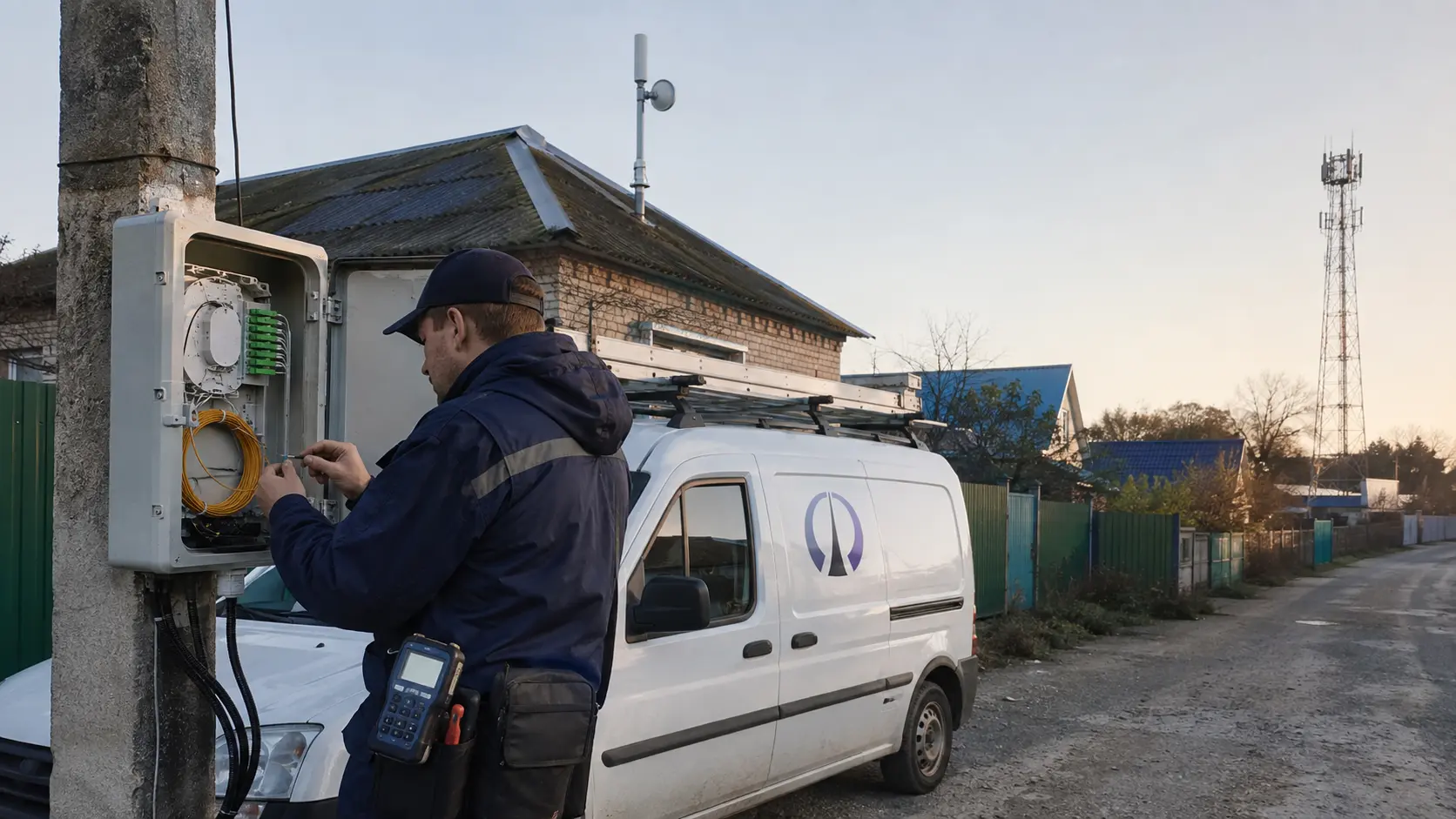
Europe and Middle East Regional ISP Trends
Prime-Service: the price parity hiding two different access futures
Prime-Service’s public retail surface puts GPON and WiMAX beside one another at matching displayed price points, but with sharply different advertised speeds. That contrast turns an ordinary tariff table into a due-diligence question about technology, upgrade paths and who…

North America Institutional Trends
HF Foods' 5x Searay Multiple Covers the Base Price, Not the Final Bill
HF Foods has closed its first international acquisition with a clean headline equation. The equation values Searay's base price; it does not settle the cash adjustment, escrow shares, two other earnouts or the accounting of the combined business.

IETF
Happy Eyeballs Is a Racing Budget, Not Proof of Dual-Stack Health
A page can load normally while one address family is unusable. Happy Eyeballs protects the user by letting another candidate win, but that success becomes misleading when operators treat it as evidence that the whole dual-stack service is healthy.

NANOG
The Late-Submission Exception
Urgency is a legitimate reason to keep a technical programme open. It is not, by itself, a sufficient rule for deciding who gets the remaining stage time. NANOG's public record offers both sides of that problem: a historical late-submission process governed by committee…

Story
A TTL Jump Can Make a RIPE Atlas Trace Invent an AS Link
A traceroute can place a destination directly after one visible network even when several unseen routers still forwarded the packet. The missing segment is not always silence or a tunnel. New RIPE Atlas research shows that an on-path device can raise the probe's TTL and let it…

Europe and Middle East Regional ISP Trends
Poyrazwifi: the wireless footprint that makes repair capacity the real product
Poyrazwifi: the wireless footprint that makes repair capacity the real product intelligence summary explains the development, the public evidence available to readers, the organisations involved, the regional context, market exposure, and the infrastructure consequences that may…

Global Cloud Services Trends
A Fresh HTTP Cache Entry Is Not Current Origin Authorization
A cache can be correct about age and wrong about present authority. Freshness permits reuse of stored bytes; it does not prove that the origin still wants those bytes disclosed to this requester.

IETF
The IETF Approved Dynamic Flooding as an Experiment. “Acceptable” Still Needs a Measure
The IETF has authorized a test, not crowned a winner. Dynamic flooding may give dense link-state networks a much smaller graph over which to distribute updates, but the approved draft leaves operators with the hardest word in the evaluation: what counts as acceptable when the…

Global Institutional Trends
Dorian Locked 99% of Its Quarter, Not Its $460m Orderbook
Dorian LPG has nearly filled its September-quarter sailing calendar while ordering four Panamax newbuildings for 2029–2030. The rate window, vessel sales and refinancing belong to one renewal programme, but they do not form one funded cash bridge.

ICANN
A GAC Early Warning Is a Signal, Not a Veto: The Applicant's Response Record
The 2026 Round gives a government representative a way to flag a concern without turning that notice into an automatic decision on the application.

IETF
The IETF Approved an IoT TLS Profile. It Still Does Not Authorize the Device
A constrained device can complete the right handshake, present an accepted credential and still have no right to perform the next action. The newly approved IETF profile makes that separation unusually explicit. It standardizes a secure transport baseline; it does not inherit the…

North America Institutional Trends
Arrow Added $250m of Receivables Capacity, Not a $250m Draw
The amendment makes Arrow Electronics' North American funding line larger and more tolerant of a qualifying acquisition. It does not say that the extra capacity has been borrowed—or that an acquisition exists.

Story
LACNIC 46's Machine Records Still Say LACNIC 39 and LACNIC 45
The closing entry in LACNIC 46's current agenda belongs to the right event when read through its canonical taxonomy and presentation title. Three other fields still name LACNIC 45. A separate homepage field goes further back, to LACNIC 39. This is a small data-integrity problem…

IETF
MOPS’ Draft Drops the Experimental Clause Without Recording the Verdict
The IETF is reviewing a light recharter for its Media OPerationS Working Group. The draft preserves the venue and its work, but removes the sentence that made the group an experiment. The old review is marked complete; the public change does not say what was learned.

North America Datacenter Trends
Hyperscale Data's dividend leaves a 473,790-share arithmetic gap
The issuer supplied a fixed pool, a denominator, a ratio and a Class A allocation. Those numbers do not produce the same answer. The unresolved bridge matters more than the label “special dividend.”

ICANN
ICANN’s New “Time to Mitigation” Metric Does Not Time a Mitigation Act
Domain Metrica now estimates how long a reported domain keeps resolving. Its label sounds like an intervention stopwatch, but its start and finish are DNS observations—not the report and not the responsible actor’s action.

Asia-Pacific Datacenter Trends
BUUU's 2GW pipeline is not one order book
BUUU has put an acquisition, a data-centre development funnel and two possible sources of equity cash into one growth story. They belong on separate ledgers because each converts on different evidence.

Story
ARIN's SMS Country List Is Now an Attack-Cost Boundary
A request to make SMS authentication more convenient ended with a security-cost decision. ARIN says the limited numbers it supported outside its service region created a costly attack vector; the public record explains the boundary it chose, but not the attack it measured.

CASE FILE
The Indicator Was Defanged. Its Next Consumer Could Still Arm It
A security analyst pastes a bracketed address into a ticket. It looks inert, and in that surface it may be. Minutes later, a preview worker extracts the same string, restores its URI form and fetches it for inspection. The analyst never clicked. The ticketing chain still crossed…