
Primary Domain
Internet Infrastructure
Within the Primary Domain facet, Internet Infrastructure intelligence groups reporting by primary domain so readers can follow a focused area of internet infrastructure, governance, connectivity markets, or digital capital. The page brings together related articles, public evidence, institutions, companies, people, regional exposure, operating dependencies, and market context that may otherwise sit across separate category pages. It explains the domain, the likely actor class, the market or governance context, and the source material readers should use when comparing signals. Operators, analysts, and governance readers can see how the same domain appears across events, profiles, market shifts, public-source evidence, regional dependencies, and longer-cycle infrastructure decisions over time.

History
The Filename the Sender Was Not Allowed to Choose
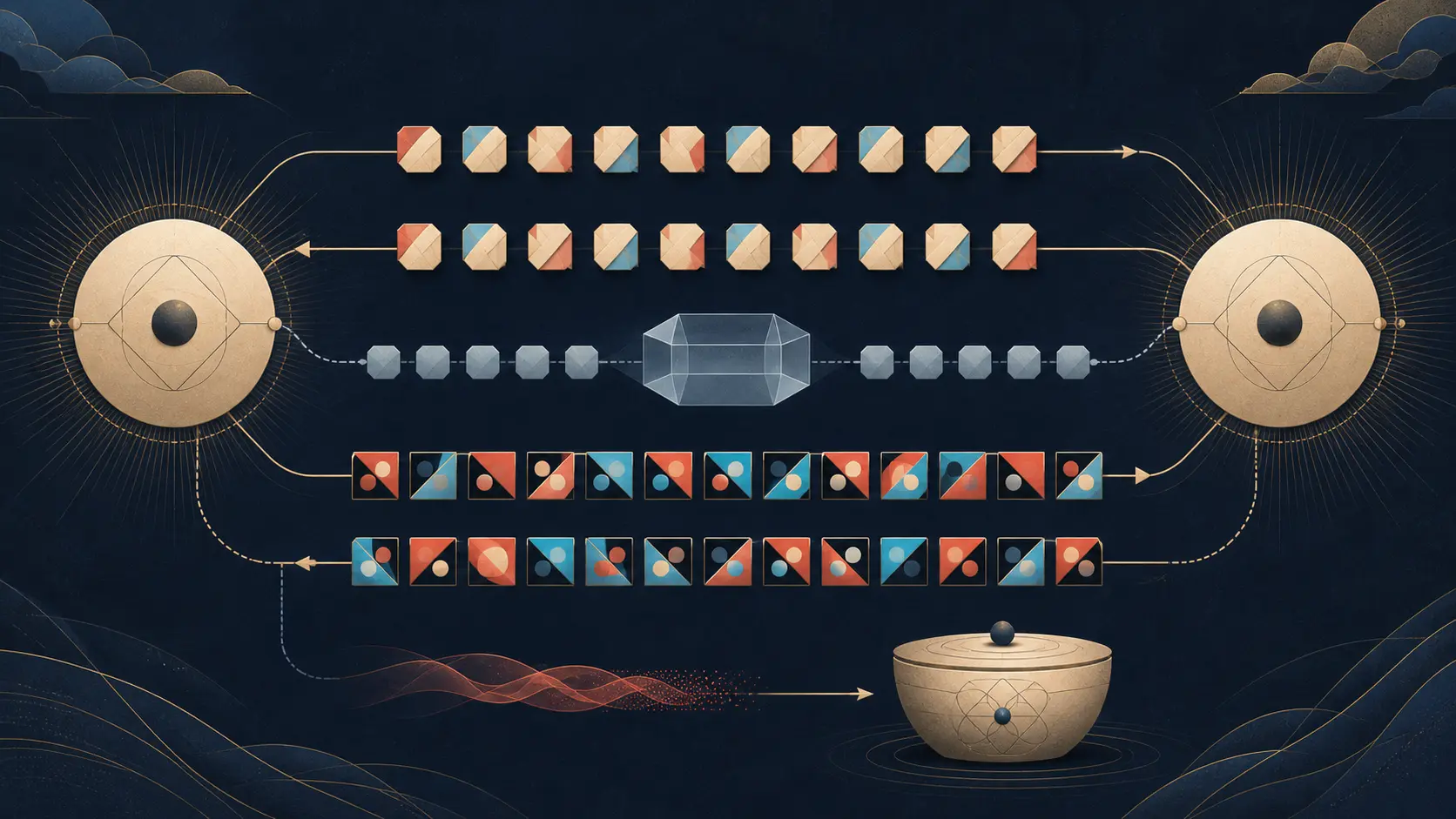
FTP’s `STOU` command made a remote server allocate a collision-free pathname and report it before transfer, turning one line of reply text into a narrow receipt for a naming decision—not proof that the upload finished, remained stored, or belonged to anyone.

History
The List That Was Not Its Address: How List-Id Gave Mailing Lists a Stable Name
When a mailing list changed processors, the place used to submit a message could move while the community stayed put. List-Id turned that mismatch into a design rule: give the list one durable name, then keep routing, actions and authentication under separate authority.

History
The Route the Relay Was Told to Forget: How SMTP Kept Source-Route Syntax After Removing Its Authority
An old SMTP recipient can still arrive carrying a list of relays before the mailbox. A modern server must understand the form, yet it need not follow the list. That apparent contradiction records a deliberate transition: compatibility preserved the grammar after normal control of…

History
The New Address That Was Not a Rename: How SMTP Split Forwarding from Referral
Two mail servers can know exactly the same thing—that a mailbox has moved—and still owe the sender opposite answers. SMTP encoded the difference in `251` and `551`: one server accepted responsibility and forwarded; the other refused the old recipient and left the next attempt to…

History
Repairing the Instrument Did Not Replay the Performance
RTP MIDI gave a receiver enough history to correct a note that would not end, without promising to replay every note that had gone missing. Its recovery journal drew a useful boundary for the real-time Internet: the state of a performance could be repaired, but the time in which…

History
The Offset That Could Not Name the File: How FTP Restart Assumed an Unchanged Object
After a large transfer breaks, a saved number feels like proof of progress. FTP could use that number to avoid sending the beginning again. But the number named a position, not the file version occupying that position. Resume worked only because both endpoints supplied an…

IETF
Job Snijders and the Checklist That Could Sign Bytes, Not Truth
A cryptographic signature can settle a narrow argument and still leave the important business question open. Job Snijders and his co-authors designed the RPKI Signed Checklist to prove that a resource-authorized key signed a list of exact file digests. Its usefulness begins with…

History
The Name the Message Had to Mint Itself: How Message-ID Worked Without a Registry
A relay can add a trace field and change a message’s bytes without changing the message. An author can revise one sentence and create a new message even while most bytes remain. `Message-ID` gave that distinction a durable name, then let replies and distributed news servers build…

History
A Return Label Was Not a Shared Instruction
A RADIUS proxy could carry another proxy's private state without knowing what it meant. The common agreement concerned preservation, relative order and return, not a universal interpretation of every value. That small distinction left room for independent implementations while…

History
A Reservation Could Survive Without Being Rechecked
RSVP learned to keep previously advertised state alive by naming it instead of repeating its description. That reduced routine work, but changed what the routine could discover. A missing record could ask for repair; a recognisable record with the wrong contents was a different…

History
The Reply SMTP Could Not Divide: How LMTP Made Local Delivery Per-Recipient
One message reaches the local-delivery boundary with two accepted recipients. One mailbox can take it; the other is temporarily over quota. SMTP has one final answer for that transaction, so the receiver must own what happens next. LMTP changed the shape of the answer: one…

History
The Knock That Brought the Client Back
A DHCP server could know that a setting should change while its client had no reason to ask again. FORCERENEW gave the server an opening in that quiet interval. It did not give the opening message the power to complete the change.

History
The Link the Origin Asked to Remove: Why HTTP 410 Was Not 404
Two dead-looking links can lead to the same empty browser view while making very different claims. HTTP 404 leaves the reason and duration unresolved. HTTP 410 lets an origin say that access ended deliberately, is likely to stay ended, and should change how the rest of the Web…

History
The Message That Expired at Only One End
A sender could stop pursuing a message whose usefulness had run out. It could not make the receiver infer that decision from silence, or recall a copy already on its way. SCTP’s partial-reliability extension made abandonment a shared procedure without disguising it as delivery.
History
The Name That Spent Its Capital Letters: How DNS Turned Case into a Reply Challenge
DNS was built to recognize a name regardless of how its ASCII letters were capitalized. Two decades later, engineers noticed that the discarded distinction could still make a forged reply harder: the name could mean the same thing to the server while carrying a pattern only the…

History
The Packet That Had to Go Home Before Going On
A mobile computer could carry its address to another network, but not necessarily the right to emit that address from there. Mobile IPv4's reverse tunnel sent an outgoing packet home before letting it continue to its correspondent. The detour was less an admission that the…

History
The New Key That Inherited Its Past: What TLS KeyUpdate Could Rotate
A protected connection may last far longer than the key that first carried its traffic. TLS 1.3 gave that connection a way to move forward without renegotiating who its peers were—but the new secret remained a descendant of the old one, with a sharply bounded security promise.

History
The Alert EOF Could Not Replace: How TLS Made One Direction's End Explicit
A receiver can authenticate every byte it saw and still not know whether more bytes were meant to arrive. TLS solved that narrower problem by putting the ending inside the protected conversation, then learned that the two directions should not be forced to end together.

History
The Report That Had to Wait for the Crowd
An RTCP report timer reaches its appointment, and the source still does not send. The report is ready. The correct next action may still be to send nothing. In the control protocol accompanying real-time media, an appointment made with an incomplete picture of the group is not an…

History
The Record the Receiver Could Not Hold: How TLS Made Size a Local Claim
A small endpoint may be able to stream encrypted output while lacking the memory to authenticate an equally large record arriving from its peer. TLS eventually learned that the two directions do not have to pretend they are the same machine.