
Primary Domain
Internet Infrastructure
Within the Primary Domain facet, Internet Infrastructure intelligence groups reporting by primary domain so readers can follow a focused area of internet infrastructure, governance, connectivity markets, or digital capital. The page brings together related articles, public evidence, institutions, companies, people, regional exposure, operating dependencies, and market context that may otherwise sit across separate category pages. It explains the domain, the likely actor class, the market or governance context, and the source material readers should use when comparing signals. Operators, analysts, and governance readers can see how the same domain appears across events, profiles, market shifts, public-source evidence, regional dependencies, and longer-cycle infrastructure decisions over time.
CASE FILE
RFC 9744: the circuit identities a shared tunnel must retain
Fewer service labels can make a carrier network cheaper to operate. The saving becomes less convincing when the remote edge can no longer tell which customer circuit needs a different path.
CASE FILE
RFC 9746: the compatibility cost of choosing EVPN split horizon
A default-method entity can send an upgraded Ethernet segment back to its encapsulation baseline. The operational question is whether the network has kept the resources and evidence needed to make that return safely.

History
Qiheng Hu and the 64K Link That Needed Authority at Both Ends
By the end of 1993, the network was technically ready. Its domestic backbone joined three academic systems, its team had chosen TCP/IP, and the international circuit had been provisioned. Yet packets still did not cross. Qiheng Hu’s part in China’s full-function Internet…

Story
LACNIC Asked for a Technical-Committee Charter. Its First Committee Ran the Registry.
LACNIC’s Board has found a sensible reason to create a technical committee and an equally sensible reason to fear one. Directors need a place to understand technologies that may reshape the registry. They do not need a second operations room. The distinction sounds obvious until…
History
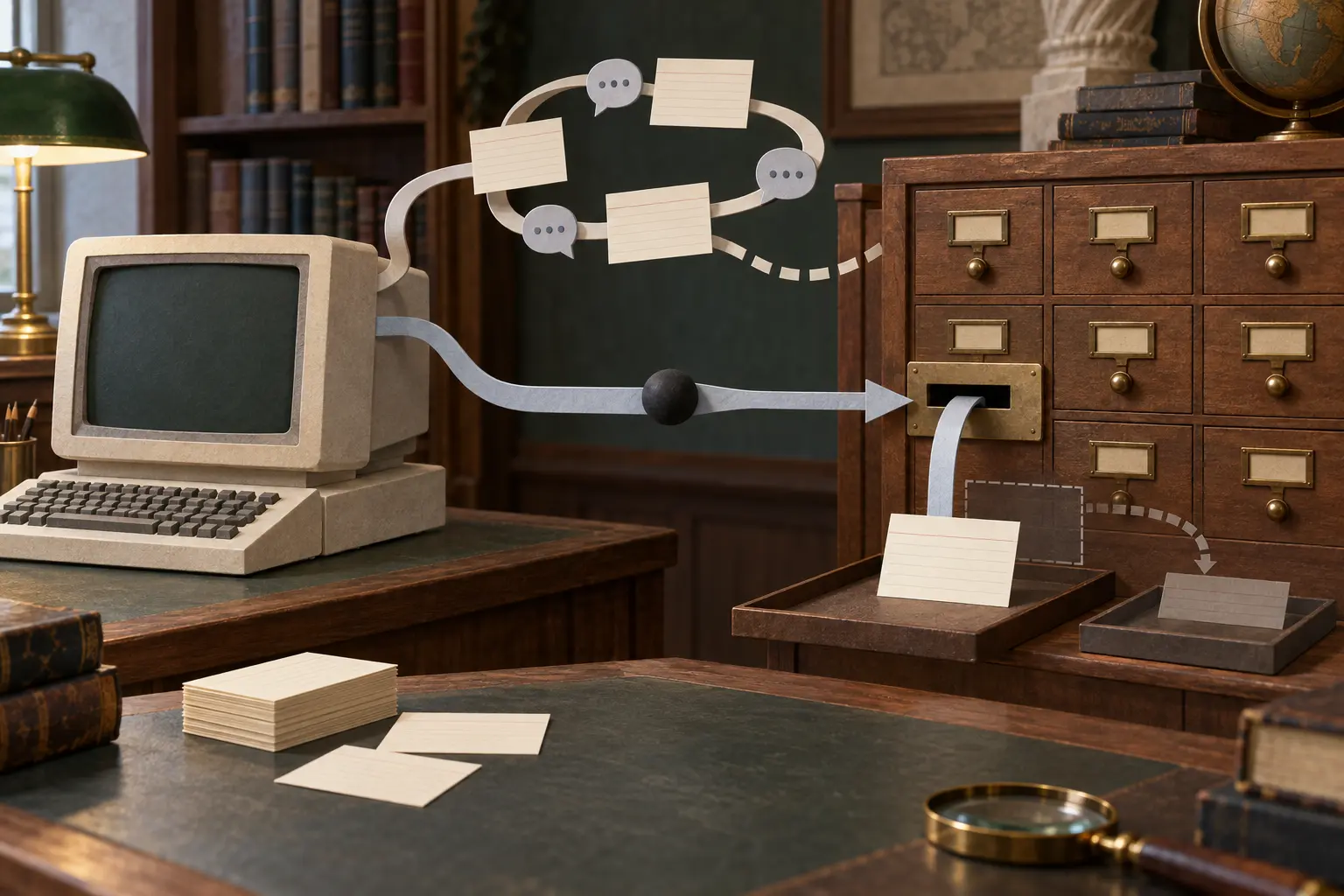
RFC 2056 and the Fork in a Z39.50 URL
In 1996, RFC 2056 gave two URL schemes to Z39.50 because one locator could conceal two very different kinds of work. One scheme entered a continuing, stateful inquiry; the other attempted a tightly bounded retrieval of a server-identified item. The distinction is a small piece of…
CASE FILE
RFC 9747: the neighbour returns a packet, not a health declaration
Unaffiliated BFD Echo removes the need for the far end to speak BFD. That useful simplification leaves the local operator owning both the test and the decision made from its result.

History
Jun Murai and the Address Space That Became a Trust
The number is oddly exact: 14,680,064 IPv4 addresses. They were neither a fresh registry allocation nor abandoned space waiting to be reclaimed. They were seven-eighths of an old Class A block, held through three decades of changing Internet institutions, and in 2020 Jun Murai…

History
The Walk Could Not Be Repeated: RFC 2041’s Contract Between Trace and Experiment
A wireless failure observed along one route could be taken back to a laboratory, but only after researchers decided what the record meant and which effects a wired testbed could reproduce. RFC 2041 made those decisions unusually visible.

History
Kilnam Chon and the Router Asia Could Not Buy
On 15 May 1982, two computers in South Korea began speaking across a 1,200 bps leased line. The connection was modest; the missing box beside it was more consequential. With no obtainable IP router, Kilnam Chon’s group treated published protocol documents as equipment they could…

Story
ARIN Can Attach a Ticket to an Org ID. That Does Not Make It the Organization’s Decision.
ARIN fixed a mundane but costly support problem: staff no longer need to begin every ambiguous question by asking which organization it concerns. The resulting Org ID selector gives a ticket context and a durable home. That is good service design. It also makes one distinction…

History
The Zero Handle Opened a Door. It Did Not Grant Entry
In 1996, RFC 2054 tried to remove two conversations that stood between an NFS client and its first useful file reference. Its answer was not a new permission system. It was a disciplined gamble: try the port most servers already used, try the newer protocol first, and present a…
History
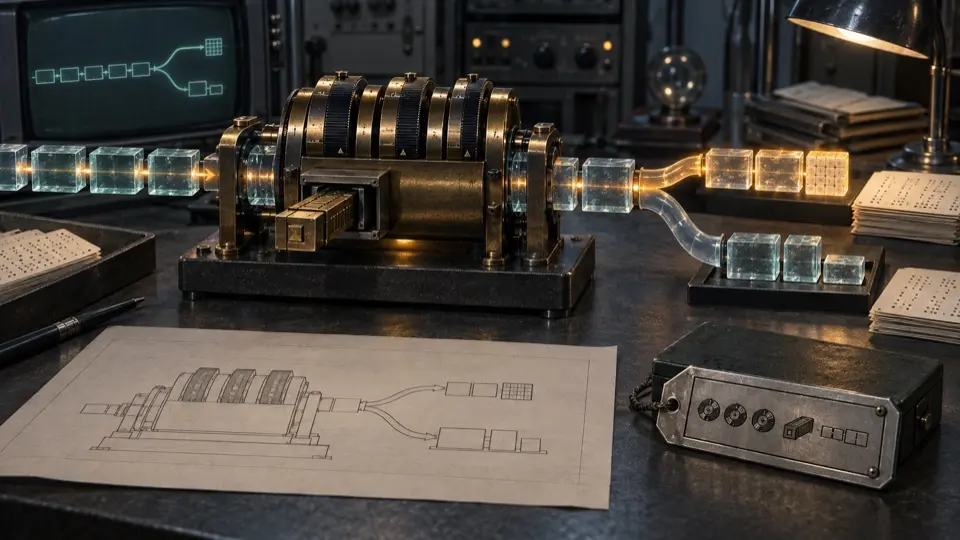
A Cipher Name Was Not Enough: RFC 2040 and the Missing Identity of RC5
RFC 2040 reads less like a manifesto for a cipher than a parts ledger for agreement. Its lasting historical value is the discipline with which it separates a family name from an executable identity: word size, rounds, key length, expanded state, chaining state and the rule used…

History
Kees Neggers and the Backbone Europe Built in Parallel
On 26 September 1992, one link between London and Montpellier completed Ebone’s initially defined backbone. The more revealing number was not its line rate but its age: 390 days since a small group had first met outside Amsterdam to ask whether Europe could operate a shared IP…

Story
APNIC’s Priority Survey Has Three Bases: 1,039, 1,038 and 1,037.
APNIC asked its community to divide exactly 100 points among eight strategic activities. The resulting chart looks unusually complete: every point is accounted for and no priority overwhelms the rest. The publication trail is less settled. Three official artifacts attach three…

History
The Configuration Row Vanished. RFC 2051 Kept the Session Alive
RFC 2051 turned an obscure APPC management model into a durable lesson about evidence: the record of what should exist can disappear while the record of what is already running remains true.
IETF
The Zone Was Still Answering. The Signing Key Was Already Gone
A correctly signed zone can outlive the private key that produced it. That interval is not recovery; it is a perishable option whose value depends on preserving old cryptographic state while proving, clock by clock, that a replacement chain has taken over.

History
Karen Banks and the Gateway That Did Not Need to Stay Online
A message could wait on a local machine, travel during one brief telephone call and still reach an international public. Karen Banks’s work on GreenNet’s GnFido gateway shows why early access was a chain of queues, operators and partners—not a light that simply switched from…
History
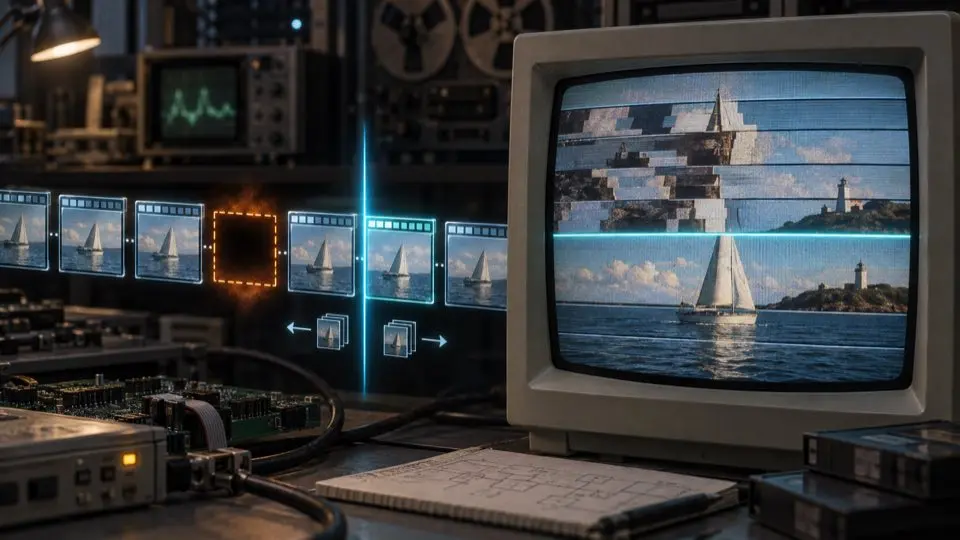
The Decoder Could Restart Before the Picture Was Whole: RFC 2038’s MPEG Slice Boundary
RFC 2038 turned an MPEG slice into a visible transport boundary. A receiver that saw an RTP sequence gap could wait for a packet declaring the next slice start and rebuild limited picture context from repeated fields—but that restart said nothing about whether the earlier picture…
History
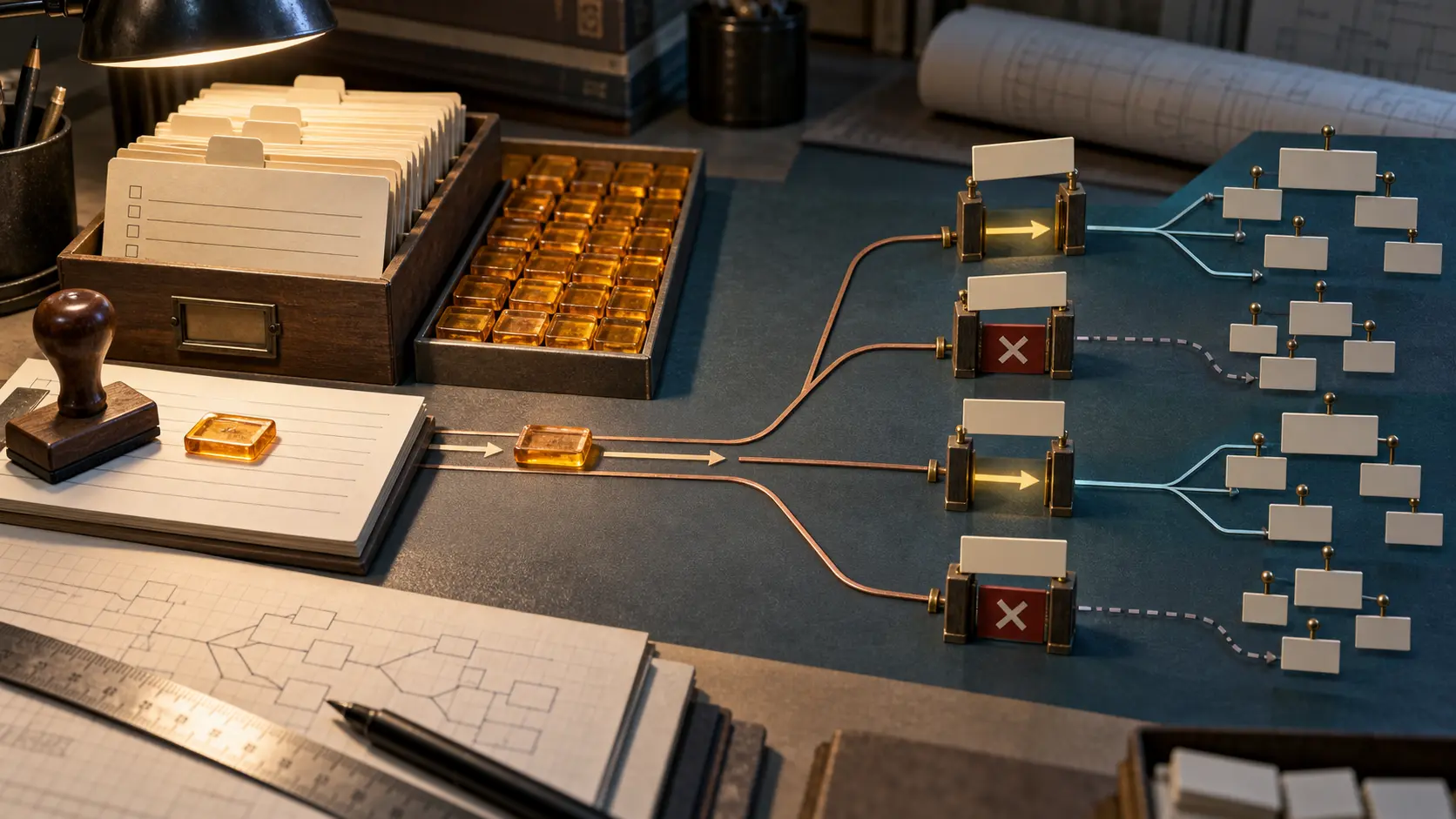
The Registry Issued the Address. RFC 2050 Refused to Promise the Route
In 1996, an organisation could receive globally unique address space, appear in the public registry and still lack the one thing a casual reader might assume came with both: a route across the Internet. RFC 2050 made that limit explicit because the registry was only one actor in…

Story
RIPE Atlas Put Reconnects and Liveness Through One Event Processor. A Slow Backend Blocked Both.
A RIPE Atlas software probe could have working Internet access on 8 June and still be shut out of the measurement network after a routine disconnect. The public incident record explains why: reconnect work and controller-liveness evidence passed through the same event processor.…