
Primary Domain
Internet Infrastructure
Within the Primary Domain facet, Internet Infrastructure intelligence groups reporting by primary domain so readers can follow a focused area of internet infrastructure, governance, connectivity markets, or digital capital. The page brings together related articles, public evidence, institutions, companies, people, regional exposure, operating dependencies, and market context that may otherwise sit across separate category pages. It explains the domain, the likely actor class, the market or governance context, and the source material readers should use when comparing signals. Operators, analysts, and governance readers can see how the same domain appears across events, profiles, market shifts, public-source evidence, regional dependencies, and longer-cycle infrastructure decisions over time.

History
Twenty Characters Made the Address Shorter and the Evidence Harder to Read: RFC 1924
The log search returned nothing. The address was present, the 128 bits were unchanged, and the parser could reconstruct them exactly. Only the spelling had moved—from familiar colon-separated hexadecimal to twenty symbols dense with punctuation. RFC 1924 made IPv6 shorter. Its…

History
Every Line Returned to ASCII So the Middle Could Be Read: RFC 1922
Open a long Chinese message at line twenty. If that visible line depends on an escape sequence hidden nineteen lines above, scrolling has become a decoding hazard. RFC 1922 answered with deliberate repetition: a Chinese line declared the character set it needed and returned to…

History
The Second Request Was Deleted. Its Error Had to Wait: RFC 1921
A second printer request arrived before the first had finished. TNVIP did not queue it, number it or let it overtake. The receiver deleted it—and postponed the protocol-violation response until the first request had received its own answer. RFC 1921 used three small, separate…

History
Both Networks Were Correct Until They Met: RFC 1918 and the Price of Local Uniqueness
At 09:00, two enterprise networks can each be orderly. Each has one machine at the same private address, one route toward it and one name that resolves correctly. At 09:01, an interconnection comes up. Nothing inside either machine has changed, yet the address can no longer…

Creators
Roy Arends and the hard work of changing DNS safely
Roy Arends helped write the 2005 specifications that made modern DNSSEC interoperable across implementations. Two decades later, his work at ICANN focuses on a harder operational problem: changing keys, error signals and delegation in a global system that no organisation can…
CASE FILE
A DNS Failure Drew 51 Queries. The Cause Was Still Unresolved
APNIC Labs sent several kinds of “no” from an experimental authoritative DNS service. Definitive negatives drew roughly four queries per test. `SERVFAIL` drew 51.73 and silence 83.46. Those are measurements of received traffic—not a verdict on which resolver layer multiplied it.

History
Before Renumbering Had a Procedure, It Had a Field Diary: RFC 1916
Most RFCs are remembered for an answer. RFC 1916 deserves attention because it published a question. In February 1996, the IETF's PIER working group needed practical guidance for changing enterprise IP addresses, but it did not pretend that a standards room already possessed the…
CASE FILE
The Purge Was Accepted. The Downstream CDN Still Said No
Revision 20 of an IETF working-group draft follows a cache-control request past the reassuring `201 Created` response. In a CDN cascade, a later rejection has to return as data inside another provider’s status resource—and the provider that refused may remain unnamed.
Creators
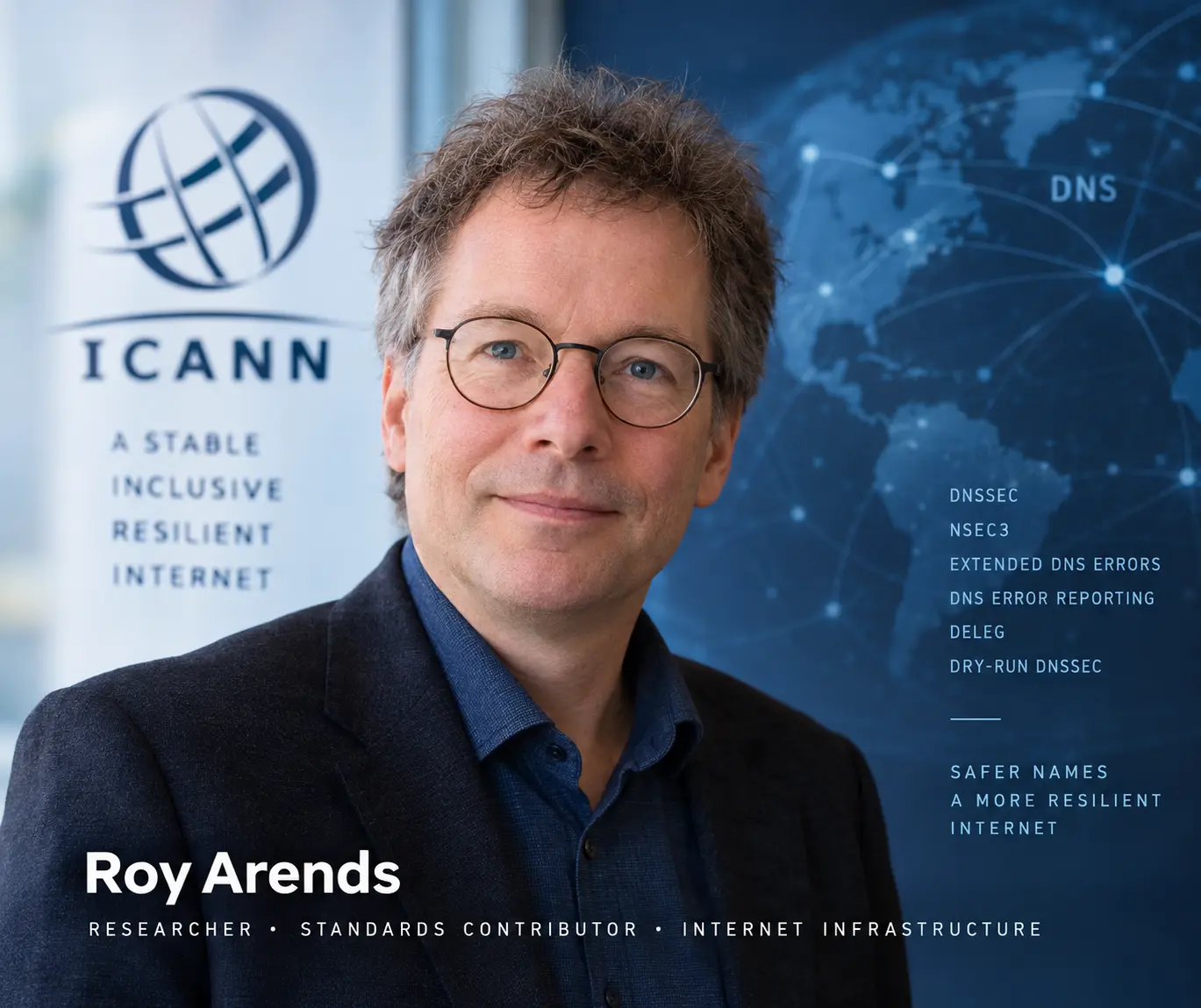
Roy Arends and the hard work of changing the DNS safely
Roy Arends helped write the 2005 specifications that made modern DNSSEC interoperable. Two decades later, his work at ICANN centres on a harder operational problem: changing keys, error signals and delegations across a global system that no institution can update by command.

History
The Assurance Was Public. The License Form Was Not: RFC 1915
A standard can be open to inspection while a decisive commercial term remains behind the next conversation. In 1996, the IETF published Motorola’s assurance that licences for claimed patents affecting two PPP control protocols would be available on reasonable and…
CASE FILE
The ICMP Error Named a Node. It Did Not Prove Which One
Revision 05 of an IETF draft makes node context harder to omit when an ICMP source address cannot do the diagnostic job alone. It also exposes a less comfortable truth: a more informative error can carry less of the packet that triggered it, and neither piece is authenticated.
Leaders
Mohamed Awang Lah and the Problem of Making Internet Capability Survive Institutional Change
The most revealing question about Mohamed Awang Lah is not whether he was important to Malaysia’s early internet development. The public record makes his importance difficult to dispute. The harder question is what, precisely, survived his successive roles: a person’s authority…
IETF
One CA Name, Several Ways to Issue
A buyer reviewing certificate operations asks a simple question: if DNS authorizes one certification-authority name with an account and a validation method, does that restriction govern every issuing system behind the name? RFC 8657 makes the answer consequential. A shared CA…
CASE FILE
Every Outer Bundle Was Delivered. The Inner Bundle Still Had Not Been Received
Bundle-in-Bundle Encapsulation gives a delay-tolerant network two journeys to observe. The outer bundles can reach their configured endpoint one by one, each with a valid delivery report, while the bundle carried inside them never reaches the Bundle Protocol Agent. The new DTN…

Story
RIPE Database Is Switching to OIDC. Maintainer Authority Does Not Move With the Session
RIPE NCC plans to replace a site-wide cookie with an OIDC session for interactive RIPE Database use. That can improve authentication, but the harder acceptance question begins after login: which `mntner` authorises this identity to change this entity, under which session regime…

History
The Parent Named the Server. The Server Still Had No Zone: RFC 1912 and Lame Delegation
The referral worked exactly as configured. A resolver asked the parent where to find a child domain, received two name-server names and sent a query to one of them. Only then did the system reveal its mistake: the selected machine had no child zone to serve. The directory entry…

Academics
Colin Perkins: How Real-Time Media Learned to Share the Internet
Colin Perkins did not invent RTP, WebRTC or Internet congestion control. His more defensible contribution is also more revealing: over three decades, he helped develop the repair, feedback, signalling, safety and governance mechanisms that allow voice and video to remain useful…

Leaders
Nurani Nimpuno and the Accountability Layer Behind Number Governance
Internet number governance is often described through institutions and acronyms. Nurani Nimpuno’s public record reveals a more useful operating question: how can a community preserve technical discretion while making delegated authority reviewable?

History
The Mesh Had No Root. The Client Paid for Completeness: RFC 1914
Two clients could ask the same question and return with different directories. One stopped after a nearby server answered; the other followed referrals through a larger graph. RFC 1914 made that divergence legible: completeness was not a property printed on the first reply. It…
History
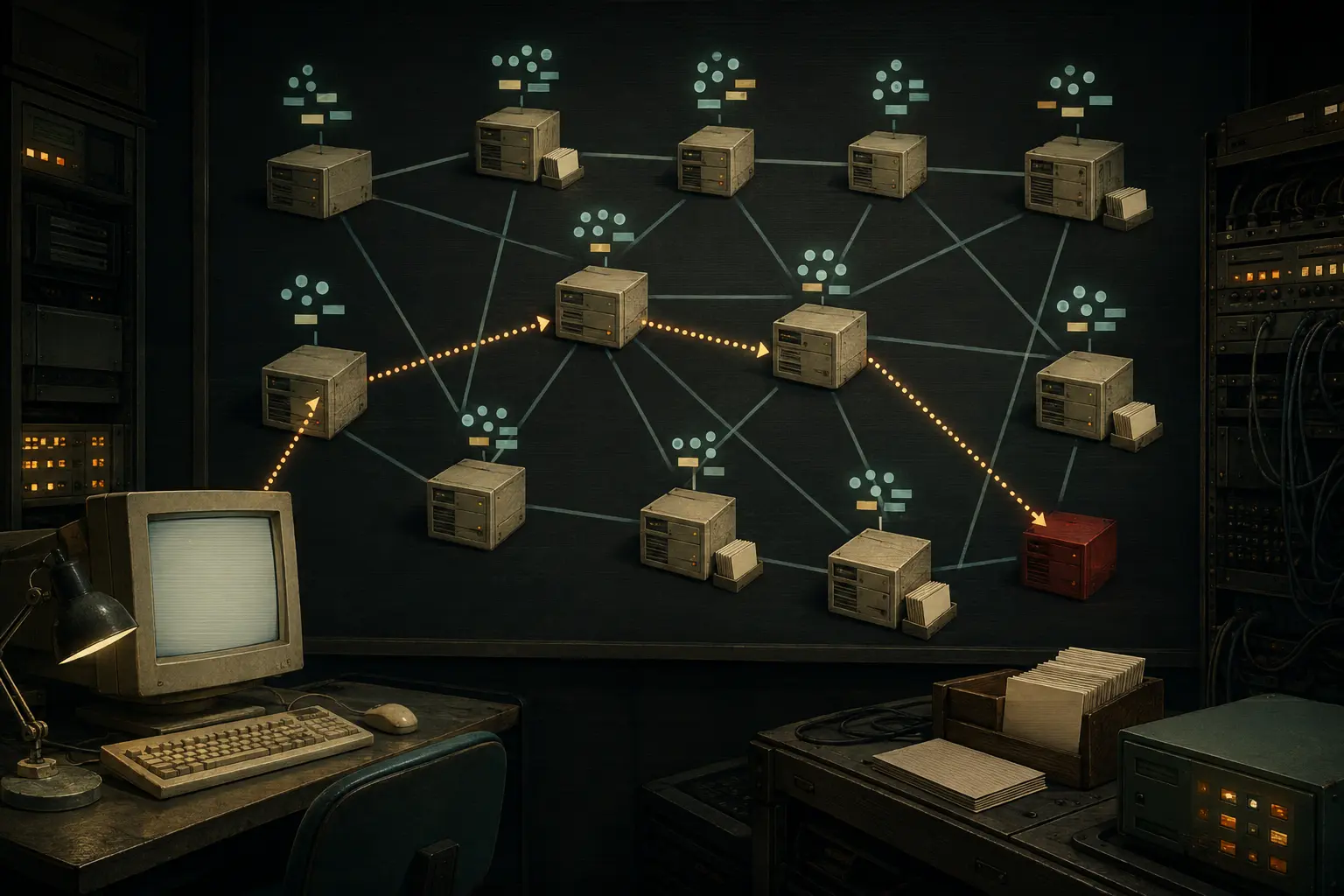
The Index Knew the Word Existed. It Still Did Not Know the Answer.
Put three directory records through a Whois++ centroid and something peculiar happens. The word “Smith” survives, but the two people who carried it disappear. So do frequency, co-occurrence, order and the path by which either record was maintained. In 1996, that deliberate loss…