
Primary Domain
Internet Infrastructure
Within the Primary Domain facet, Internet Infrastructure intelligence groups reporting by primary domain so readers can follow a focused area of internet infrastructure, governance, connectivity markets, or digital capital. The page brings together related articles, public evidence, institutions, companies, people, regional exposure, operating dependencies, and market context that may otherwise sit across separate category pages. It explains the domain, the likely actor class, the market or governance context, and the source material readers should use when comparing signals. Operators, analysts, and governance readers can see how the same domain appears across events, profiles, market shifts, public-source evidence, regional dependencies, and longer-cycle infrastructure decisions over time.
Leaders
Mohamed Awang Lah and the Institutional Continuity of MyCERT
Malaysia’s MyCERT is best understood not as a personal possession that moved from one job to another, but as an incident-response function that survived changes in institutional placement. Dr. Mohamed Awang Lah can be connected to the security initiatives associated with MyCERT’s…

History
The Uncompressed Packet That Changed the Dictionary: RFC 1967
An LZS-DCP packet can arrive with its data plainly uncompressed and still alter the shared state needed to decode the next compressed packet. RFC 1967 made that choice explicit, split state into numbered histories, and carried recovery signals inside later data packets. The…

Global Institutional
Seven fields that make ISC operational assurance auditable
Public pages can identify where a control is described without showing whether it worked in a named event. For Internet Systems Consortium, the next accountability step is an event-to-repair ledger that connects scope, timing, responsibility, observed results and follow-up…
Global Institutional
DFINFRA and AS210860: What Routing Evidence Can—and Cannot—Prove
DFINFRA and AS210860: What Routing Evidence Can—and Cannot—Prove intelligence summary explains the development, the public evidence available to readers, the organisations involved, the regional context, market exposure, and the infrastructure consequences that may follow. The…
Europe and Middle East Institutional
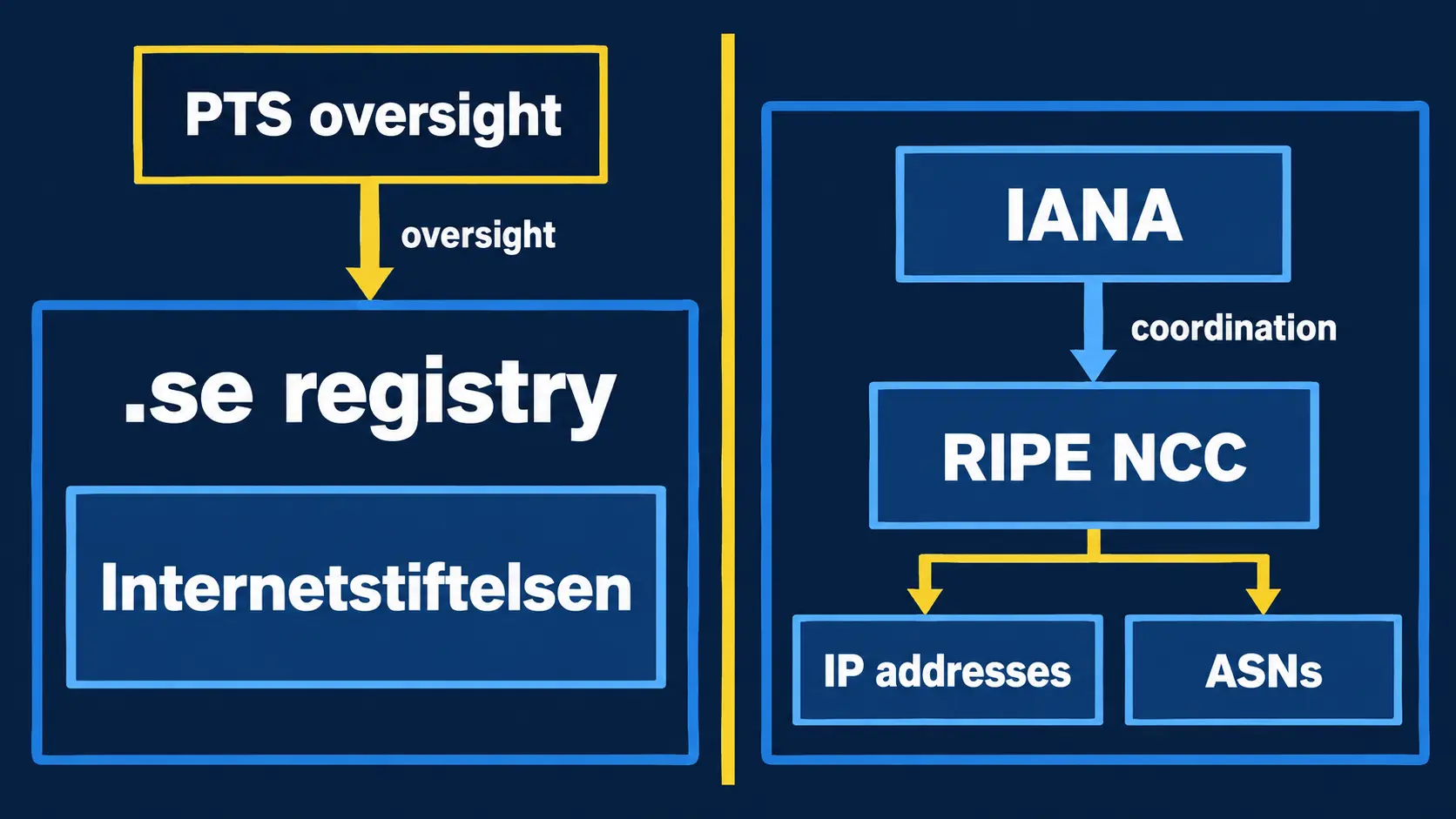
What Internetstiftelsen Controls—and What It Does Not
A sparse directory label points toward Sweden’s .se registry, but the evidence separates domain-name stewardship from the Internet’s IP-address and autonomous-system infrastructure.

Story
AFRINIC Calls Its NS2 Dashboard ‘Real-time.’ All Twelve Linked Measurements Are Stopped One-Offs
A page can refresh on demand without measuring the present. AFRINIC’s public NS2 dashboard illustrates the distinction: it advertises “Real-time Anycast Node Monitoring”, yet every RIPE Atlas measurement wired into the interface is a stopped one-off. The result is useful evidence…

Leaders
From Registry Association to Operational Authority: What AS211867 Records Can—and Cannot—Show
From Registry Association to Operational Authority: What AS211867 Records Can—and Cannot—Show intelligence summary explains the development, the public evidence available to readers, the organisations involved, the regional context, market exposure, and the infrastructure…

Story
A Backup DNS Plan Is Not a Second Resolver
A 9 September APNIC Blog account turns a household outage into a precise infrastructure lesson: resilience begins only when an alternative service is running, reaches the clients that depend on it, survives a controlled failure and can be rolled back.

Story
RIPE NCC’s K-root Refresh Needs Three Acceptance Records, Not One Batch Status
Amsterdam can be refreshed while the three-site programme remains in progress. That is not a contradiction; it is a warning about the unit of evidence. RIPE NCC has named three K-root core sites whose seven-year-old routers and servers were due for replacement. The useful public…

History
The Packet Stayed Native, but the Dictionary Moved: RFC 1977's Hidden PPP State
A packet capture can show an ordinary PPP datagram while both endpoints quietly rewrite the codebook that will determine the meaning of the next compressed packet. RFC 1977 made that invisible transition a condition of interoperability.

Story
LACNIC’s Autonomous-Network Ladder Needs a Scenario Ledger, Not a Company Badge
Two operators can both call themselves level three while describing entirely different machines. One may automate fault diagnosis in a radio network; the other may automate service fulfilment but leave every consequential configuration change to a person. The number sounds…
CASE FILE
The Cookie Returned. The Service Had Not: RFC 9853
RFC 9853 lets a DTLS endpoint test a peer address after a Connection ID recovers an existing security context from a datagram whose source has changed. The returned cookie can justify one binding decision at one moment. It cannot explain the change, promise a stable path, or…

History
The Ticket Arrived. The Receipt Did Not: RFC 1964’s Authentication Boundaries
RFC 1964 gave Kerberos V5 a disciplined GSS-API wire vocabulary: a mechanism identifier, typed tokens, a digest for caller-supplied channel bindings, service flags and an optional delegated credential. The design is valuable precisely because each item stops at a boundary. A…

History
The Header Came Last: How RFC 1963 Reassembled Serial Frames over PPP
RFC 1963 made an unusual bargain with time: send the serial data first, postpone the adaptation header until the packet's end, and let the transmitter decide on segmentation only after compression had revealed the size. What reached the receiver was a grammar for reconstruction…

Story
RIPE NCC Says Its 2027 Invoicing Changes Are Complete. The Bill Still Waits for 31 December
RIPE NCC has finished the applications work for its 2027 charging scheme before the data that will determine the first bills exists. That is sensible project management. It is also why “complete” needs a second, more operational meaning in January: can each charge be reproduced…

Story
ARIN’s RPKI Constraint Is Only as Current as the Package That Ships It
A trust boundary can be carefully designed, correctly signed and still arrive too late. ARIN’s planned RPKI constraint work makes that mundane distribution problem part of routing-security policy.
Number Resource Society
AS210837’s Continuity Question Is an Evidence-Chain Problem
AS210837’s Continuity Question Is an Evidence-Chain Problem intelligence summary explains the development, the public evidence available to readers, the organisations involved, the regional context, market exposure, and the infrastructure consequences that may follow. The Number…
CASE FILE
The Paths Were Paired. The Round Trip Was Not Proven: RFC 9854
RFC 9854 gives a low-power network two related route discoveries when one radio direction cannot stand in for the other. That pairing prevents control state from being confused; it does not turn two temporary graphs into evidence that a request went out, a response came back, and…
Number Resource Society
AS210057’s visible network footprint still stops short of proving who operates it
AS210057’s visible network footprint still stops short of proving who operates it intelligence summary explains the development, the public evidence available to readers, the organisations involved, the regional context, market exposure, and the infrastructure consequences that…

History
One Direction Lost the Dictionary. The Other Kept Moving: RFC 1962
A PPP link in 1996 could agree to compress traffic without pretending that its two directions were identical. RFC 1962 let each receiver say what it could decompress, let the reverse path make a different choice, and gave a damaged direction a reset exchange of its own. That…