
Primary Domain
Infrastructure
Within the Primary Domain facet, Infrastructure intelligence groups reporting by primary domain so readers can follow a focused area of internet infrastructure, governance, connectivity markets, or digital capital. The page brings together related articles, public evidence, institutions, companies, people, regional exposure, operating dependencies, and market context that may otherwise sit across separate category pages. It explains the domain, the likely actor class, the market or governance context, and the source material readers should use when comparing signals. Operators, analysts, and governance readers can see how the same domain appears across events, profiles, market shifts, public-source evidence, regional dependencies, and longer-cycle infrastructure decisions over time.

Asia-Pacific National Telecom Trends
Kemkomdigi agrees Palapa Ring reroute for Sitaro
Sitaro and Kemkomdigi agreed to reroute Palapa Ring Tengah through Tagulandang, with construction and commissioning still pending.

Asia-Pacific Institutional Trends
PLN adds 5MW to Selayar power system
Six rental generators are now operating in Selayar, lifting the island system's total generation capacity to 16MW.

Asia-Pacific National Telecom Trends
Firmus signs 25-year APX East capacity deal
Firmus will spend about US$300m for up to 150Tbps over 25 years on SUBCO's planned Australia-US cable, due in 2028.

North America National Telecom Trends
Clearfield adds WAV distribution channel
Clearfield will use WAV to distribute its fibre, cabinet and power products to wireless and broadband providers across the US and Canada.

Asia-Pacific Datacenter Trends
India targets data-centre delivery bottlenecks
India is focusing on reliable power, ready land and faster approvals as it seeks to turn about $200bn of expected data-centre investment into projects.

Europe and Middle East National Telecom Trends
MasOrange tests 6GHz radio technology with Ericsson
MasOrange has tested 6GHz spectrum with 256TR active antennas and beamforming as it evaluates radio technology for future 6G deployment.
North America Regional ISP Trends
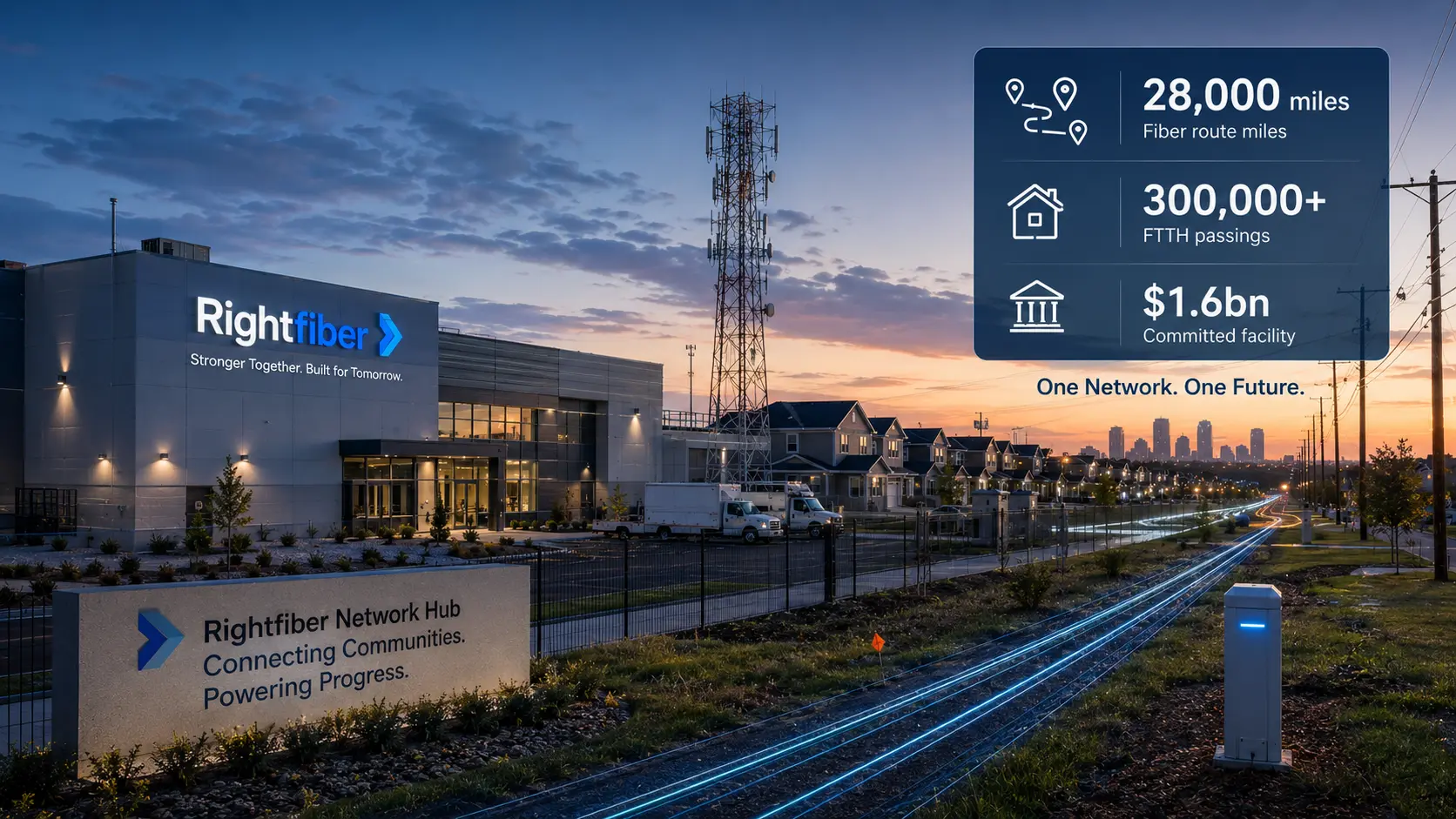
Ritter, Great Plains complete merger to form Rightfiber
Rightfiber starts with a 28,000-mile fibre network, more than 300,000 FTTH passings and a $1.6 billion facility for growth and acquisitions.

Europe and Middle East National Telecom Trends
Tottenham Hotspur upgrades stadium network with Wi-Fi 7
HPE will add outdoor Wi-Fi 7 and bring data-centre, campus and edge network management into Aruba Central at Tottenham Hotspur Stadium.

North America Datacenter Trends
Texas Batch Zero load is twice ERCOT peak
ERCOT is auditing about 200GW of large-load projects after Texas data-centre demand overwhelmed a grid whose July peak reached 91.3GW.

Story
APNIC’s Resource Quality Check Is Not an Address Attribute
APNIC made a careful change in 2019: “assurance” became “check”. The distinction matters because a registry can observe routes, filters and reputation signals, but it cannot make thousands of other networks carry the result forward.

IETF
A Signature Is Not Proof of the Other Key: RFC 9883 and Private-Key Possession Statements
A second certificate request can be validly signed by an already certified signature key, yet that signature is only an assertion—not technical proof—that the requester controls the different private key behind the requested key-establishment certificate. RFC 9883 defines how a…

History
The Packet That Had to Answer Back: TCP's Challenge ACK Repair
TCP once treated a reset that landed anywhere inside the receive window as sufficiently believable to tear down a connection. RFC 5961 replaced that destructive shortcut with a narrower rule: exact sequence alignment could act immediately; merely plausible input had to survive a…

History
The ACK That Could Not Say Which Packet Arrived: Karn's Retransmission Ambiguity Rule
The same sequence range crossed the network twice. The acknowledgment that returned proved the bytes had arrived, but not which transmission had earned the reply. Karn's rule turned that uncertainty into a discipline: delivery evidence could advance while the round-trip estimator…

IETF
The Signature Algorithm Is Not the Signed Byte Sequence: RFC 9882 and ML-DSA in CMS
Two CMS systems choose ML-DSA-65 for identical content, yet verification fails when one signs a final implicit-tag representation and the other verifies the complete DER SignedAttrs value with its explicit SET OF tag. The algorithm is the same; the signed byte domain is not.

History
The Packet That Waited for Its Predecessor: Nagle's Small-Segment Rule
A one-byte write did not need a universal delay timer. It needed a rule about whether the connection already had data in flight. Nagle's answer made acknowledgment state—not the wall clock—the gate for another short TCP segment.

IETF
The Algorithm Name Is Not the Certificate Profile: RFC 9881 and ML-DSA in PKIX
The Algorithm Name Is Not the Certificate Profile: RFC 9881 and ML-DSA in PKIX intelligence summary explains the development, the public evidence available to readers, the organisations involved, the regional context, market exposure, and the infrastructure consequences that may…

AFNOG
AfNOG Publishes Mailing-List Rules, Not the Moderation Procedure Behind Them
AfNOG’s mailing-list page sets clear expectations for a technical community: keep discussion operational, avoid disrespect, and do not use the list for blatant product marketing. The published page establishes the rules. It does not explain the procedure used when a post is…

Europe and Middle East National Telecom Trends
A mobile-site generator is not a local continuity plan until refuelling access, runtime and restoration priority are verified
A generator beside a mobile site is equipment, not proof of continuity. The local capability begins only when the site’s real load, safe access, fuel replenishment authority, delivery time and restoration priority can be exercised as one bounded operating chain.
IETF
A Registry TTL Is Policy State, Not a Live DNS Observation
RFC 10037 lets a registry publish configured DNS time-to-live values through RDAP. That sounds like a small JSON extension. Its more important effect is to expose a piece of registry policy without pretending that a registration-data service is watching the live DNS. The…

IETF
A Data Model Is Not a Wire Contract: RFC 9880 and SDF Protocol-Binding Boundaries
Two implementations can claim the same Thing model yet disagree on the wire: one chooses a URL and JSON payload convention, while the other expects a numeric identifier and different invocation rules. The gap appears when a protocol binding was implicit rather than versioned and…