
Content Type
Research
Within the Content Type facet, Research intelligence gathers BTW.MEDIA articles that share the same editorial format, helping readers compare briefings, profiles, risk notes, market analysis, and event coverage without mixing different kinds of evidence. The page explains how this content type frames internet infrastructure events, company movements, governance decisions, operational signals, and public evidence across the site. Readers can compare which actors or infrastructure systems appear most often, how source quality changes interpretation, and whether the material is a durable profile, a time-sensitive event, a strategic market signal, or a governance development. The result is a useful search page for operators, investors, customers, analysts, and policy stakeholders who need to understand the consequence, timing, and evidence behind similar article formats.

CASE FILE
Internet Society’s Authority Has a Documented Structure, but Its Remedies Remain Conditional
The Internet Society’s public governance record points to a layered institution rather than a single source of power. Its articles of incorporation, bylaws, Board of Trustees and the District of Columbia nonprofit statute occupy different positions in that structure. The…
Global Cloud Services
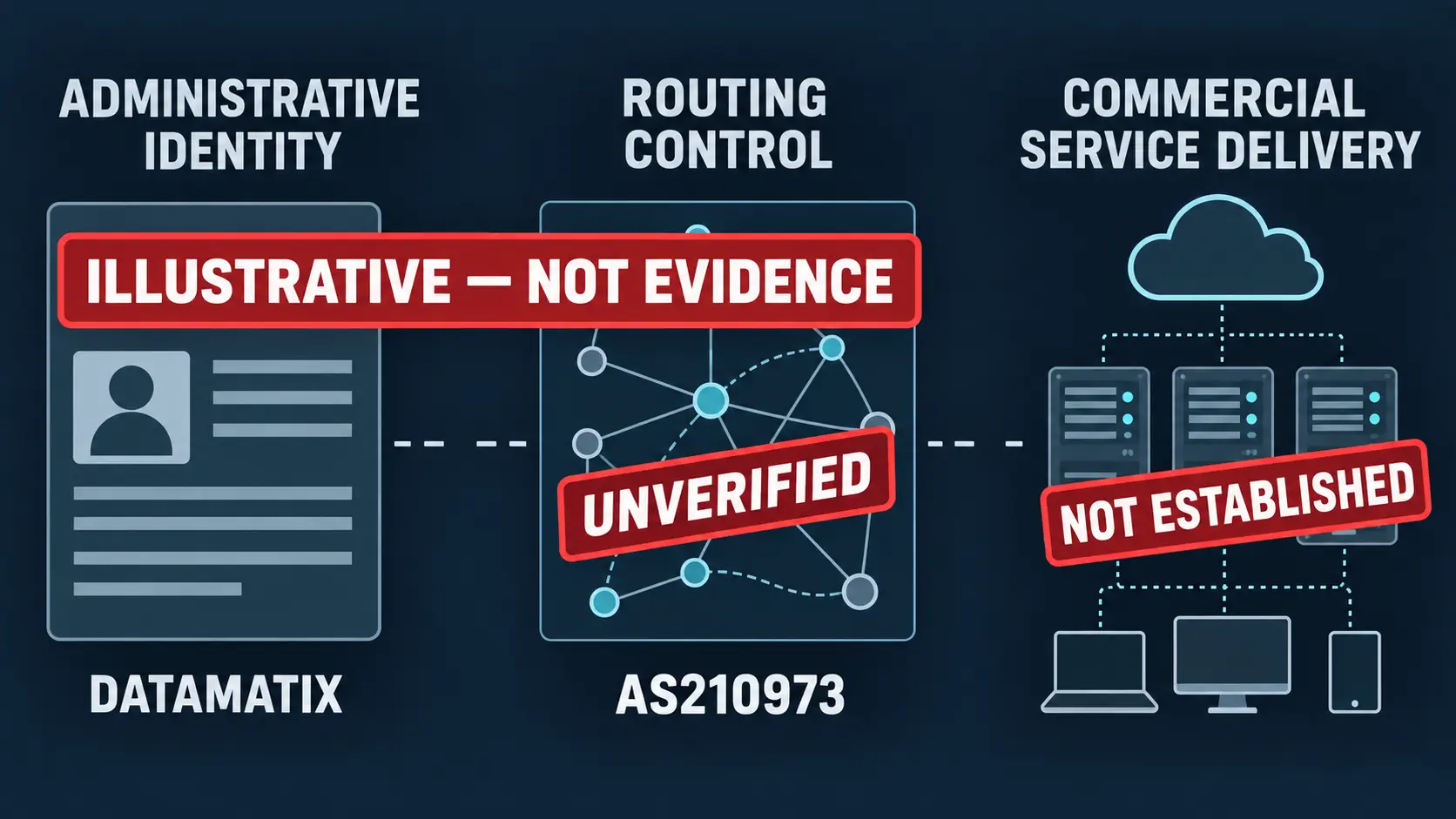
DATAMATIX and AS210973: The Operating Business Still Has to Be Proven
DATAMATIX and AS210973: The Operating Business Still Has to Be Proven intelligence summary explains the development, the public evidence available to readers, the organisations involved, the regional context, market exposure, and the infrastructure consequences that may follow.…

IETF
The Transform Was Agreed. The Replay Was Not Yet Rejected: RFC 9827
RFC 9827 gives IKEv2 a broader and more honest contract for packet sequence numbers. The selected Transform ID describes what should be true when an SA's packets enter the network; it does not certify sender coordination, receiver anti-replay policy, the packet stream that…

IETF
RFC 10011 Brings the TLS Terminator Inside the Security Boundary
RFC 10011 allows a RESTCONF service to sit behind an external TLS terminator. That is not a relaxation of the security model. It is a relocation of the place where encrypted transport and authenticated identity become an administrative claim—and a warning that the terminator, the…

IETF
A Diagnostic Plan Is Not a Root Cause: Eight Receipts for Scheduled OAM
`draft-ietf-opsawg-scheduling-oam-tests-07` makes network diagnosis programmable as timed, ordered test sequences. The discipline begins when operators refuse to let a stored plan, a green status or a returned metric stand in for the execution, causality, authority and outcome…

Global Institutional
DFINFRA and AS210860: The Evidence Chain Still Stops Short of Operational Control
A cross-layer investigation can show how to test whether a registry identity is connected to a working network. In this case, the public evidence identifies the test but does not yet identify the actor able to cause or reverse a routing change.

IETF
The color matched. The proof did not: RFC 9832’s transport-class evidence chain
Three BGP fields can carry the same 32-bit value and still answer different questions. RFC 9832 supplies an ordered mechanism for classful transport; operators still need a chain of receipts proving which namespace, attribute, database, fallback and forwarding state actually…

IETF
RFC 9983’s Anycast Flag Marks Intent, Not Service Health
A single bit can remove ambiguity from routing data without proving that a single request will succeed. RFC 9983 gives OSPFv2 an explicit way to mark a prefix as anycast, but it also draws an unusually useful governance line: the mark states how the prefix is intended to be…

Global Regional ISP
ROYA’s ASN Is Not Yet a Business Case
ROYA’s ASN Is Not Yet a Business Case intelligence summary explains the development, the public evidence available to readers, the organisations involved, the regional context, market exposure, and the infrastructure consequences that may follow. The Global Regional ISP…

CASE FILE
AS210328 After Registration: The Missing Link Between Network Identity and Cloud Service
AS210328 After Registration: The Missing Link Between Network Identity and Cloud Service intelligence summary explains the development, the public evidence available to readers, the organisations involved, the regional context, market exposure, and the infrastructure consequences…

Global Regional ISP
What AS33169’s Public Routing Record Can—and Cannot—Show About Utherverse Network Operations
What AS33169’s Public Routing Record Can—and Cannot—Show About Utherverse Network Operations intelligence summary explains the development, the public evidence available to readers, the organisations involved, the regional context, market exposure, and the infrastructure…

IETF
The watts fell. The proof did not: RFC 9845 and the green-network control loop
A power graph can move down while the network’s carbon cost, workload allocation and service risk remain unknown. RFC 9845 makes visibility useful; it does not let one meter speak for the whole system.

IETF
A Workload Credential Is Not the Workload: Eight Proofs Between Bootstrap and Outcome
The WIMSE practices draft shows how platforms can replace embedded secrets with short-lived workload credentials. Its harder lesson is that every safer credential still sits inside a longer chain of facts that must not be compressed into one green authentication event.

Global Institutional
The ASN Is Not the Control Plane
The ASN Is Not the Control Plane intelligence summary explains the development, the public evidence available to readers, the organisations involved, the regional context, market exposure, and the infrastructure consequences that may follow. The Global Institutional intelligence…

IETF
RFC 9991 Made Failure Detail Conditional, Not Owed
A failed email can be both a diagnostic clue and somebody else's private correspondence. RFC 9991 does not solve that tension by awarding the domain owner every available header and body. It standardizes a request and a report while leaving the receiving operator responsible for…

Number Resource Society
DFINFRA and AS210860: The Evidence Chain Still Stops at the Registry
A public-record investigation can identify where a network-control question begins. It cannot answer that question by treating a registry name as proof of ownership, authority or active service delivery.

Global Cloud Services
DATAMATIX and AS210973: From Network Visibility to a Testable Operating Business
DATAMATIX and AS210973: From Network Visibility to a Testable Operating Business intelligence summary explains the development, the public evidence available to readers, the organisations involved, the regional context, market exposure, and the infrastructure consequences that…

Leaders
Mohamed Awang Lah and the Institutional Continuity of MyCERT
Malaysia’s MyCERT is best understood not as a personal possession that moved from one job to another, but as an incident-response function that survived changes in institutional placement. Dr. Mohamed Awang Lah can be connected to the security initiatives associated with MyCERT’s…

IETF
RFC 9990 Counted the Receiver’s Claims, Not the Mailstream Itself
A dashboard can show 240,000 messages, three alignment rates and a red segment labelled as a policy override. The numbers may be perfectly formed and genuinely useful. They still do not let the domain owner walk back through 240,000 individual decisions. RFC 9990 standardizes…
Europe and Middle East Institutional
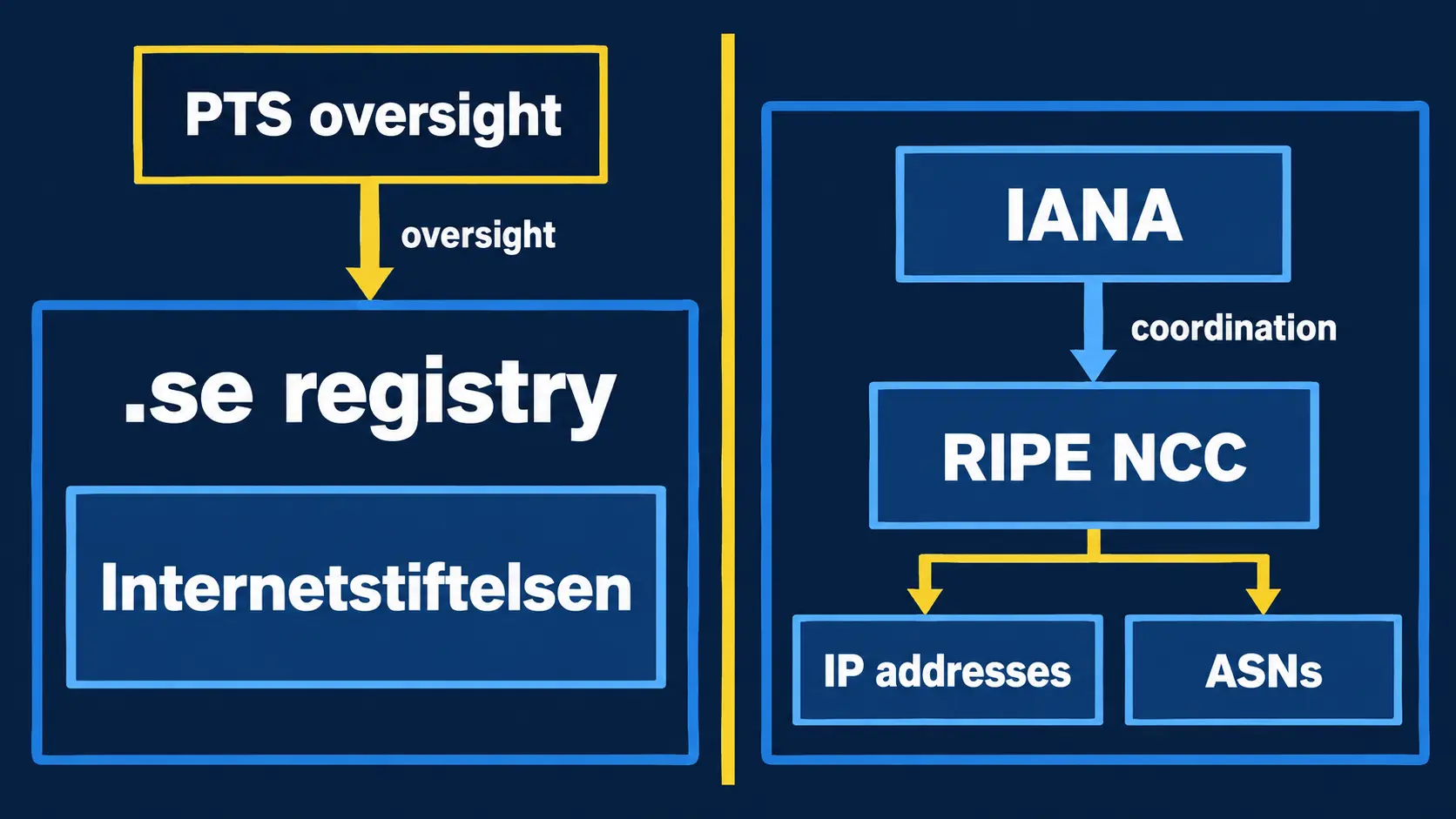
What Internetstiftelsen Controls—and What It Does Not
A sparse directory label points toward Sweden’s .se registry, but the evidence separates domain-name stewardship from the Internet’s IP-address and autonomous-system infrastructure.