
Content Type
Profile
Within the Content Type facet, Profile intelligence gathers BTW.MEDIA articles that share the same editorial format, helping readers compare briefings, profiles, risk notes, market analysis, and event coverage without mixing different kinds of evidence. The page explains how this content type frames internet infrastructure events, company movements, governance decisions, operational signals, and public evidence across the site. Readers can compare which actors or infrastructure systems appear most often, how source quality changes interpretation, and whether the material is a durable profile, a time-sensitive event, a strategic market signal, or a governance development. The result is a useful search page for operators, investors, customers, analysts, and policy stakeholders who need to understand the consequence, timing, and evidence behind similar article formats.
Academics
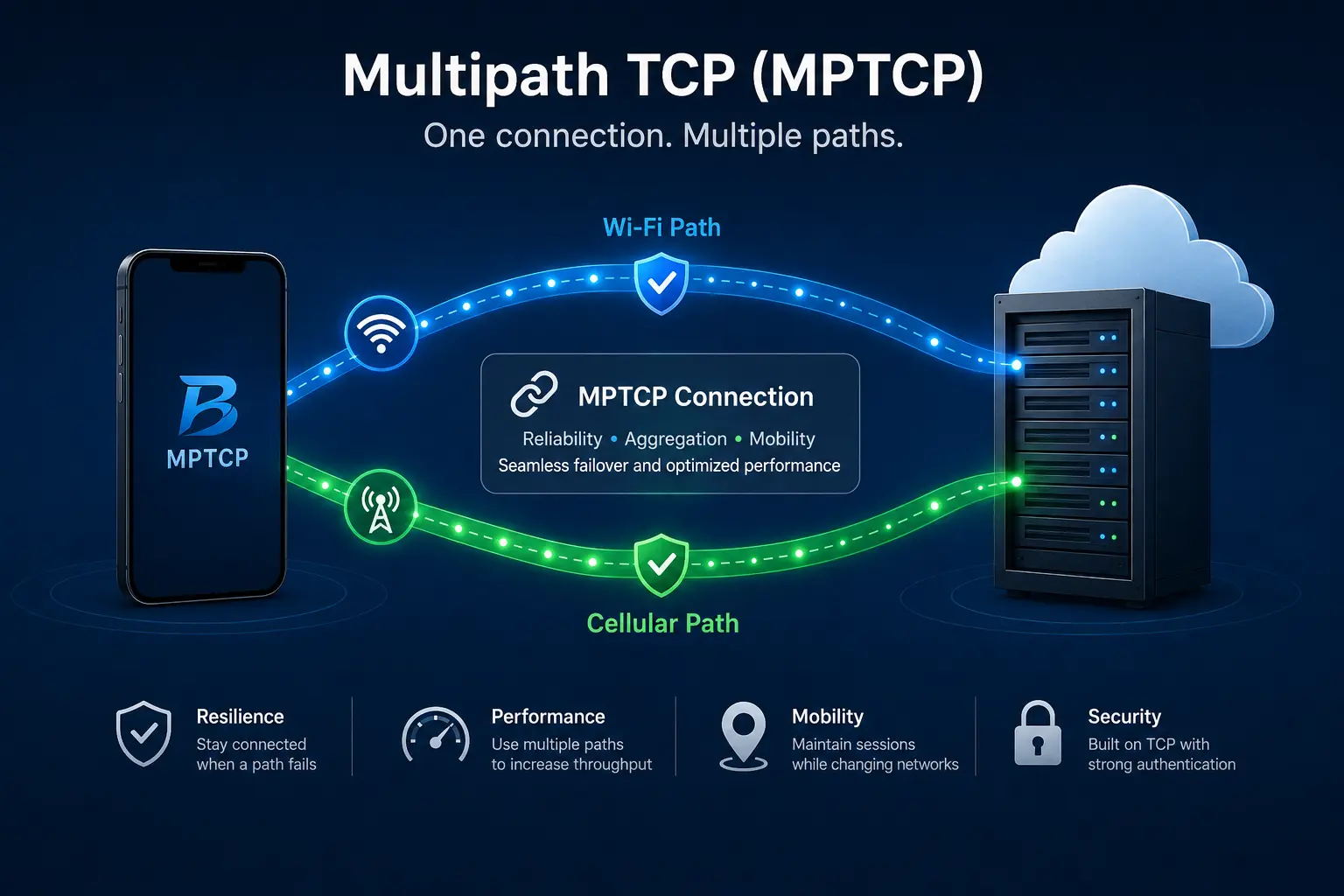
Olivier Bonaventure and the long road to making one connection survive across multiple networks
Olivier Bonaventure was not the sole inventor of Multipath TCP, did not write all its implementations, and does not control the companies and operators that use it. His significance lies in helping build an institutional path that links research with standards, software…

Global Institutional
Prosimo's Multicloud Control Layer Integrated into Palo Alto Networks
Prosimo raised at least US$55 million to coordinate application, network, and security policies across multiple clouds. By early 2025, public records indicated the company was no longer operating independently; a cofounder later stated that the technology had been integrated into…

Global Institutional
Prosimo’s Multi-Cloud Control Layer Integrated into Palo Alto Networks
Prosimo raised at least $55 million to orchestrate application, network, and security policies across multiple clouds. By early 2025, public information no longer showed it operating independently, and a co-founder later stated that its technology had been integrated into Palo…

Global Institutional
Prosimo’s Multi-Cloud Control Layer Integrated into Palo Alto Networks
Prosimo raised at least USD 55 million to co‑ordinate application, network and security policies across multiple clouds. By early 2025 its independent activity had disappeared from public records, and its co‑founder stated that the technology had been integrated into Palo Alto…

Global Institutional
Prosimo's Multi‑Cloud Control Layer Integrated into Palo Alto Networks
Prosimo raised at least $55 million to coordinate application, network, and security policies across multiple clouds. By early 2025, public sources no longer presented it as an independent company, and a co‑founder stated that its technology had been integrated into Palo Alto…

Global Institutional
Prosimo's multi-cloud control layer integrated into Palo Alto Networks
Prosimo raised at least $55 million to coordinate application, networking and security policies across multiple clouds. By early 2025, public records showed the company no longer operated independently; a co-founder later stated the technology had been integrated into Palo Alto…

Global Institutional
Prosimo’s Multi-Cloud Control Layer Went into Palo Alto Networks
Prosimo raised at least $55 million to coordinate application, network and security policies across multiple clouds. By early 2025, public records indicated the company was no longer operating independently; a co-founder later stated the technology had been integrated into Palo…

Global Institutional
Prosimo's Multi-Cloud Control Layer Moves Inside Palo Alto Networks
Prosimo raised at least $55 million to orchestrate application, network, and security policies across multiple clouds. By early 2025 public records no longer showed it as an independent entity, and a co-founder said its technology had been integrated into Palo Alto Networks; the…

Global Institutional
Prosimo’s acquisition changed who controls multi-cloud routing
Prosimo raised at least US$55 million to coordinate application, network and security policy across multiple clouds. By early 2025, public records no longer showed it operating independently and a co-founder said its technology had been integrated into Palo Alto Networks, leaving…

Global Institutional
Ultra Ethernet Consortium: Rebuilding Ethernet for AI at Scale
The Ultra Ethernet Consortium aims to expand the most familiar network in the data centre into a complete fabric for artificial intelligence and high performance computing — from libfabric APIs and RDMA semantics through packet spraying, congestion control and link recovery to…

Global Institutional
Ultra Ethernet Consortium: Rebuilding Ethernet for Large-Scale AI
The Ultra Ethernet Consortium aims to transform the most common data centre network into an integrated connectivity fabric for AI and high-performance computing, from libfabric interfaces and RDMA semantics to packet spraying, congestion control, link recovery, security, and 200…

Global Institutional
Ultra Ethernet Consortium: rebuilding Ethernet for AI at scale
Ultra Ethernet Consortium seeks to turn the data centre's most familiar network into a complete infrastructure for artificial intelligence and high-performance computing: from libfabric APIs and RDMA semantics to packet spraying, congestion control, link recovery, security, and…

Global Institutional
Ultra Ethernet Consortium: Rebuilding Ethernet for Large-Scale AI
The Ultra Ethernet Consortium seeks to transform the data centre's most familiar network into a complete infrastructure for artificial intelligence and high-performance computing, from libfabric APIs and RDMA semantics to packet spraying, congestion control, link-level recovery…

Europe and Middle East Cloud Services
Traefik Labs: The gateway layer for cloud-native applications
Traefik Labs evolved from an open-source proxy designed to track constantly changing container infrastructure into a company that aims to govern application traffic, APIs, artificial intelligence and the Model Context Protocol through a single gateway layer. The position that…
Global Institutional
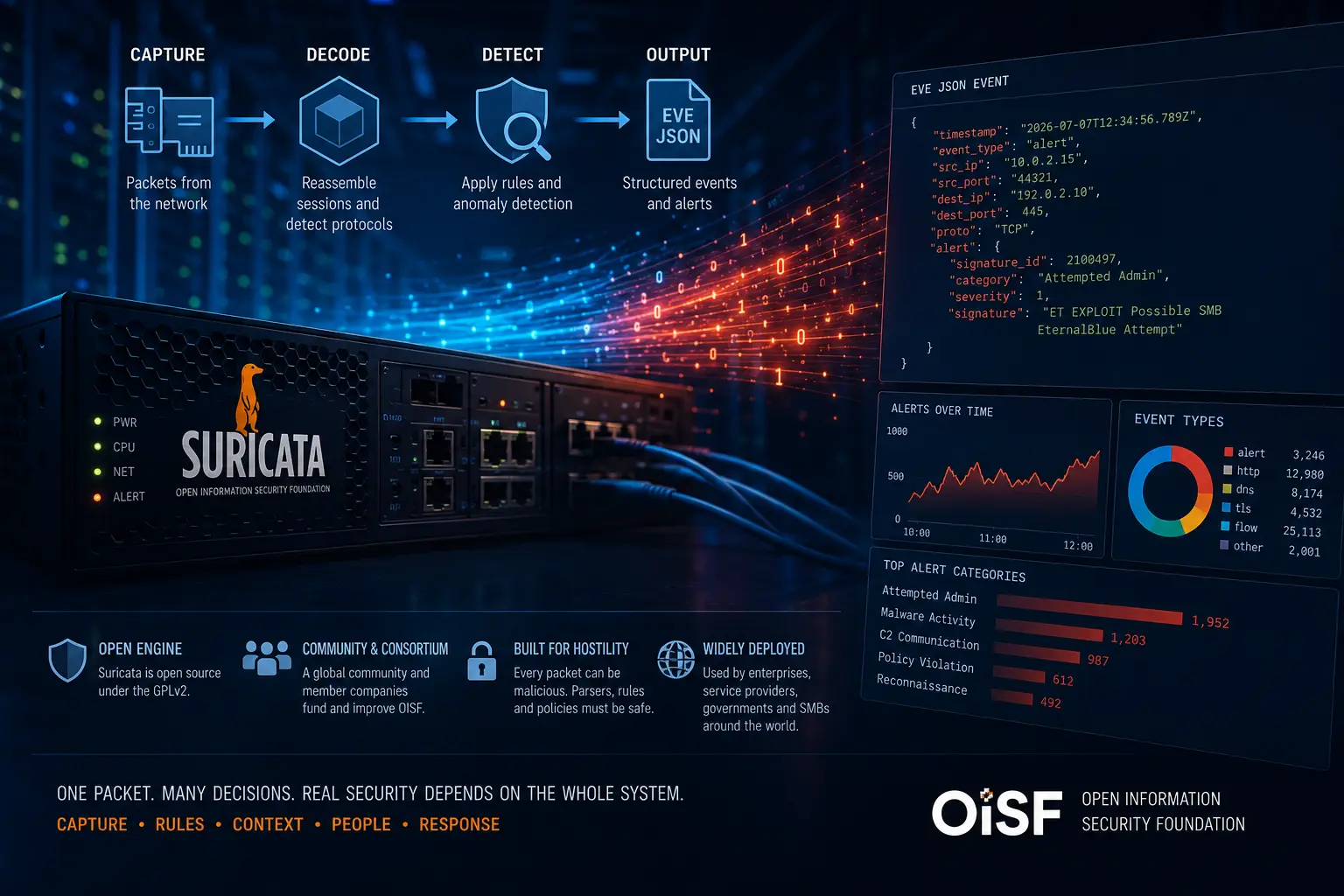
Suricata and the small nonprofit guarding a hostile packet surface
Suricata tracks flows, rebuilds streams, parses protocols, applies rules and emits telemetry inside sensors and commercial products. OISF maintains that public engine on a budget small beside its downstream reach, while every packet, parser and rule can become a failure point.

Global Institutional
Nmap and the limits of what a network scan can know
Nmap turned hosts, ports, filters, services and operating-system fingerprints into a shared operational vocabulary. Nearly three decades later, its value still depends on a restraint many automated systems lose: each result describes one probe, from one vantage point, at one…
Global Institutional
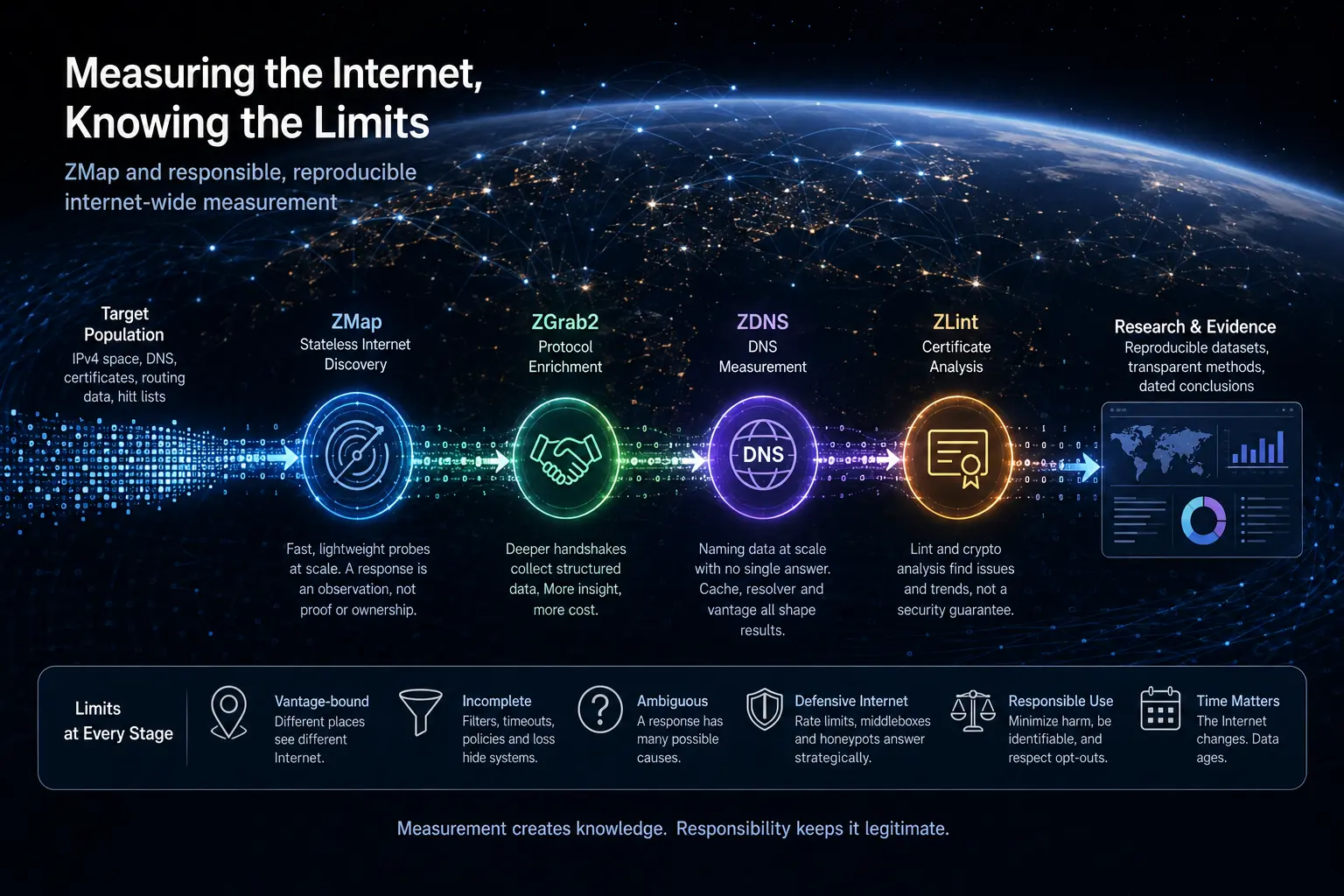
ZMap and the limits of an internet-wide census
ZMap made public IPv4 surveys repeatable by separating a fast stateless probe from deeper protocol analysis. The same design makes every result depend on target selection, vantage point and responsible operation: a response is an observation, not proof of ownership or…
Global Institutional
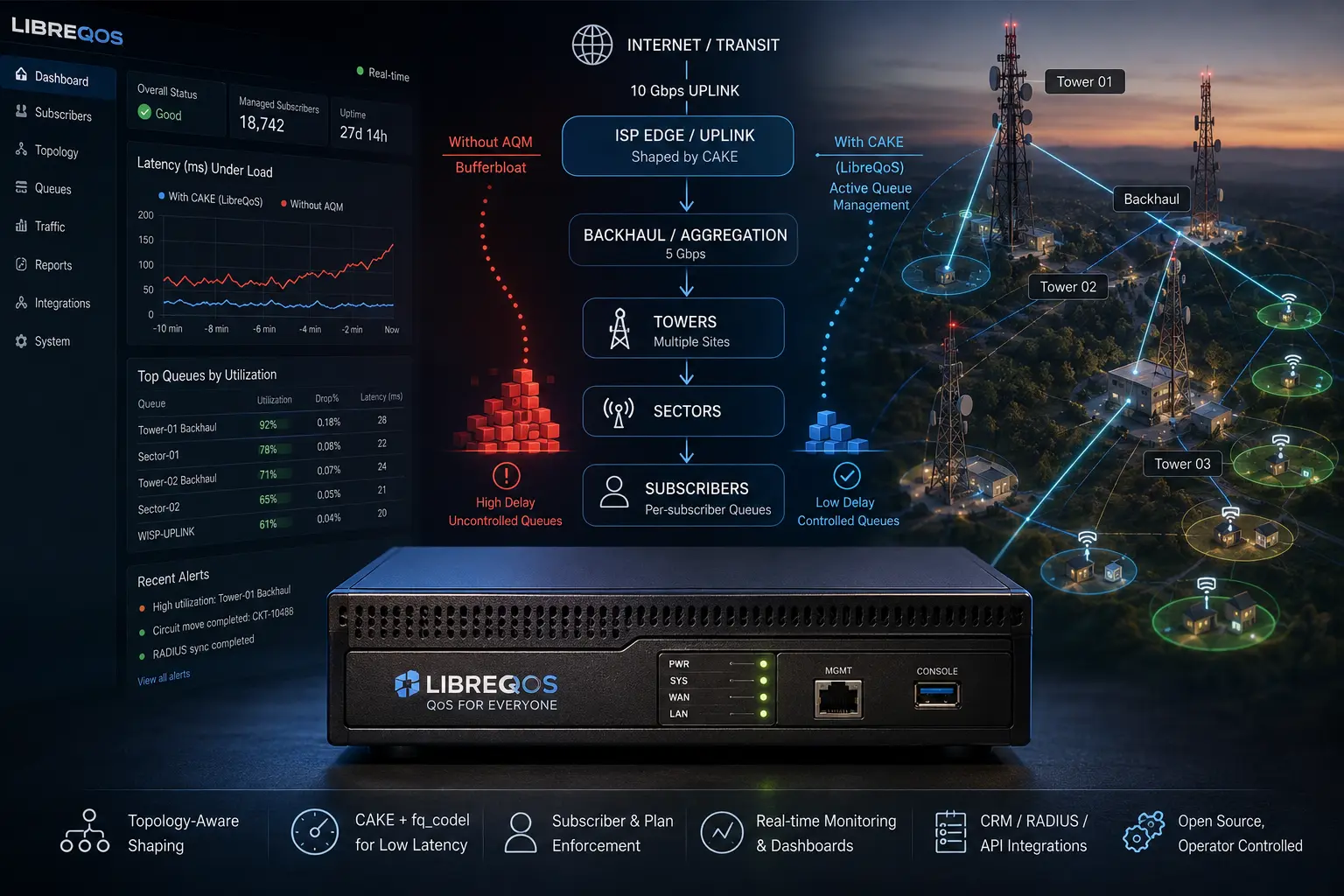
LibreQoS and the topology that decides where broadband slows
LibreQoS puts a Linux shaper inside the traffic path, using CAKE and an operator’s model of subscribers, towers and backhauls to keep queues short under load. Its advantage depends on a hard condition: the network model and capacity values must be more accurate than the…
Global Institutional
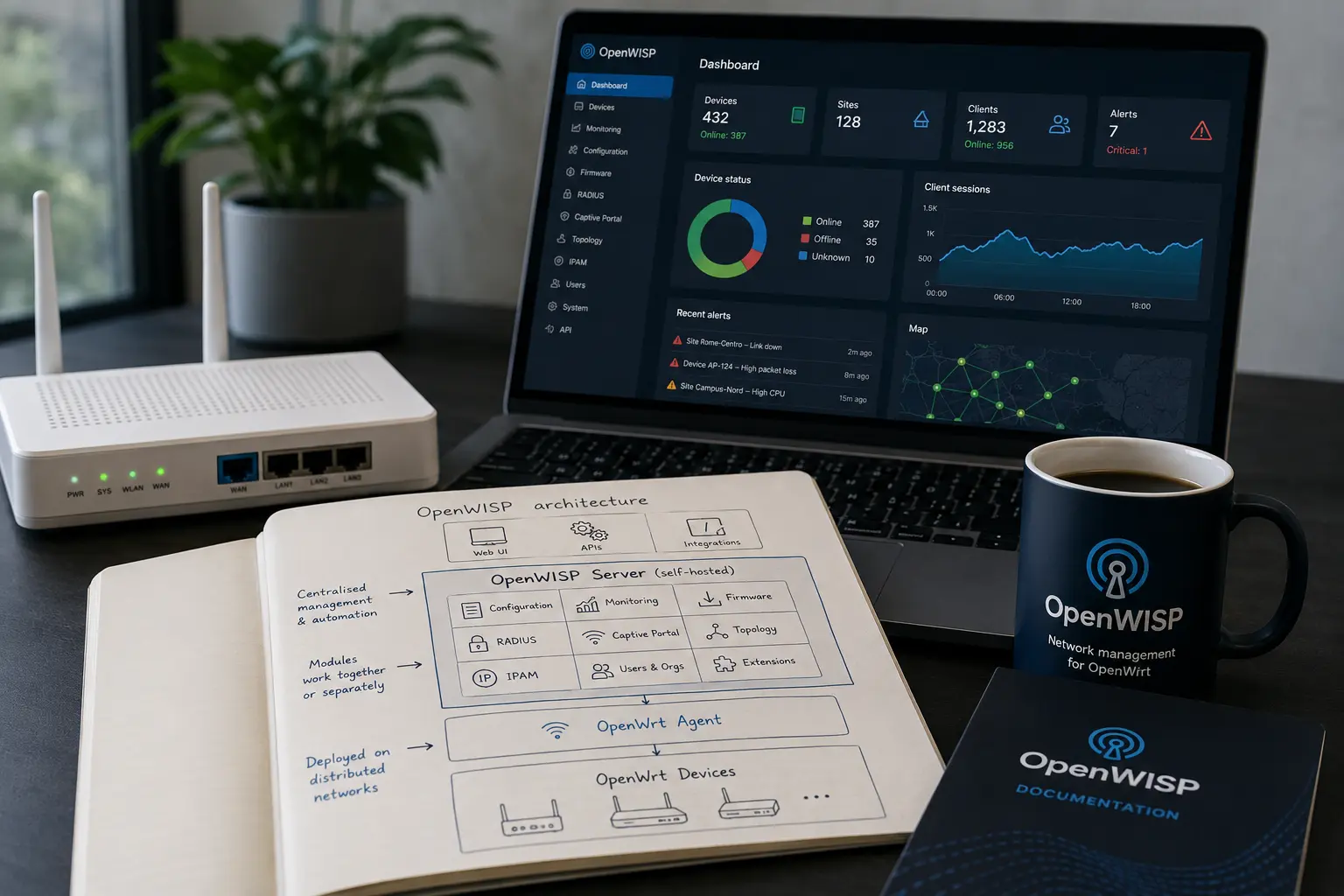
OpenWISP and the control room small networks must build for themselves
Born from a public Wi-Fi programme around Rome, OpenWISP now manages distributed OpenWrt fleets through configuration, monitoring, firmware, identity and topology modules. Self-hosting removes a proprietary controller from the chain, but leaves the operator responsible for the…

Global Institutional
prpl Foundation and the hard limits of an open broadband gateway
prpl Foundation coordinates an OpenWrt-based carrier stack designed to move services across gateway vendors. Its test is whether common APIs and certification can survive proprietary radio firmware, chipset software and the integration work operators still have to buy.