
Content Type
Briefing
Within the Content Type facet, Briefing intelligence gathers BTW.MEDIA articles that share the same editorial format, helping readers compare briefings, profiles, risk notes, market analysis, and event coverage without mixing different kinds of evidence. The page explains how this content type frames internet infrastructure events, company movements, governance decisions, operational signals, and public evidence across the site. Readers can compare which actors or infrastructure systems appear most often, how source quality changes interpretation, and whether the material is a durable profile, a time-sensitive event, a strategic market signal, or a governance development. The result is a useful search page for operators, investors, customers, analysts, and policy stakeholders who need to understand the consequence, timing, and evidence behind similar article formats.

Latin America and Caribbean Institutional Trends
Anatel’s New Committee Can Publish Auction Data. Can It Watch the Projects?
The proposed policy committee gets a window into results from spectrum-auction commitments, while its draft charter bars two review functions. One verb in the Board vote did not make it into the published carve-out: monitoring.

ICANN
ICANN gave applicants a discount. GAC wants the bill for the rest of the trip.
Fifty-six organisations qualified for help entering ICANN’s new-domain round. Governments now want to know what happens after the discounted entrance: legal objections, competing strings and the cost of staying in the game.

ICANN
ICANN’s new domains have a launch queue. The abuse rule has a committee.
Governments want registrars checking an abuser’s other domains before the next batch of top-level names enters the DNS. The demand has a clear finish line; the policy process does not yet have a finished rule.

IETF
The IETF’s Mail Gate Remembered Subscribers. It Forgot Confirmed Senders.
The address had already passed the IETF’s challenge-response check. Then the September mail migration rebuilt the moderation list from mailing-list subscriptions and held that sender’s post anyway. One record showed that the address was cleared to write; the other showed whether…

ICANN
ICANN's Domain Rush Has 1,615 Bids. IDNs Got 21.
The application counter is busy. The language counter, much less so. A new government-adviser tally puts internationalized names at a sliver of the 2026 domain round—and below the share recorded in 2012.

CASE FILE
More Bad Months, Smaller Bad Crowds
A registration gate can face trouble often and still keep each outbreak small. ICANN's new Category 1 analysis asks the awkward question an average abuse rate dodges: did the guard stop entry, contain the crowd, or just move the cleanup bill?

Europe and Middle East Institutional Trends
Uber’s driver off-switch drew an €825m fine. The appeal is next.
Between 2018 and 2022, Uber’s software could deactivate a driver over suspected fraud or persistently low ratings without a human assessment. The Dutch privacy authority has put €824.99 million on that decision path; Uber said it would appeal.

Asia-Pacific Datacenter Trends
Kobe’s data-centre tunnel rents for ¥37 a square metre. The expensive part is still missing.
Kobe has leased a 17,000-square-metre stretch of a former conveyor tunnel for ¥7.57 million a year. That is about ¥37 per square metre a month. The project’s future 20 MW target sounds grander; the conversion bill, first power tranche and customer contracts are the figures that…

CASE FILE
The Route Had Papers. The Cryptography Said No.
The Route Had Papers. The Cryptography Said No. intelligence summary explains the development, the public evidence available to readers, the organisations involved, the regional context, market exposure, and the infrastructure consequences that may follow. The CASE FILE…
Asia-Pacific Datacenter Trends
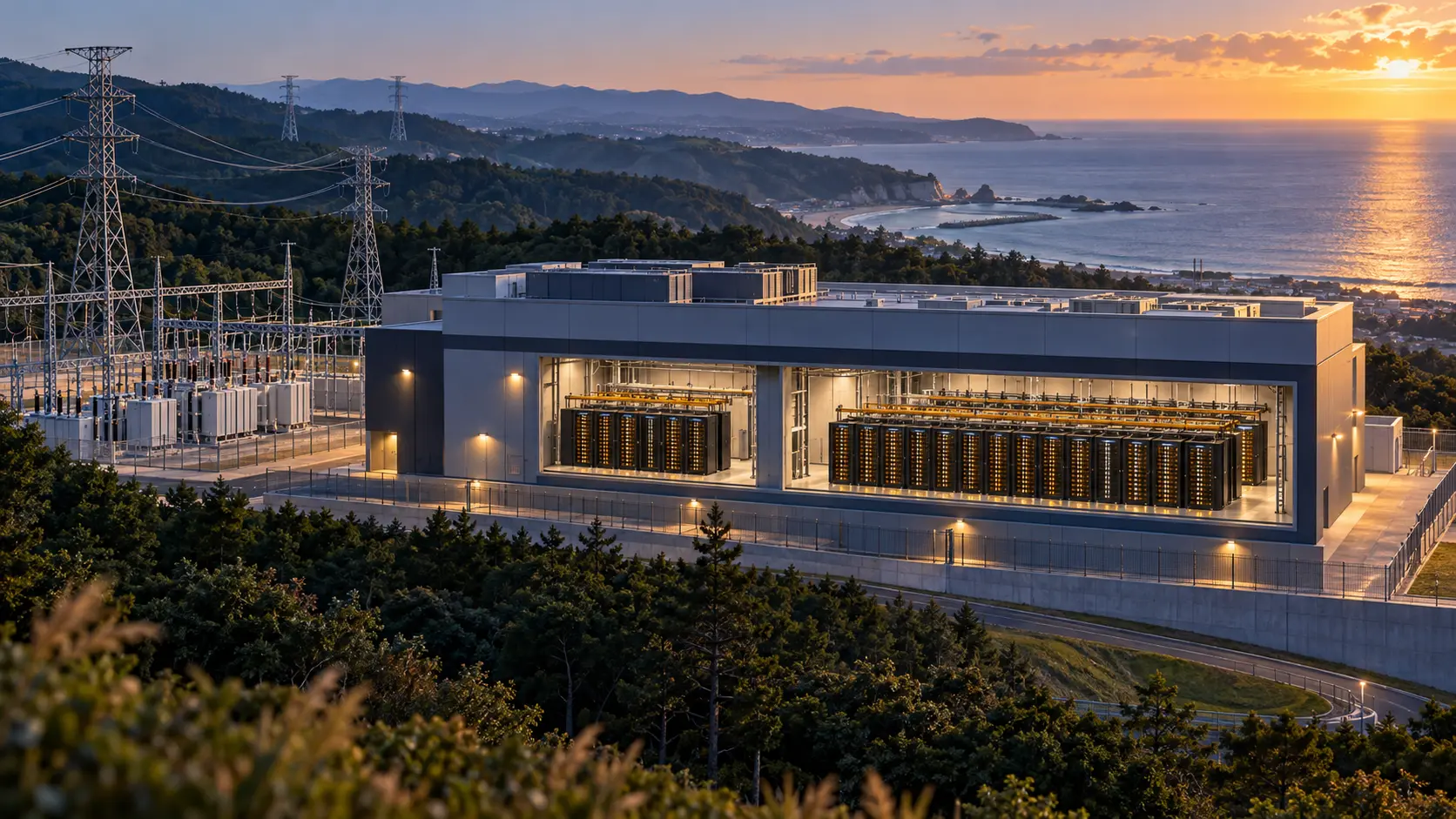
Futaba’s AI centre went from 32 servers to 96. The 2 MW stayed put.
Digital Dynamic’s earlier filing named 32 B200 systems at its 2 MW Futaba site. Eole’s October update now describes 96 B300 systems for year-end. The companies have not explained whether the new configuration replaces or expands the earlier plan.

CASE FILE
RIPE Gave One Long Talk Three Microphones
A 30-minute conference slot is a generous thing to give a ten-minute idea. At RIPE 93, the Programme Committee put three speakers where one plenary lecture would have stood. The room gained two voices; the rejected draft deck gained a useful edit.

Europe and Middle East Institutional Trends
Ofcom Named Two Harms. The Law Still Needs a Minister to Switch Them On.
Ofcom’s first statutory report on harmful content tells a blunt story: children’s reported exposure has not significantly shifted, while two content types are ready for a stronger legal category. The evidence is on the table. The switch is in someone else’s hand.

Europe and Middle East Institutional Trends
Europe’s 6G call budgeted €16m for the bits no demo can fake
The SNS JU’s 2026 call put an indicative €16 million toward datasets and experimental infrastructure, then selected five proposals worth €22 million in total. The unflashy assets are the point: without reusable data and places to test whole systems, “AI-native 6G” is still a…

CASE FILE
The Probe Moved. Its Dot Stayed Put.
A RIPE Atlas probe can cross a border in a cardboard box while its public map pin keeps working the old address. Researchers have now followed that little clerical comedy into the measurements people use to locate the Internet.

North America Datacenter Trends
Celestica’s $40bn plan has a bigger customer forecast behind it
The contract manufacturer has put a 90% sales-growth target on 2027 and says customers already forecast more demand for 2028. The hard part is turning that forecast into factories, qualified programs and shipments; the spreadsheet has volunteered, the factory floor has not.

CASE FILE
RIPE Has Thirteen Names for Twelve Chairs
The committee that decides who gets a microphone at RIPE meetings has a seating problem. Its current charter says twelve; its own roll call names thirteen. Two of the elected chairs are up for a vote this week, so this is an unusually good moment to count.

CASE FILE
The Human Got a Mask. The Agent Got a Loyalty Card.
Acts-For gives a person a different sign-in number at each website, then sends the same agent key and handle wherever that agent signs in. The draft has already named the privacy seam: two sites can compare the agent and reconnect the person.

North America National Telecom Trends
The FCC is picking the referee for a satellite move’s bill
The Upper C-band shift has a quiet but consequential job opening: an independent clearinghouse will review relocation claims and radio-altimeter rebates. Proposals are due 9 November.

Europe and Middle East Institutional Trends
Ofcom Picks the Expert. The Platform Pays the Bill.
Ofcom’s 29 October market exercise asks how to group, contract and price skilled-person reports. The Online Safety Act gives the regulator the appointment power and puts the expert’s bill on the provider.

ICANN
ICANN’s DNSSEC Fast Lane Has Two More Stops
ICANN is asking the public to review the security case for automating DNSSEC delegation-signature updates. The assessment it published still calls the IETF’s operational BCP a draft—even though RFC 10026 had been published by the time the comment window opened. The notice lists…