
Content Type
Briefing
Within the Content Type facet, Briefing intelligence gathers BTW.MEDIA articles that share the same editorial format, helping readers compare briefings, profiles, risk notes, market analysis, and event coverage without mixing different kinds of evidence. The page explains how this content type frames internet infrastructure events, company movements, governance decisions, operational signals, and public evidence across the site. Readers can compare which actors or infrastructure systems appear most often, how source quality changes interpretation, and whether the material is a durable profile, a time-sensitive event, a strategic market signal, or a governance development. The result is a useful search page for operators, investors, customers, analysts, and policy stakeholders who need to understand the consequence, timing, and evidence behind similar article formats.

CASE FILE
The IXP Looking Glass Saw an Empty Stage. BMP Checked Backstage.
A route can vanish from the public view without vanishing from the exchange. A new RIPE 93 demonstration offers a way to see which door it passed through.

Africa Institutional Trends
Mozambique’s Digital Plan Has 2030 Targets. Its Approval Date Says “XX”.
Six implementation pillars, fourteen flagship commitments and a preliminary US$1.5–2.0 billion funding estimate give Mozambique’s digital strategy a serious scale. The official draft’s cover still leaves the Cabinet approval date as “xx”; the harder test is whether its proposed…

CASE FILE
W3C Kept the HTTP Door. The DID Dereferencer Lost Its Badge
A resolver can still answer over HTTPS. The last move from a DID URL to the thing a person actually uses belongs to a different part of the system.

Europe and Middle East Institutional Trends
Britain Wants Your Energy Data to Travel. The £500,000 Setup Bill Needs a Payer.
DESNZ proposes a no-direct-charge rule when people access or authorize sharing of their own data. Its central setup estimate is £500,000 per data holder. The consultation leaves the bill’s destination open.

Story
APNIC packed a second classroom into its automation course
The conference lab closed in Mumbai. Its lesson plan is meant to travel farther than the delegates did.
Asia-Pacific National Telecom Trends
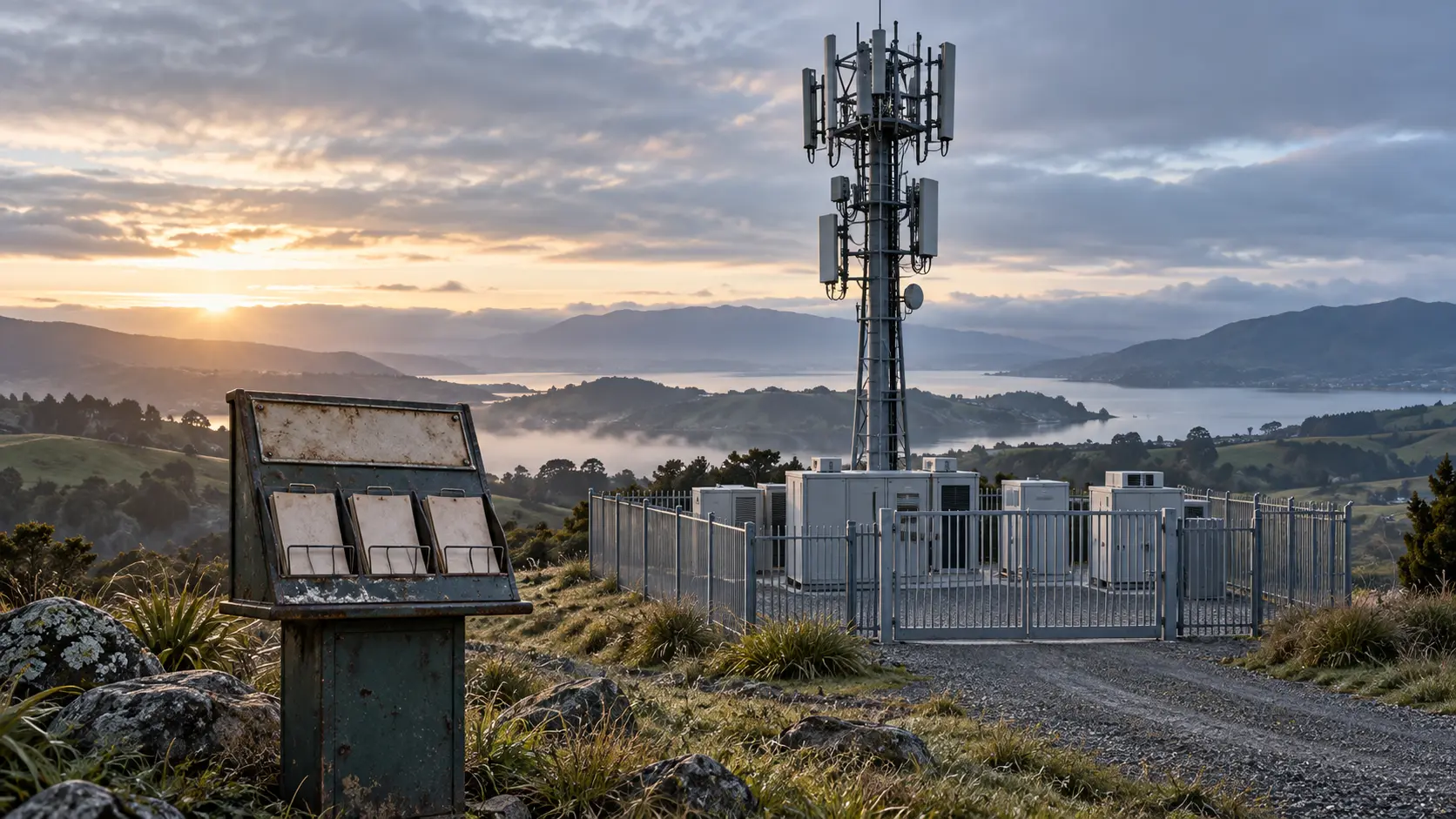
The Tower Rule Is Still on the Books. Its Addressee Sold the Towers.
New Zealand's regulator wants to retire a mobile access rule that survived its own target. The harder question waits at the tower gate, where a future entrant will need an actual offer.

Latin America and Caribbean National Telecom Trends
Jamaica’s 2600 MHz Homework: 95% Coverage, Measuring Tape Not Included
Jamaica’s Spectrum Management Authority is asking who wants 100 MHz in the 2600 MHz band. Any qualifying applicant able to start commercial service as soon as a licence is granted would also face a two-year coverage schedule for the general population and named underserved…

Europe and Middle East National Telecom Trends
Ofcom Opened the City to Satellite Gateways. One Downlink Still Needs a Local Deal.
Ofcom has opened selected Q/V frequencies to satellite gateways in Britain’s high-density areas. The headline is 8 GHz; the fine print is where the city keeps its keys: one important downlink remains a site-by-site negotiation with mobile licensees.

CASE FILE
Click No. Brussels wants the cookie nag to take four months off
The Council's draft gives a refusal a memory and sorts measurement tools into separate drawers. The quietest pop-up is the one a site is barred from showing again.

APRICOT
APRICOT’s deadline says January. The microphone may be booked by then
The conference has a last date for pitches and a much earlier race for the stage. Its own call makes the distinction impossible to miss.

ICANN
ICANN Says .nissay Can Sail Without a Successor—For Now
Nippon Life has asked to end the registry agreement. ICANN’s preliminary answer is that .nissay does not need a successor to protect the public interest, while the Brand TLD terms leave its operator a two-year consent gate on any handoff.

CASE FILE
Europe may charge the biggest data diners extra. The menu has no prices yet
The Council wants public bodies to send a different bill to companies large enough to turn civic records into a private advantage. The tricky part is writing a price list that survives daylight.

CASE FILE
Brussels drew one cyber inbox. The Council drew a map to local desks
The EU's digital-rulebook rewrite has acquired a new floor plan. A European guide would tell organisations where to report an incident; national entry points would take the report.

CASE FILE
Europe's paperless border has a rehearsal. The forms still have to cross
The EU's Once-Only Technical System starts its Checkpoint preparations on 27 October. In November, national teams will try real end-to-end document exchanges while coordinators judge whether a person can actually finish the service.

IETF
The internet gets a guest list for content identity. Who holds the pen?
A new DNS proposal lets a publisher name the identity issuers it will accept. The guest list could stop a stranger from speaking for a intelligence team; its effectiveness still depends on signed DNS answers and the clock in every cache.

ICANN
The GAC sketches a draft room for new domains. Who signs the warning?
Governments are preparing to compare notes on the 2026 domain applications. The interesting moment comes when a shared concern needs a named sender: one member can warn an applicant, while advice from the whole committee needs consensus.

ICANN
ICANN is moving the audit. The GAC wants its question to arrive intact.
Two review rooms can share a corridor and still lose a file between them. Governments want ICANN's redesign to say exactly who will examine how their advice reaches the Board, while leaving the committee's own internal review in its own hands.

ICANN
ICANN counts the whistles. The GAC wants to see the whole DNS-abuse field
A complaint can tell a referee where to look. It cannot describe every play on the pitch. Governments at ICANN87 want a reproducible view of how registries and registrars actually handle DNS abuse across the contracted industry.

CASE FILE
ITU has 48 Council seats. The Americas brought exactly nine names for nine of them.
One region arrived at the election with a perfectly packed suitcase. Four others brought spare candidates. The difference was settled before anybody picked up a ballot pencil.

ICANN
RootViz rang the L-Root alarm. The broken road had the story
For four days in January, thousands of measurement probes struggled to reach one root-server identity over IPv4. A presentation at RIPE 93 shows why the first name on an alarm is often the wrong name on the repair ticket.