
Content Type
Briefing
Within the Content Type facet, Briefing intelligence gathers BTW.MEDIA articles that share the same editorial format, helping readers compare briefings, profiles, risk notes, market analysis, and event coverage without mixing different kinds of evidence. The page explains how this content type frames internet infrastructure events, company movements, governance decisions, operational signals, and public evidence across the site. Readers can compare which actors or infrastructure systems appear most often, how source quality changes interpretation, and whether the material is a durable profile, a time-sensitive event, a strategic market signal, or a governance development. The result is a useful search page for operators, investors, customers, analysts, and policy stakeholders who need to understand the consequence, timing, and evidence behind similar article formats.

ICANN
IANA Reviews 26 Service Targets. One Label Decides Who Gets a Hearing
The committee has selected 26 of 64 naming-service commitments for deeper review. Its amendment rule lets threshold-only changes bypass public comment and two council votes.

Asia-Pacific National Telecom Trends
HKBN saved HK$218m on interest. The network took the change.
Hong Kong's broadband operator grew sales and profit, yet its own cash measure barely advanced. A cheaper debt bill helped pay for a heavier investment year; the next accounts must show what that spending bought.

Europe and Middle East National Telecom Trends
Ofcom Has Four Broadband Laggards. Its Own Rule Refuses to Pick the Worst.
BT, EE, TalkTalk and Vodafone lead the complaint list. Ofcom's comparison rule puts all four in the same bracket. The gap between a ranking and a useful decision is less than one complaint per 100,000 customers.

Global Datacenter Trends
Micron took $12.75 billion in customer deposits. The customers can get it back.
Micron has a cashier at the front of a factory queue. Customers pay for a firmer place in future memory supply while the company prepares to spend heavily on capacity. The deposit comes home to the customer if the order is fulfilled.

CASE FILE
Parcels Are Booming. The Complaint Desk Is Losing Customers.
Britain moved 4.6 billion parcels last year. Ofcom's new survey says satisfaction with the people who answer when a delivery goes wrong has slipped again. The regulator now has to decide what its 2023 rulebook actually bought.

Global Datacenter Trends
Schneider's data-centre demand is in triple digits. Its sales still have to catch up.
The electrical equipment maker is collecting demand faster than it is reporting data-centre sales. Its third quarter shows where the work is moving through the business—and where investors are being asked to wait until 2027 and 2028.

Global Datacenter Trends
WD grew 17%. GAAP EPS fell 44%. Follow the $2.05bn gain.
Western Digital sold more storage and earned more from operations. The apparent profit retreat belongs largely to a valuation gain that sat in the previous quarter, not to a collapsing drive business.

North America National Telecom Trends
Morocco Made Some Calls. Quebec Gets the C$106,000 Fine
Canada's telecom regulator held a furniture seller responsible for its overseas call centre, then cut its own proposed penalty. The call chain crossed an ocean; the limit on the regulator's fine stayed at home.

ICANN
Five ICANN Consultations Took 39% of FY26 Comments
ICANN opened 32 public-comment proceedings and counted 375 submissions. Five files drew 146 of them. The annual report shows where attention gathered; the next test is what each decision maker did with the record.

Asia-Pacific National Telecom Trends
Darwin Kept Three TV Licences but Lost a Transmitter. The Old Set Gets the Bill.
ACMA wants to put a legal date under Darwin's television consolidation. Broadcasters began sharing transmitters on 14 October; the receiver consequences began then too.

Global Datacenter Trends
Seagate made $1.48bn in free cash. Lenders and shareholders took $1.83bn.
Storage demand gave Seagate an extraordinary quarter. The revealing choice came after the drives shipped: the cash statement sent more to debt holders and shareholders than the business generated in free cash flow.

Europe and Middle East National Telecom Trends
Hull Opens the Duct, Then Puts the Price Report Away
Ofcom's final rules open KCOM's physical network to competitors while retiring two routine obligations. The regulator keeps the power to ask for prices; somebody must now give it a reason to look.

Global Datacenter Trends
Corning sold 44% more optical gear. Profit took the express lane.
The glass maker's optical division earned $532 million on $2.379 billion of third-quarter sales. The striking part is the distance between the two growth rates, and the product-level number Corning still keeps behind the curtain.

Europe and Middle East Institutional Trends
The CAA’s Airspace Data Club Opens for Drones in 2028. Crewed Aviation Gets the 2034 Invite
Britain’s aviation regulator has put two dates on one shared-information project: integrated drone operations in 2028, crewed aviation in 2034. The framework that should organise the exchange was due in 2024; its first public draft arrived this month, with the rulebook still to…
CASE FILE
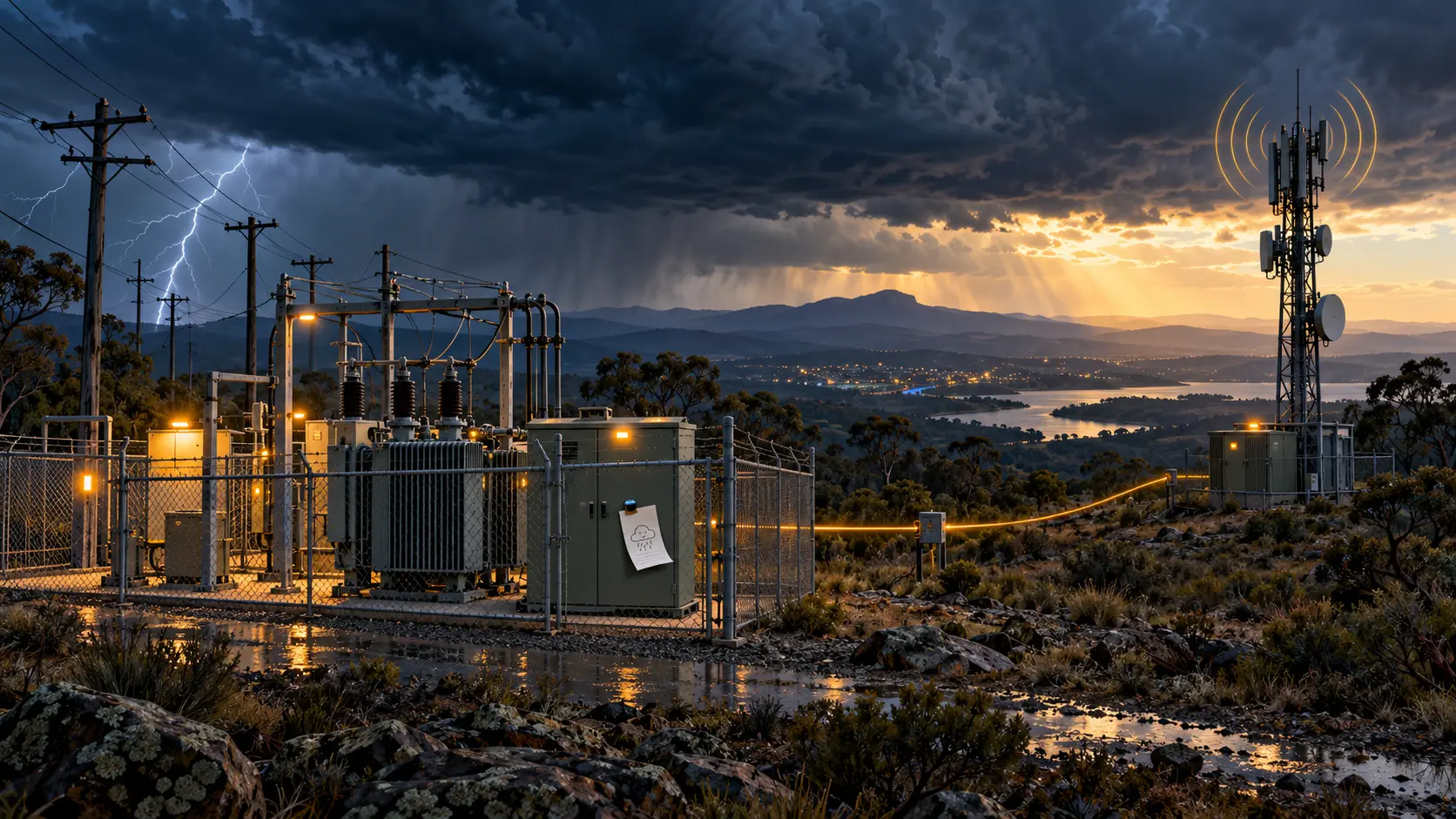
When Australia’s Grid Calls Telecoms for Help, the AER Wants the Receipt
Australia’s electricity regulator accepts that power networks depend on communications. Its draft resilience test then asks the awkward question: whose service is the spending actually for?

IETF
The Router Signed Every Pulse. Who Set the Dials?
An IETF draft has found the control panel beside the attestation stream. Its settings decide which measurements arrive, how fast they arrive and which key speaks for the device.

IETF
The Ghost Committee Has Left. The IETF Africa Plan Now Has Two Roads.
An IETF inclusion proposal has retired its imaginary budget office and replaced a missed calendar with two jobs people can actually start: build a local contributor base and examine an African meeting venue.

Europe and Middle East Institutional Trends
Britain's Time Signal Has No Guest List. Whitehall Wants to Know Who's Listening
A radio mast sends the time across Britain. The clocks can hear it; the mast cannot hear them back. Now the government wants users to explain which parts of modern life have quietly put that broadcast on the clock.

IETF
The CDN Checked the Guest List. Its Cache Printed Extra Wristbands.
A revised IETF draft follows a cross-origin rule from the upstream CDN to the edge and into a shared cache. The guest list can be right while the badge handed to the browser is wrong.

Europe and Middle East Institutional Trends
Brussels Adds Critical Communications to the Climate Risk List. Who Gets the Pager?
The European Commission’s proposed Climate Resilience Law puts critical communication systems among the risks that EU and national authorities must assess and plan for. Its sharpest move is administrative: every major risk in a national plan needs a public authority attached to…