
Content Type
Briefing
Within the Content Type facet, Briefing intelligence gathers BTW.MEDIA articles that share the same editorial format, helping readers compare briefings, profiles, risk notes, market analysis, and event coverage without mixing different kinds of evidence. The page explains how this content type frames internet infrastructure events, company movements, governance decisions, operational signals, and public evidence across the site. Readers can compare which actors or infrastructure systems appear most often, how source quality changes interpretation, and whether the material is a durable profile, a time-sensitive event, a strategic market signal, or a governance development. The result is a useful search page for operators, investors, customers, analysts, and policy stakeholders who need to understand the consequence, timing, and evidence behind similar article formats.

Story
Same Chile, Two VPNs: 9.5% or 64.2% of Requests Looked Domestic
Change the VPN, keep the Chilean websites: one research sample’s domestic-looking share moved from one request in ten to almost two in three.

Europe and Middle East Institutional Trends
Brussels Opens the Telecom File, but Its Veto Stops at Two Findings
On 29 October, the European Commission said its full record of telecom-market decisions—including first-stage decisions and monthly overviews—was available on CIRCABC without registration. The archive opens a busy review process to inspection. It also makes the Commission’s hard…

NANOG
NANOG Changed Four Rules. Only 178 Members Voted.
Four bylaw amendments won between 89.5% and 97.7% of votes cast in NANOG’s 2026 election. The same official record lists 702 eligible voters and 178 ballots: a 25.4% participation rate. Those are two different denominators, and the distinction is the story.

North America Institutional Trends
The FCC’s List Is Live. Its Ownership Checks Are Still on Ice.
Washington has put eight streams of restricted-party records behind one search box. The new ownership checks many readers may expect from that system have not taken effect.

IETF
Two Agent Handoffs Pass. The Authority Chain Still Breaks at 1 Versus 3.
A new Internet-Draft gives agent networks an awkward arithmetic problem: two locally valid delegations cannot authorize a chain when the value leaving one party is not the value received by the next.

Europe and Middle East National Telecom Trends
Ofcom’s Second-Price Auction Has a First-Price Exception
Ofcom has set a £5 million floor for one 25 MHz mobile spectrum lot. The sharp edge is in the tie: bidders who submit the same highest offer can be drawn at random, and the winner pays that top offer.

IETF
The Worker Called Out. The Proxy Still Chooses What Comes In.
Reverse HTTP can make a backend reachable without opening an inbound firewall port. The hard question moves one hop: which requests may the proxy send down that outbound channel?

IETF
Your Sender Put a Timer on the Email. Your Inbox Keeps the Delete Key.
A new IETF standard lets ordinary email carry an expiry date. The sender can announce when a message loses validity; the receiving mailbox still decides what to hide, retain or remove.

Europe and Middle East National Telecom Trends
Britain Wants a Security Switch Over Data From Listening Cables
The UK’s new subsea proposal reaches beyond cable repair. It would put fibre-optic sensing deployments under advance review and require operators to provide the data they generate when government requests it for national security.

IETF
One Bit Can Identify a SNAC Router. It Cannot Vouch for It.
RFC 10075 gives IPv6 Router Advertisements a flag that lets SNAC routers identify one another. The flag has no job title in the security office: it labels a sender, while admission still belongs to the network that receives it.

NANOG
5003 Means 400ZR Here. Automation Needs the Meaning, Not the Number.
A NANOG 98 slide exposes a quiet seam in optical automation: a common field can carry a device-specific number. Portable control needs the mode definition and target capability evidence beside it.

North America Regional ISP Trends
Cogeco’s expansion capex fell 54%; other net capex rose 40%
In the fourth quarter, net spending on network expansion dropped to C$26.8 million while net capex outside expansion climbed to C$134.9 million. Cogeco Communications now guides for lower fiscal 2027 capital spending as U.S. subscriber losses pull its revenue and EBITDA outlook…
IETF
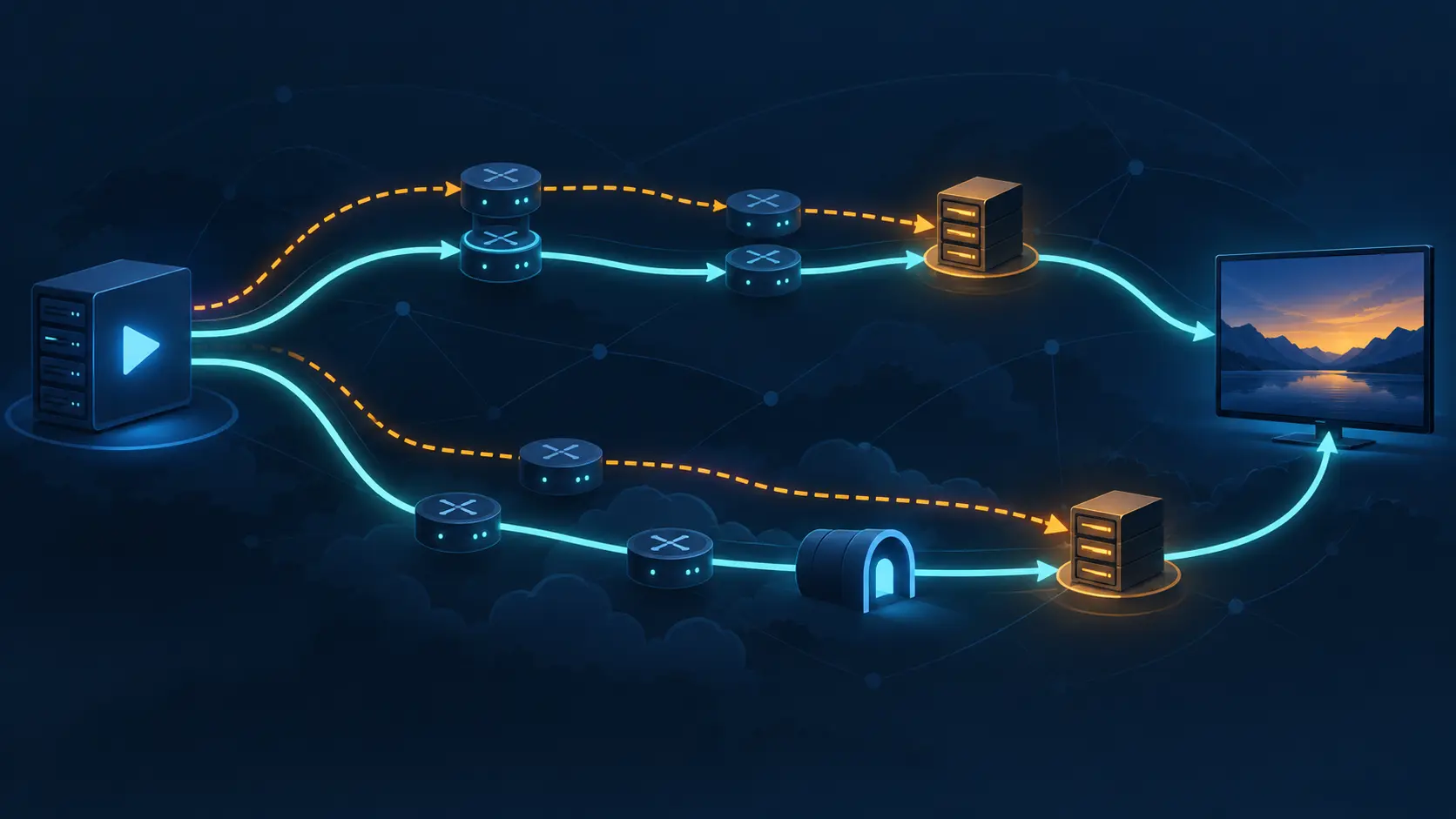
The IETF's Video-Overlay Draft Says “Observed in Production.” It Shows No Measurements.
A streaming path can move when a VPN or tunnel changes where DNS queries and video packets emerge. The IETF's latest draft explains how that can steer a viewer toward a different CDN cache. It calls the effects production-observed, but gives readers no deployment or measurement…

Story
RIPE NCC Has 8,000 Undeliverable Addresses. If Every Recipient Fails, No Notice Gets Through.
A RIPE Database update can be acknowledged while every designated watcher misses the notice. RIPE NCC's own transcript names the hard edge: when all notification recipients fail, nobody is left to warn.

IETF
IPv6-Mostly Has a DHCP Switch. The “Ready” Test Lives in Operator Policy.
An IETF draft makes one DHCPv4 option the hinge between a client that keeps an IPv4 address and one that gives it up. The protocol carries the signal; operators decide which devices are ready to send it.

CASE FILE
ISED’s 45-Day Tower Proposal Makes Municipal Silence a Default
Canada’s 28 October telecom roadmap puts a 45-day tower-siting proposal back on the public agenda. The detailed draft starts that clock only after a proponent attests that its required consultation steps are complete, while the proposed portal would not keep the exchanges behind…

IETF
A New BGP Tag Has No Route-Target Powers. It Can Still Cross Borders.
IETF’s latest draft separates a Route Target from a tag derived from it. The new tag cannot steer distribution or trigger VRF import under this document. Yet its transitive form can cross an AS boundary, where a filter looking for the original Route Target may never notice it.

CASE FILE
HMRC’s 28-Day Notice Has a Joint-Account Caveat
Britain plans to let HMRC instruct banks to collect some established tax debts after months of unanswered contact. The proposed warning period is clear; whether a non-debtor co-holder receives it still depends on what HMRC already knows.

NANOG
RPKI Drops the Route. The Owner Gets No Receipt.
At NANOG 98, KAIST’s iROV proposal asks a pointed operational question: when origin validation rejects a route, why should the network that owns the prefix learn nothing about where the route died or what it cost?

Story
APNIC’s 11-Language Survey Had 363 Non-English Replies. Bengali and Indonesian Took 52%.
APNIC made its 2026 community survey available in 11 languages. The answer mix tells a sharper story than the language menu: non-English replies edged up by 16, their share of all responses fell, and Bengali plus Indonesian supplied just over half of them.