Summary
- OpenConfig standardizes the field, but its model calls operational-mode vendor-specific and requires it in the device’s supported-mode list.
- NANOG 98 maps 5003 to OIF 400ZR AppSel 1 on the speaker’s platform; it is not a universal codebook.
5003 looks like automation’s ideal input: short, tidy, easy to copy. Then the footnote arrives. Philip Bedard’s NANOG 98 slide assigns it to OIF 400ZR Application Selection 1 on the example platform. The same slide says OpenConfig’s numeric operational-mode is not standardized and sketches 6xxx as a future representation of the actual AppSel.
That is the control boundary. OpenConfig offers a common field; it does not make every number in it a shared optical vocabulary. Its terminal-device model calls the value a vendor-specific mode identifier and requires it in the device’s supported-mode list. That list is evidence the receiving device recognizes the request.
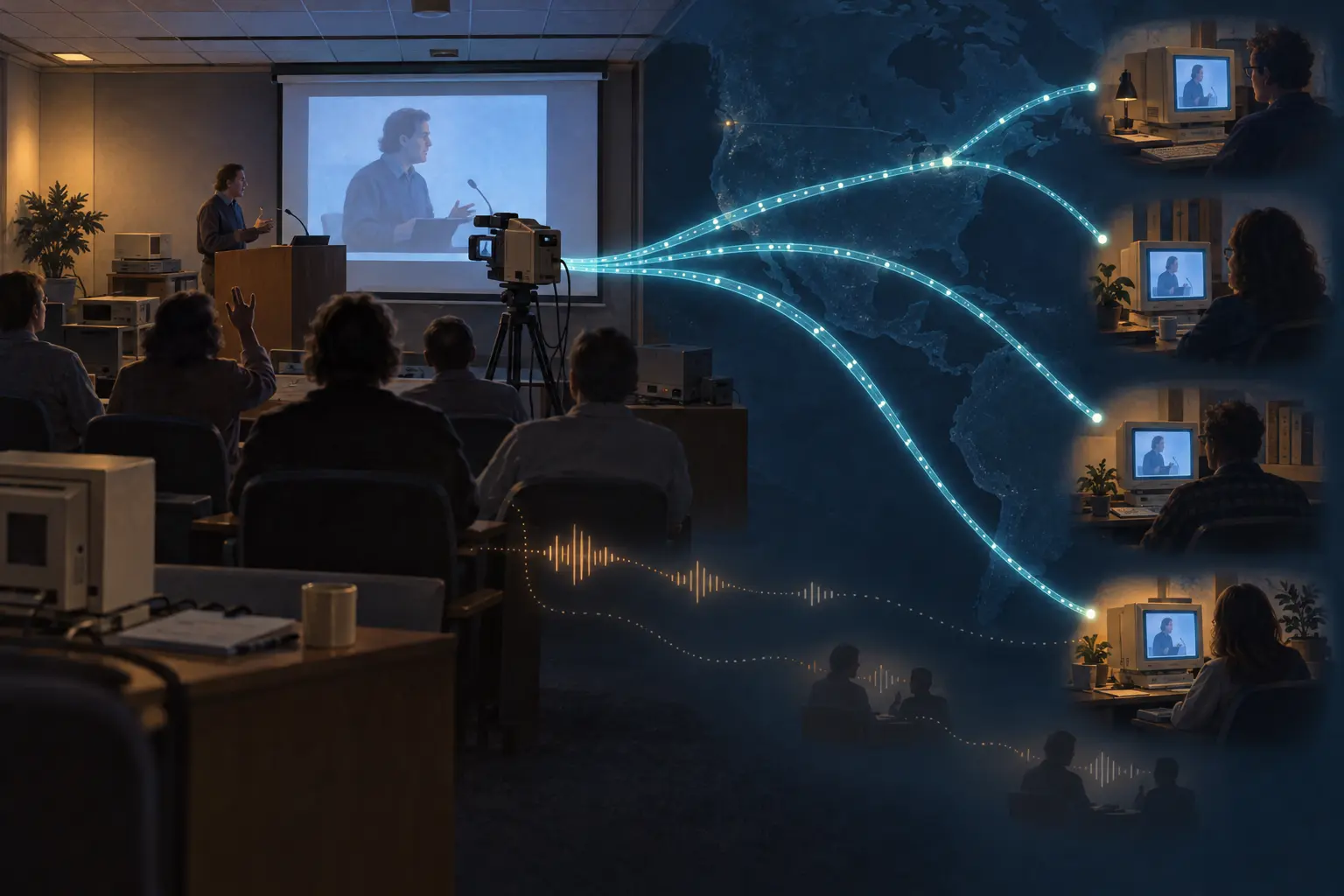
When configuration moves from inventory through a controller to a router, copying 5003 without its definition can preserve the characters and lose the intent. Carry the standard or organizational mode, local identifier, host/media interface pairing and target capability list together. Resolve the local code at the target.
The optical path needs separate checks. A configured mode, module-reported state, optical measurements and delivered service are different records. An accepted write proves only that a value was accepted; it does not establish the intended mode is operating or the end-to-end path is feasible.
OIF announced C-CMIS 1.5 in September 2026, adding coherent-module management functions. The October 30 IETF DWDM YANG draft distinguishes standard, organizational and explicit modes, while saying its model does not guarantee transceiver interoperability. The vocabulary is improving; operators still need the mapping to each device’s actual capabilities.
The NANOG deck gives no cross-vendor migration matrix and attributes no outage to an ID mismatch. Its narrower point is useful: a bare integer is a weak contract because the number can travel farther than its meaning.
Sources
Member Briefing
Deeper Profile Context
Sign in with the right membership level to unlock the full briefing and source notes.
Only for Strategic Circle
Strategic Circle
Open to all readers. Unlock profile briefings after joining and signing in.
Join Strategic CircleOnly for Leadership Alliance
Leadership Alliance
For qualified IP-asset owners and management; sign in to unlock alliance briefings.
Join Leadership Alliance