Summary
- IETF draft -05 says streaming effects from network overlays have been observed in production, yet names no deployment and supplies no measured comparison or dataset.
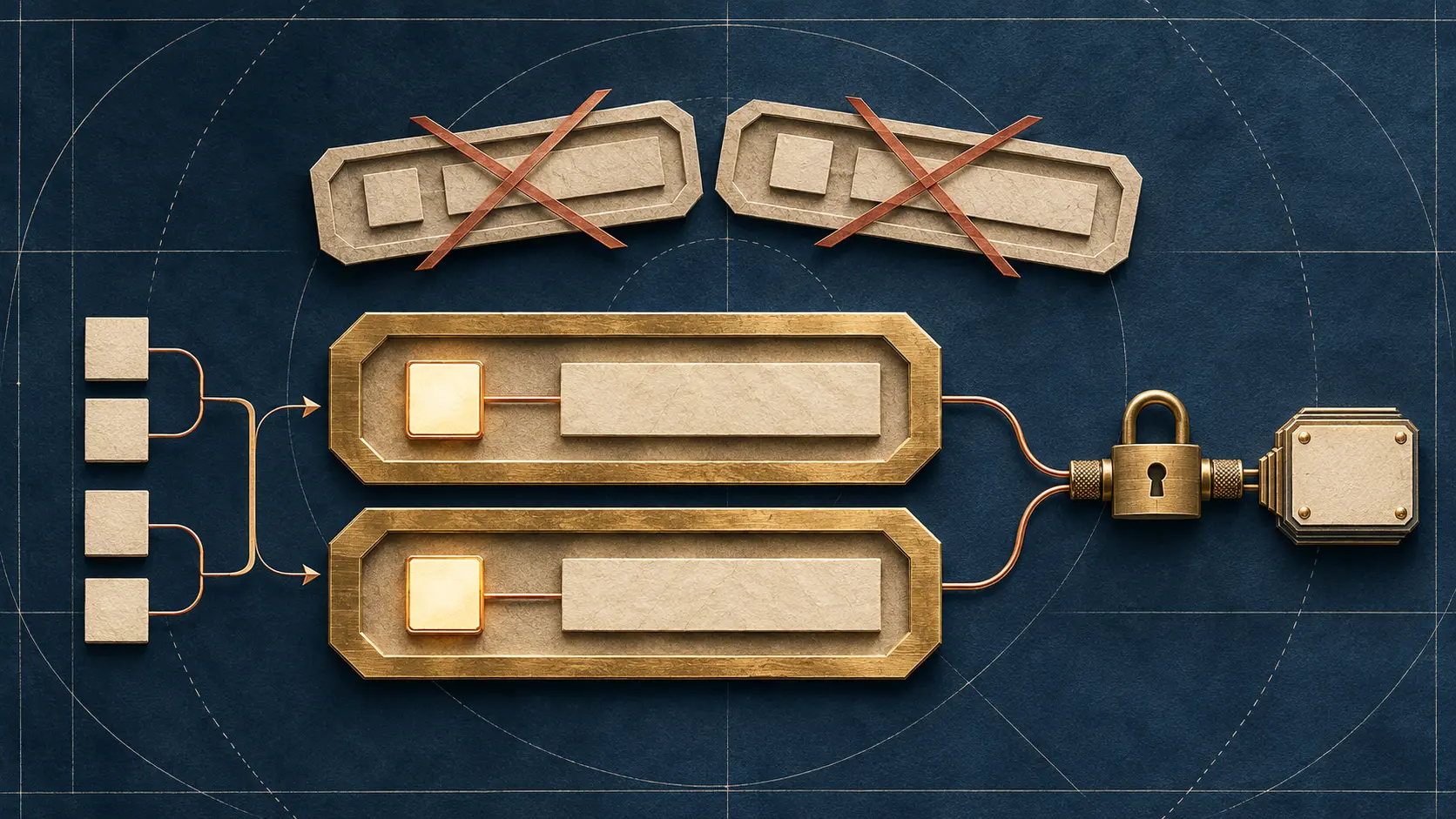
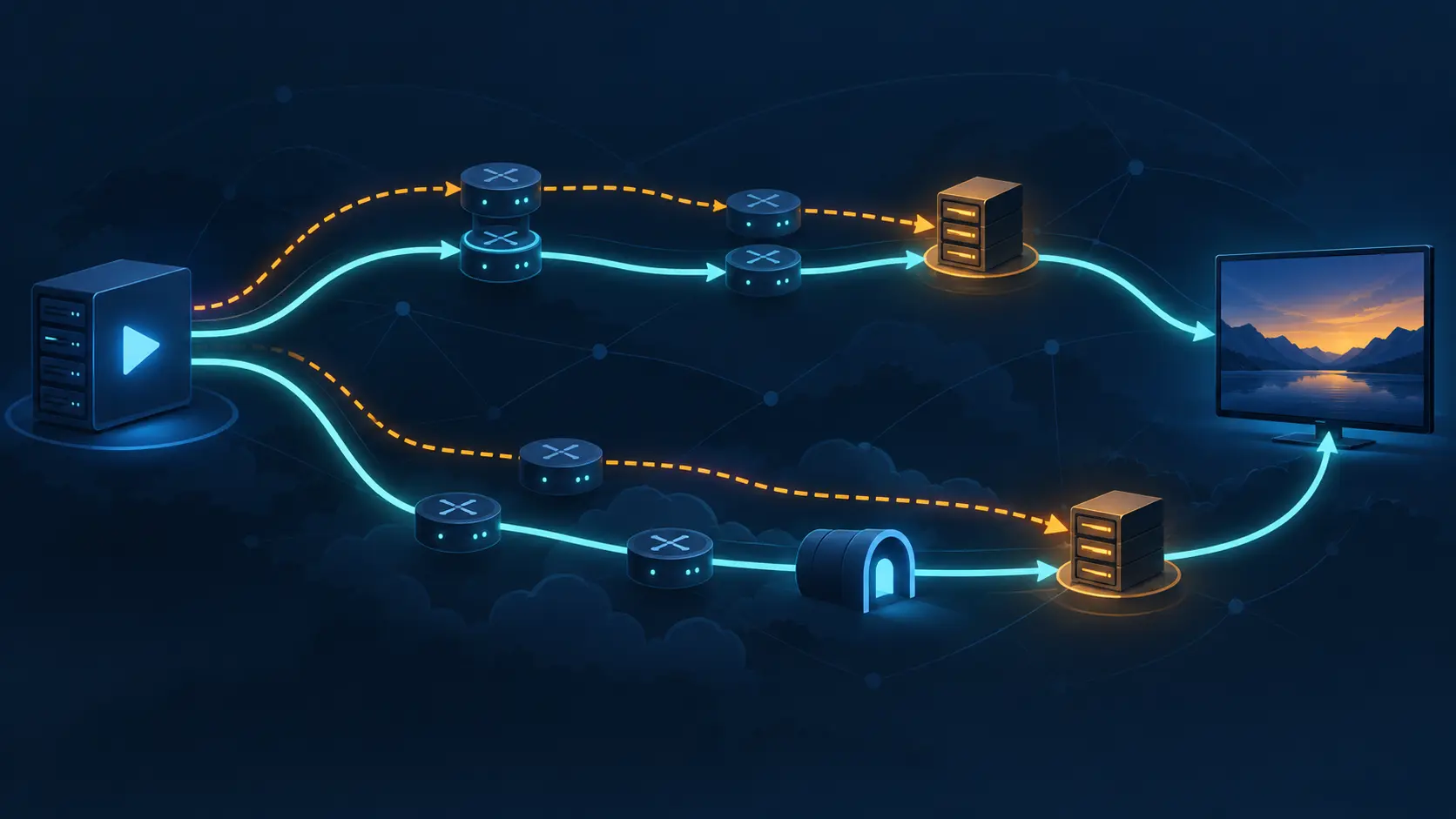
- The draft maps a plausible DNS, routing and CDN-cache mechanism; its mechanism diagram is not a field result.
For a network operator investigating streaming performance, the practical question is whether the resolver, packet path and cache still describe the same place.
The IETF's Media Operations Working Group draft, Network Overlay Impacts to Streaming Video, answers with a catalogue of ways they may diverge. A full tunnel can carry all device traffic to an egress point; a split tunnel sends only selected flows through it. If DNS resolution occurs on one path while media packets leave through another, a CDN that maps users to caches by DNS can choose an edge near the wrong point. The draft's example describes the resulting extra transit and latency. That is a concrete mechanism, not a reported measurement from a named service.
The wording raises the harder question. Revision -05 says the document captures operational effects “observed in production” and that issues have been seen across deployments. It identifies no operator, deployment, sample, test method, before-and-after comparison, cache-selection rate, latency distribution or video-quality outcome. The draft itself says its categories are patterns observed in deployments, not protocol-defined classes. It also leaves specific mitigations out of scope.
The revision history sharpens the gap. Revision -04 included HD and 4K bitrate ranges and hourly transfer estimates. Revision -05 removes those ranges. Their presence in the earlier draft did not establish an overlay effect: they described streaming demand, not a measured change caused by a tunnel. The newer revision cites RFC 9317 for a separate historical estimate that video accounted for about 75% of end-user traffic in 2019. That figure establishes scale, not causation or current share.
A useful case file would let an operator follow one affected flow: tunnel policy and egress; resolver and DNS answer; client and egress addresses; selected cache; paired path, latency, throughput and playback measurements; and the diagnostic data visible to the application. The draft names enough moving parts to make that test possible. It does not publish the test.
The work is valuable as a map of failure mechanisms. Its production claim is still a label on the map, without a traceable journey behind it.
Sources: IETF draft -05; draft -05 text; draft -04; RFC 9317; RFC 7556.
Member Briefing
Deeper Profile Context
Sign in with the right membership level to unlock the full briefing and source notes.
Only for Strategic Circle
Strategic Circle
Open to all readers. Unlock profile briefings after joining and signing in.
Join Strategic CircleOnly for Leadership Alliance
Leadership Alliance
For qualified IP-asset owners and management; sign in to unlock alliance briefings.
Join Leadership Alliance