Summary
- RFC 822 defined the field in 1982 as
received = "Received" ":"with the comment "one per relay", and listed the clauses that survive today: sending host, receiving host, physical path, link protocol, receiver message id, and the time received. - RFC 5321 requires an SMTP server to insert trace information "at the beginning of the message content", forbids any program to "change or delete a Received: line that was previously added", and requires that lines be prepended rather than reordered. RFC 5322 then says of the same group that "the trace fields are strictly informational, and any formal interpretation of them is outside of the scope of this document".
The record is written by the party it describes
A trace line is a small piece of testimony: this host received the message from that one, using this protocol, at this time, and here is an identifier. The format has barely changed in forty years. RFC 822's from, by, via, with, id and for clauses are still the shape of the field, and the mandatory part is still a date after a semicolon.
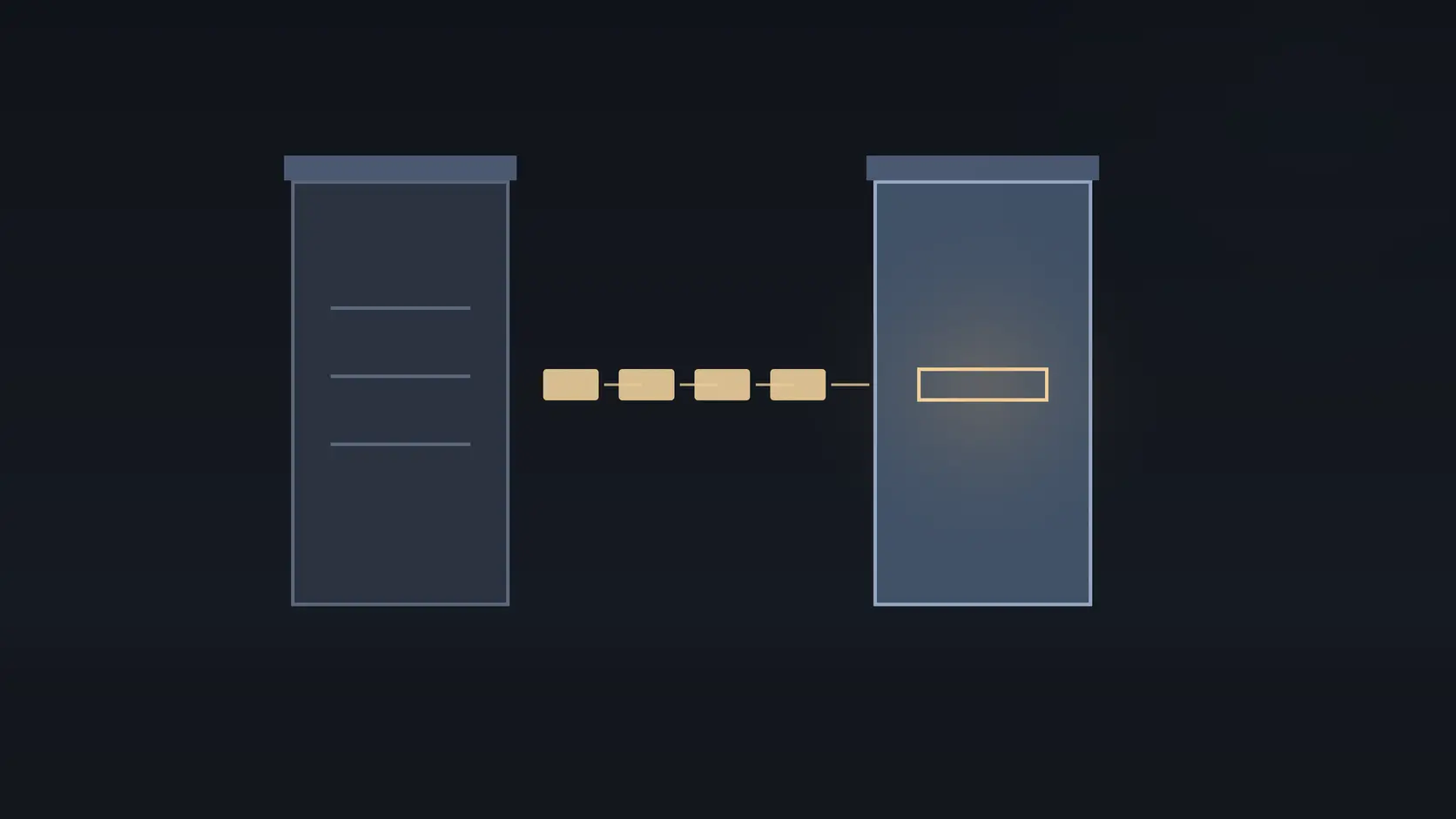
What is unusual is who writes it. Every relay writes its own line, about itself, and then passes the message on with the earlier lines intact underneath. The register of the journey is therefore kept by the hosts that made the journey, in the order in which they joined it.
The rules protect the stack, not the reader
RFC 5321 is explicit about the mechanics. A server receiving a message for delivery or further processing MUST insert the trace information at the beginning of the content. The FROM clause should carry both the name the source presented in EHLO and an address literal containing the source IP address "determined from the TCP connection". If a FOR clause appears it must name exactly one path, even when several recipients were given, because "multiple
Then come the two prohibitions that make the stack a record rather than a pile. An Internet mail program "MUST NOT change or delete a Received: line that was previously added to the message header section", and servers "MUST prepend Received lines to messages; they MUST NOT change the order of existing lines or insert Received lines in any other location".
That is what turns separate stamps into a sequence. Each relay adds to the top and leaves everything below alone, so the stack reads newest first, and the last line you can trust to be an insertion is the one written closest to you.
Two kinds of claim in the same line
The FROM clause is the most interesting requirement, because it asks for two different things at once: the name the sending host claimed in the greeting, and the address literal taken from the network connection. One is what the sender says about itself; the other is what the receiver observed.
The document does not say which wins. It says the clause should contain both, which is an instruction to write down a claim and a check side by side. A reader who knows which half is which can tell a forged greeting from a forged connection.
The date clause gets the same treatment for a different reason. Comparability of trace fields "is important for detecting problems, especially slow relays", so servers should use explicit offsets rather than time zone names, and local time with an offset is preferred over UT because "use of UT loses information about the time zone-location of the server". The trace is written to be compared, and its author is told to keep the comparison possible.
The specification that declines to interpret it
RFC 5322 lists the trace group as an optional Return-Path field followed by one or more Received fields, gives the grammar in four lines, and then states its position: "For the purposes of this specification, the trace fields are strictly informational, and any formal interpretation of them is outside of the scope of this document."
Read the two memos together and the arrangement is odd in a way worth naming. The transport specification makes the field mandatory, ordered and tamper-evident within the protocol. The format specification, which defines what a valid message is, says the whole group is information and refuses to say what it means. The mail system built a register and then declined to write a rule for reading it.
Return-Path completes the picture. It is inserted at final delivery to preserve the reverse-path from the MAIL command, and the memo admits that "the mailbox in the return path may be different from the actual sender's mailbox" — with mailing lists this is "common and useful as a means of directing errors to the list maintainer rather than the message originator". So the first line of the delivered message is an address that may belong to someone other than the author, placed there by the last server rather than the first.
A chain that answers a different question
It is easy to read the trace stack as an authenticity record. It is a route record. The top line tells you which server handed the message to yours; each line below tells you who handed it to that server. Nothing in the chain proves who composed the message, and nothing in it is checked by the protocol. The name in the greeting is a claim, the address literal is an observation, and both are written by the same host.
That is why later work had to add a separate check rather than strengthen the trace. A chain of custody records where a thing has been. It does not record whether the thing was honest when it started, and the last host to add a line has no way to certify the ones underneath it.
Member Briefing
Read the full trend briefing
Members read the full briefing with the source notes behind every finding.
Strategic Circle
A daily briefing in your language, built from changes we have verified.
Join for USD 20/monthCancel anytime.
Members also get the full research library, a daily briefing on the networks they follow and the private forum.