Summary
- RFC 761, the January 1980 TCP specification, contains the sentence that became doctrine: "be conservative in what you do, be liberal in what you accept from others."
- RFC 9413, published by the Internet Architecture Board in June 2023 as "Maintaining Robust Protocols", keeps the principle but names its costs: it "has been interpreted in a variety of ways", and while some readings help, "others can negatively affect interoperability over time".
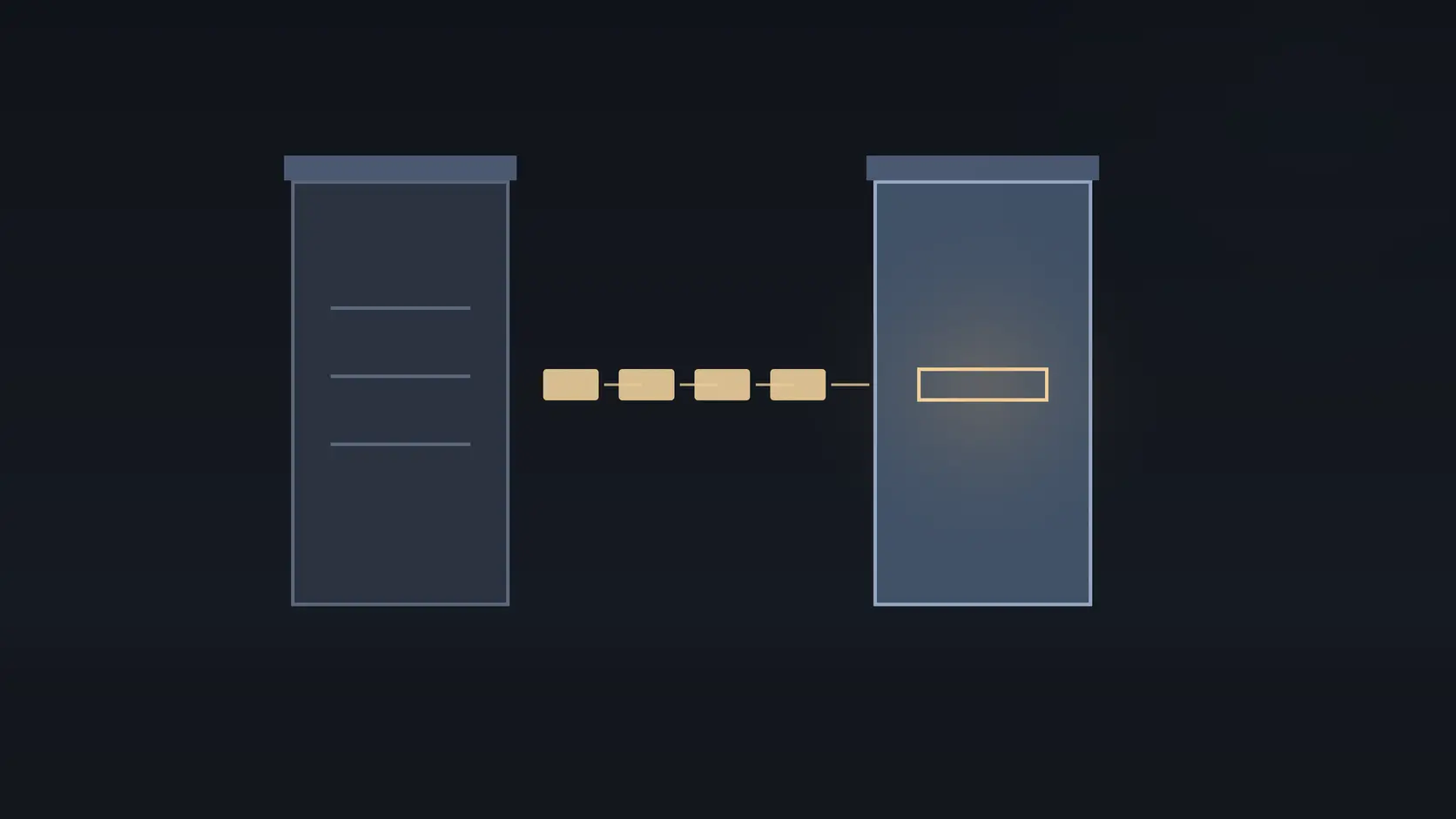
- The document's own remedy reverses the posture for unspecified cases: "Choosing to generate fatal errors for unspecified conditions instead of attempting error recovery can ensure that faults receive attention" — an approach its authors call virtuous intolerance.
A sentence written for a network with no users to break
In 1980 the internet was a research network with a handful of implementations, and RFC 761's advice was the cheapest way to keep them talking. Accept what arrives, send what is correct. Every deviation you tolerate is one fewer argument with a peer, one fewer release that has to wait.
That is an engineering trade dressed as a virtue, and it worked. Leniency let dissimilar stacks interoperate long enough to become a network, and it pushed the cost of every ambiguity into the future, where somebody else would meet it.
What forty years of leniency deferred
RFC 9413 does not pretend the trade was a mistake. It describes it precisely: "Tolerating unexpected input might be an expedient tool for systems in early phases of deployment, which was the case for the early Internet. Being lenient in this way defers the effort of dealing with interoperability problems and prioritizes progress. However, this deferral can amplify the ultimate cost of handling interoperability problems."
The mechanism is the one every maintainer recognises. Divergent implementations appear, variation becomes normal, and the variation becomes the specification that new code must match. "Even with the best intentions to maintain protocol correctness, the pressure to interoperate can be significant. No implementation can hope to avoid having to trade correctness for interoperability indefinitely."
The document names the outcome protocol decay: a specification that everybody follows and nobody implements as written.
The IAB's new phrase
The remedy in §5.1 is deliberately uncomfortable. A well-specified protocol should include rules for aberrant conditions, and an implementation may choose to fail on cases the specification did not cover rather than invent a recovery. "This intolerance can be harnessed to reduce occurrences of aberrant implementations."
The argument for it is about feedback. A new implementation that meets a strict peer learns quickly; a new implementation that meets a forgiving peer learns that its bugs are acceptable. Intolerance is a test suite that runs in production.
The catch nobody can dodge
The same section adds the condition that decides whether the advice is usable: intolerant implementations "need to be sufficiently widely deployed so that they are encountered by new implementations with high probability". Strictness only teaches if being strict is normal, and normality is a market fact, not a technical one.
§5.2 then names the risk of the cure: intolerance can exclude. A large implementation can fail on behaviour it does not like and let the smaller one absorb the breakage, which is why the same document warns that strictness has to be applied to specified rules rather than to local preferences.
Who can afford to be strict
The 1980 sentence and the 2023 document are both about the same thing: who pays for ambiguity. In 1980 the network paid, in the form of broken conversations between machines that could not be fixed quickly. In 2023 the user pays, in the form of a protocol that no longer means what its specification says.
The IAB's answer is that ambiguity should be closed where it appears, by whoever has the deployment weight to close it. That is a good rule and an uncomfortable one, because deployment weight is distributed unequally, and a principle that depends on who can afford to be strict is not a principle so much as a market description.
What survives either way is the sentence. Forty-three years after it was written, the internet's most quoted design instruction needed a second document to explain when not to follow it.
Member Briefing
Read the full trend briefing
Members read the full briefing with the source notes behind every finding.
Strategic Circle
A daily briefing in your language, built from changes we have verified.
Join for USD 20/monthCancel anytime.
Members also get the full research library, a daily briefing on the networks they follow and the private forum.