Summary
- DTPC revision 00 lets an application callback remove obsolete or superseded data from an outbound queue before aggregation, making elision a semantic application decision rather than a network-loss event.
- Its Data and Ack PDU field lists do not carry an elision reason or predecessor-to-replacement link; operators need a separate local receipt before treating conserved capacity as controlled behaviour.
The deletion happens before the network can witness it
The individual Internet-Draft Delay-Tolerant Payload Conditioning was dated 27 September 2026. The Datatracker gives it no stream and no formal IETF standing. Revision 00 is a proposal, not an RFC or evidence of deployment.
Its setting is severe enough to make deletion attractive. DTPC sits above the Bundle Protocol and below an application. It can queue small Application Data Units, aggregate those that share a destination and profile, and send them when a size threshold or timer fires. The exact revision 00 text also defines sequencing, ACK/NAK processing, retransmission logging and duplicate suppression.
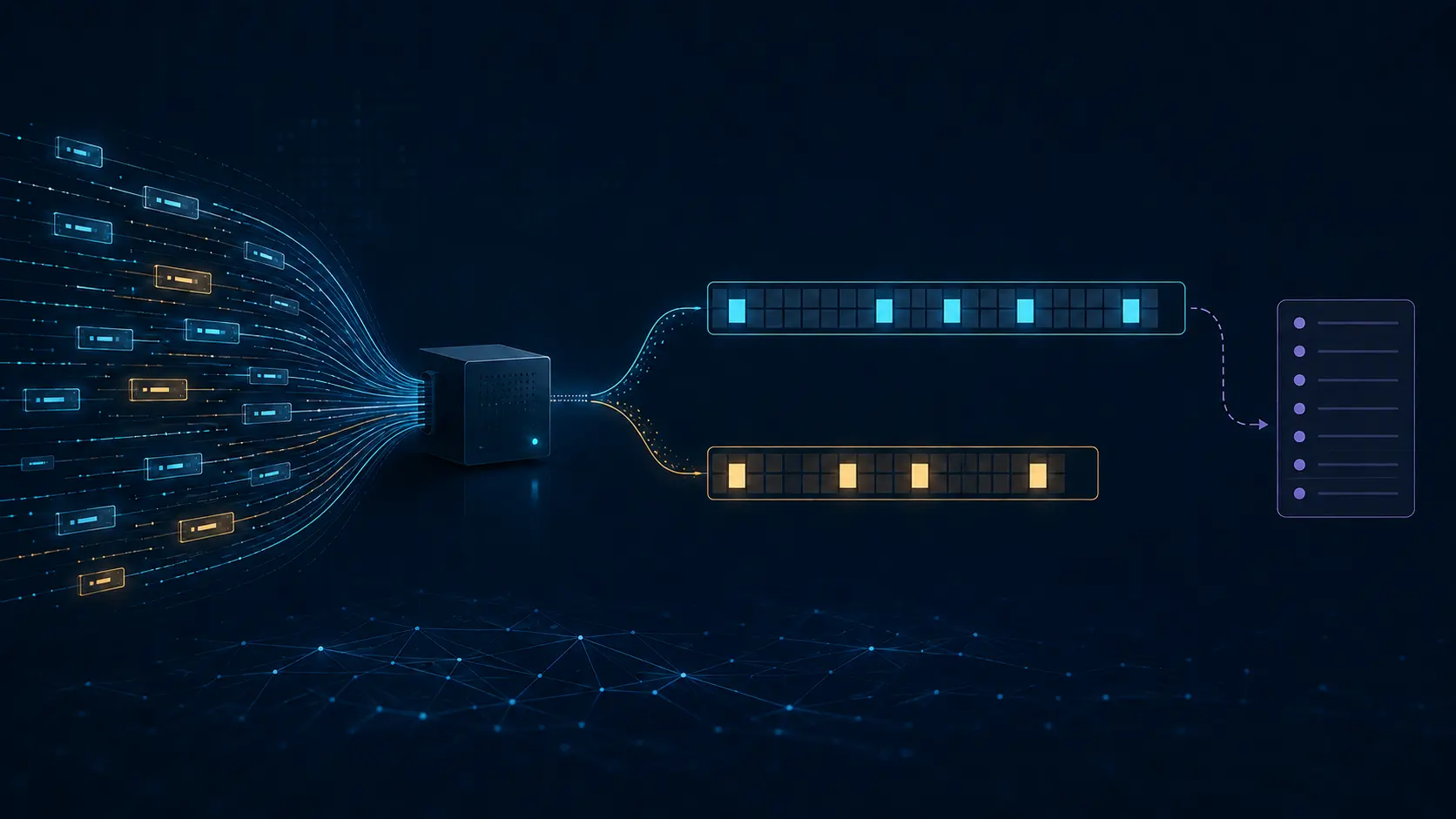
Elision is different from all of them. An application registers a Topic ID and an elisionFn. When fresh data enters the outbound queue, that callback may flush an item judged outdated or superseded and replace it with the new entry. The network did not drop the old item. The receiver did not reject it. The sender application decided that yesterday's state no longer merited transmission.
That can be the right decision for temperature, position or status updates whose latest value dominates an earlier unsent sample. It can be dangerously wrong for commands, increments, alarms or legal records whose meaning accumulates. “Newer” is not a protocol-level proof of “equivalent and safer to retain”. The semantic key belongs to the application.
The wire record begins after the controversial act
Revision 00 lists a Data PDU type, flags, Topic ID, Profile ID, sequence number, payload length and payload. Its Ack PDU carries a topic and sequence ranges. The list contains no elision reason, predecessor identifier, replacement link, policy version or deletion timestamp.
That absence does not make the proposal invalid. It locates responsibility. A compact application-side record should bind the removed queue object to the surviving replacement, the rule version, the decision authority and the later Data PDU. Payload retention can remain bounded; the receipt need not duplicate sensitive data.
RFC 9171 defines the Bundle Protocol's own reception, forwarding and delivery states. Those states cannot describe an object that disappeared before a bundle existed. RFC 9172 can protect transmitted blocks with integrity or confidentiality; it cannot authenticate the correctness of an earlier semantic deletion. Revision 00's request for an ipn service number sits within the registry context updated by RFC 9758, but a requested number is not endorsement or proof that implementations share one elision model.
The useful control is therefore a three-way separation: elision decides which state deserves carriage; reliability reports what happened to transmitted PDUs; the destination application proves what state it accepted. Combining those into one green indicator would erase the decision most in need of review.
This follows the discipline of Running-Code Primacy: protocol text defines a possible mechanism, while observed queue, transmission and application state establish what ran. Minimum Initial Specification, Localized Future Decision supports a narrow common envelope without transferring local semantic authority to the network. The essay on authority and belief supplies the final warning: a representation should not acquire more authority than the actor and evidence behind it.
Member Briefing
Deeper Profile Context
Sign in with the right membership level to unlock the full briefing and source notes.
Only for Strategic Circle
Strategic Circle
Open to all readers. Unlock profile briefings after joining and signing in.
Join Strategic CircleOnly for Leadership Alliance
Leadership Alliance
For qualified IP-asset owners and management; sign in to unlock alliance briefings.
Join Leadership Alliance