Summary
- NTT DOCOMO's service page records 6.5 million connection persons on docomo Starlink Direct as of 6 August, up from five million on 9 July, with the service launched on 27 April.
- Eligible DOCOMO lines need no application and pay no monthly fee; 90 handset models and more than 25 million devices were compatible as of 6 August.
- The service works outdoors under open sky, outside DOCOMO 4G/5G and Wi-Fi coverage, carrying messages, selected apps, data and emergency alerts—but not voice calls.
- CNET Japan reports that connection persons around the 28 July Kumamoto earthquake ran about three times the level at the same weekday and time a week earlier.
- DOCOMO plans international roaming in September; pricing, countries, settlement terms and actual roaming availability were not disclosed in the current evidence.
- From September, three balloon-HAPS demonstrations are planned in Noto under a government project—trials combining smartphone communication and high-resolution imaging, not commercial HAPS service.
docomo Starlink Direct: 6.5 million connections against 25 million eligible devices
Six and a half million Japanese phones have looked up and found a satellite. That is the number NTT DOCOMO published for docomo Starlink Direct on 6 August, up from five million on 9 July for a service that only opened on 27 April.
Read it as a curve of adoption and you will misread it. DOCOMO switches the feature on for eligible lines with no application form and no monthly charge; a compatible handset that loses 4G, 5G and Wi-Fi simply reaches for the sky when it has a clear view of it. There is no purchase decision to make, so there is no subscriber to count.
That is why the eligible estate—more than 25 million devices across 90 models—dwarfs the connection count. The 6.5 million figure proves that a large slice of DOCOMO's base has bumped into the fallback at least once. It says nothing about repeat use, monthly activity, simultaneous load, traffic volume, session length, retention or revenue.
The Kumamoto earthquake tripled connections—and tested nothing about capacity
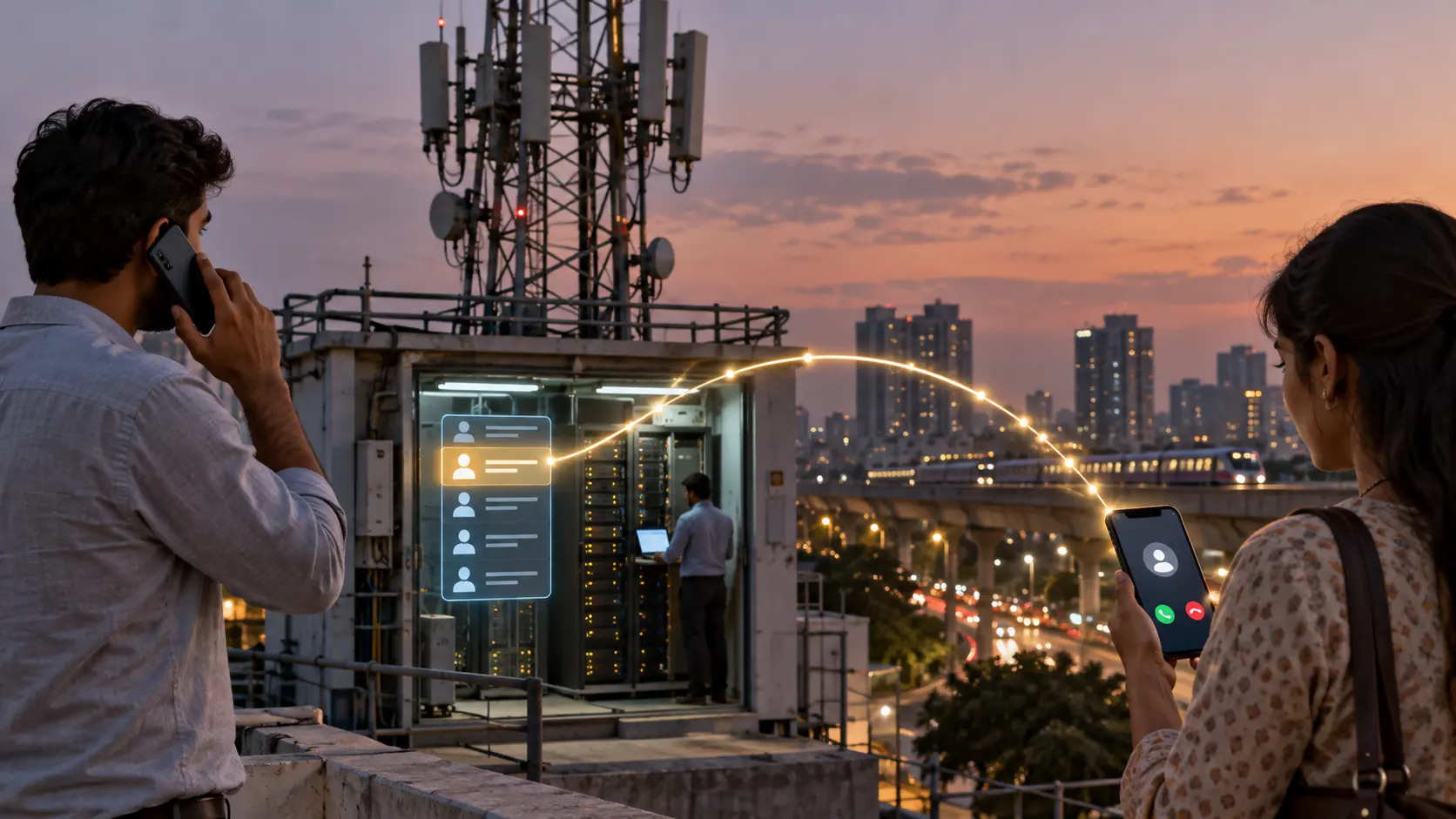
CNET Japan reports that around the 28 July Kumamoto earthquake, connection persons ran roughly three times the level seen at the same weekday and time a week earlier. As a behavioural signal it is genuinely useful: when the ground moves and the terrestrial layer wobbles, people find the satellite.
As a capacity test it is silent. The report gives no absolute connection count, no message success rate, no latency, no congestion figure, no session duration, no geographic spread. A threefold jump can start from a small base, and connection persons are not traffic. The earthquake supports the resilience story without proving the service carried every attempted session, or that it had headroom to spare while it mattered.
Coverage insurance at zero price, not a second mobile network
The operating envelope is narrow and worth stating plainly: outdoors, open sky, beyond DOCOMO 4G/5G and Wi-Fi. Inside it you get messaging, supported applications, data and emergency alerts. You do not get a voice call. Access may also be rationed when public needs take priority.
For the customer, coverage insurance now costs nothing at the point of use. For DOCOMO, the cost has not vanished—satellite capacity, integration, support and settlement all still need funding. Neither party discloses wholesale economics, incremental network cost or revenue attachment. The return may arrive as lower churn and a broader coverage claim rather than a line item on a bill, but no retention evidence has been produced to support it.
September roaming is the first real monetisation and settlement test
International roaming is scheduled for September. That is the moment a domestic fallback becomes a cross-border arrangement, and cross-border arrangements demand device eligibility, spectrum permissions, partner terms and charging rules. The current report discloses none of the countries, prices, revenue-sharing terms or firm launch dates.
Until availability is observed on the ground, roaming is a plan, not a product. It could extend the value of an existing DOCOMO line for travellers, or it could stay a tightly fenced emergency feature. The next facts to demand are where it works, who bills whom, and whether satellite use is included, capped or separately charged.
HAPS over Noto runs on a slower and more demanding clock
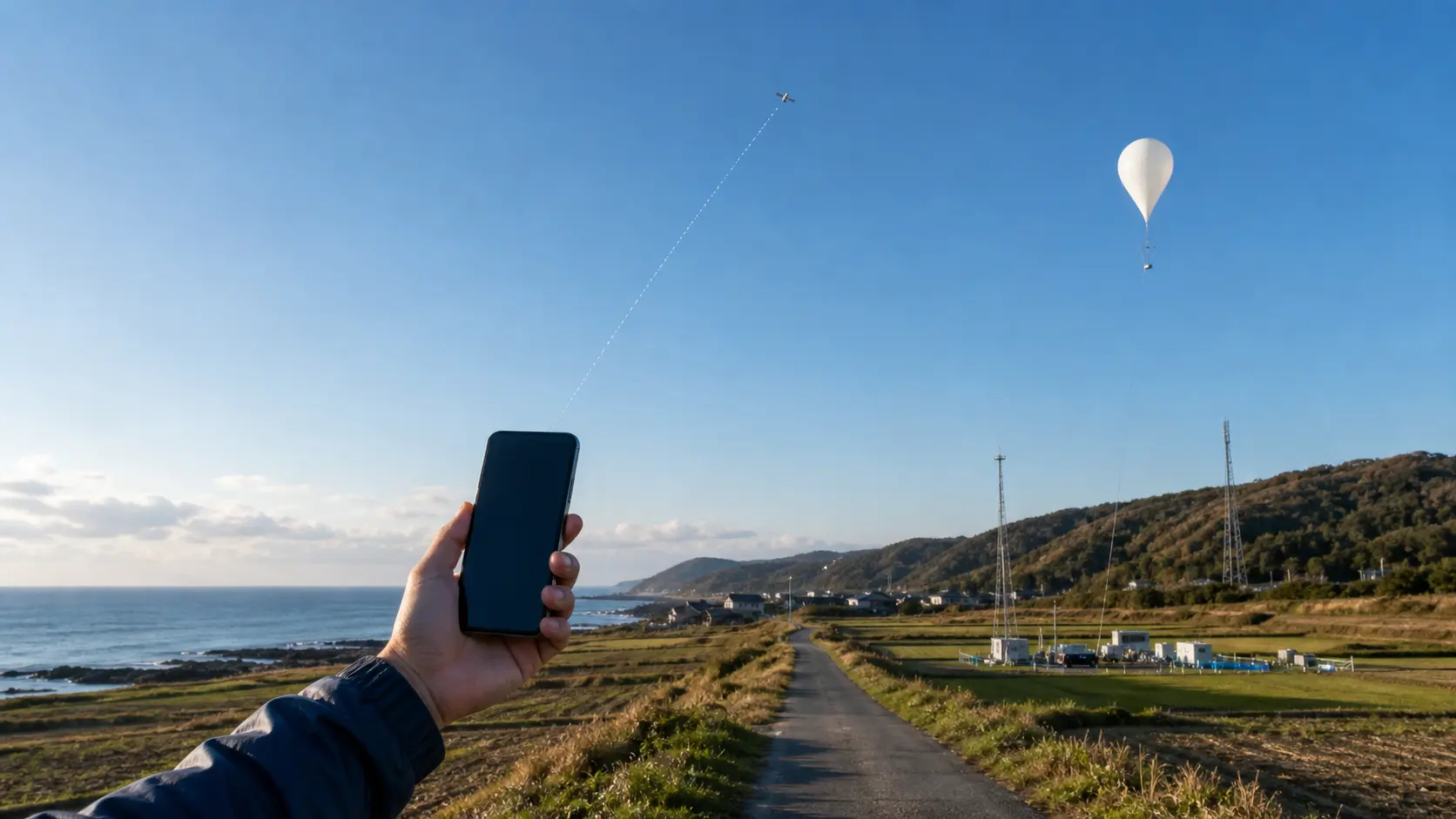
DOCOMO also plans three balloon-HAPS demonstrations in Noto from September under a Ministry of Internal Affairs and Communications project. The tests pair smartphone communications with high-resolution imagery for labour saving in primary industries, dam and infrastructure monitoring, and reading disaster conditions.
This is a different machine from Starlink Direct. HAPS puts an airborne platform into the stratosphere to serve a concentrated area; the September work is an experiment. DOCOMO's 2025 programme materials described commercial flight in Ishikawa from fiscal 2028 onward. Trial count, coverage, availability and cost must therefore be kept in a separate ledger from commercial capacity.
Sources
Member Briefing
Read the full trend briefing
Members read the full briefing with the source notes behind every finding.
Strategic Circle
A daily briefing in your language, built from changes we have verified.
Join for USD 20/monthCancel anytime.
Members also get the full research library, a daily briefing on the networks they follow and the private forum.