Summary
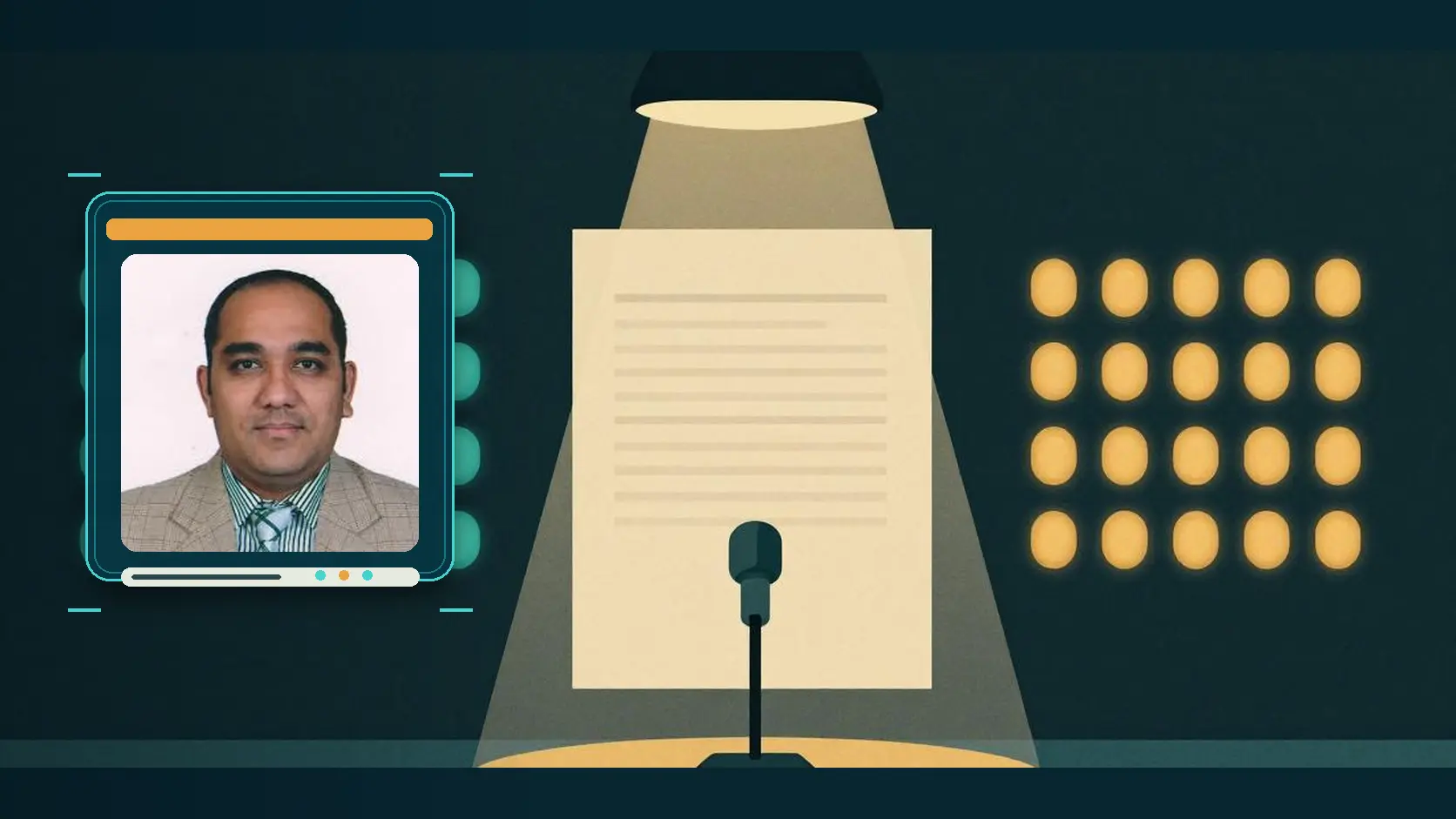
- APNIC’s profile presents Bikram Shrestha as a facilitator who should remain neutral and help every participant speak. At APNIC 62 he also announced the Policy SIG’s consensus findings.
- The APNIC policy process gives the SIG Chairs that decision. APNIC-128 requires them to explain the question, weigh views in a balanced way and share the decision consistently.
- Prop-164 was declared to have no consensus. Its author challenged the conclusion, asked for the method and obtained a recall; the conference report records another no-consensus outcome without the underlying count or objection ledger.
The exchange at the Mumbai meeting was short and unusually direct. Shrestha ran the consensus indicators on prop-164, a proposal to cut APNIC’s minimum IPv6 allocation from /32 to /40 and add return, reservation and nibble-alignment rules. After conferring with his co-Chairs, he said consensus had not been reached.
Christopher Hawker, the proposal’s author, disputed that finding. He said one strong objection in the online poll had not been claimed by anyone, while the strong objection raised in the room had been withdrawn after discussion. He asked how the Chairs had reached their conclusion. Shrestha replied that the Chair had to remain “clear and balanced” and that the proposal could come back later. The transcript records the promise of another round; it does not record a reconciliation of the evidence.
Hawker pressed again. He said a member and author had a right to an answer. The Chair said the Chairs would answer together, then moved on. The meeting did have an escape hatch: Hawker asked whether the consensus finding could be recalled. The APNIC Secretariat said no rule prevented it, though it believed this would be unprecedented. The final authority still sat in the room: the call was at “the discretion of the Chairs and the rest of the community.”
Shrestha reran the indicators after participants in the room and online chat called for a recall. The result was the same. Prop-164 returned to the mailing list.
Nothing in the public record proves that the first or second decision was wrong. It does show that the decision cannot be reconstructed. The official transcript leaves out room and Zoom totals. The report gives the outcome, not the evidence weighed. The identity and substance of the unclaimed remote objection are not published. The test used to decide whether the withdrawn objection remained relevant is not stated.
That is the defect. APNIC’s development process says the Chairs decide whether community consensus exists. APNIC-128 turns that into a larger job than counting hands: explain the question, hear new views, weigh them, disclose the finding and report it consistently to the AGM or AMM. A volunteer Chair should not have to write a judicial opinion after every proposal. She or he does need a decision receipt when an author disputes the result.
Shrestha’s own opening made the distinction: policies are decided by the Policy SIG, not by the Chairs. The policy room may well have opposed prop-164 after the recall. The chair still performed the decisive act of naming that room’s sense. In a consensus system, the naming authority needs a legible basis.
APNIC’s proposal history already logs no consensus at APNIC 60 and no consensus call at APNIC 61. APNIC 62 adds another formal failure to move the proposal. The next useful record is a receipt that distinguishes a room with no majority from a room with unresolved objections, an online signal with no claimant, and a Chair’s considered doubt. Those are different reasons for returning the text to the list.
Sources: Bikram Shrestha profile; APNIC 62 report; APNIC 62 schedule API; OPM1 transcript; OPM2 transcript; Policy Development Process; APNIC-128; prop-164; prop-164 v006 text.
Member Briefing
Read the full trend briefing
Members read the full briefing with the source notes behind every finding.
Strategic Circle
A daily briefing in your language, built from changes we have verified.
Join for USD 20/monthCancel anytime.
Members also get the full research library, a daily briefing on the networks they follow and the private forum.