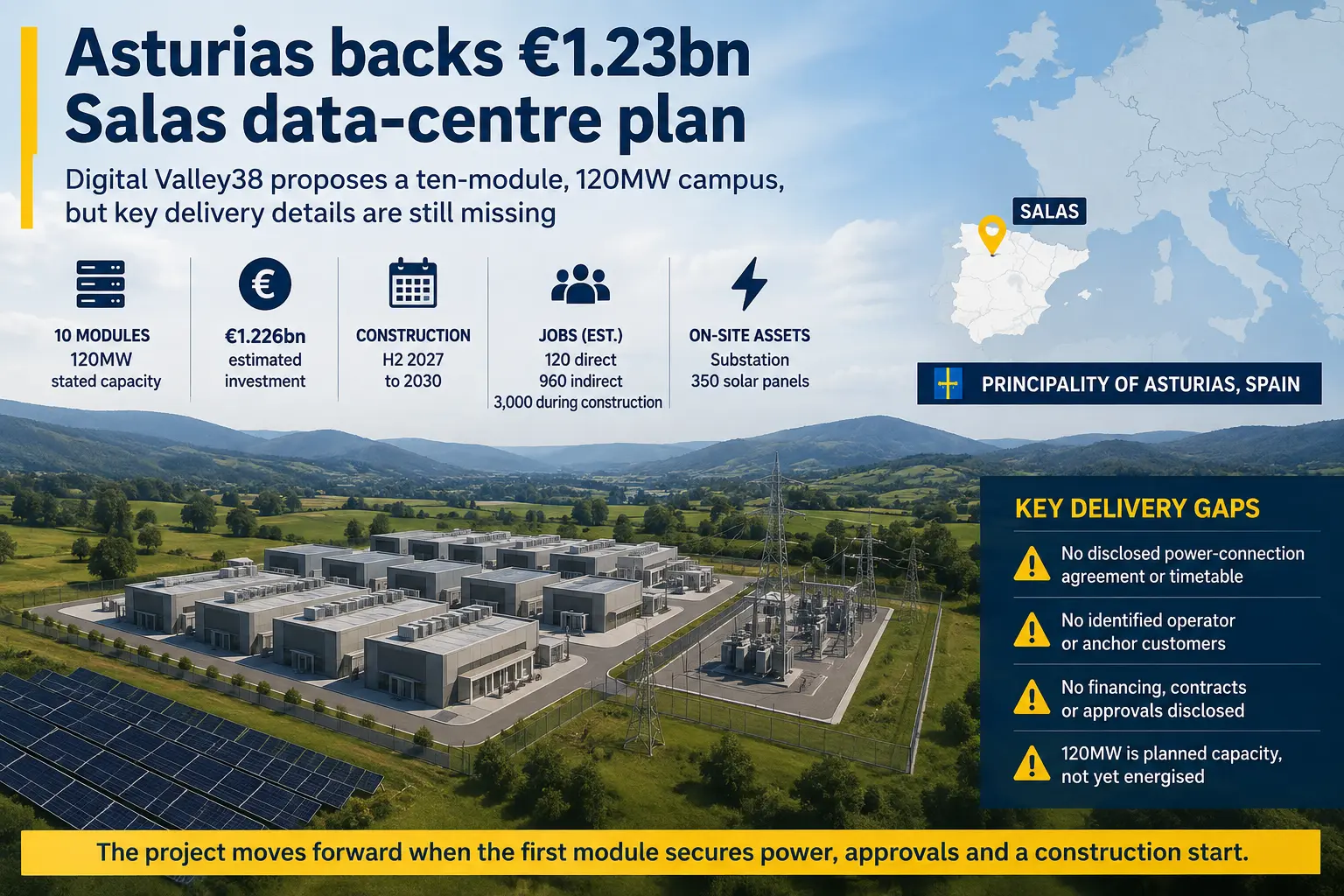
- Asturias presented a €1.226bn plan for ten data-centre modules with 120MW of stated computing capacity in Salas
- Construction is planned from the second half of 2027 to 2030, and the site design includes a substation and 350 solar panels
The fact
The Government of the Principality of Asturias has presented the Digital Valley38 project for the Nonaya Este industrial estate in Salas. The project has an estimated investment of €1.226bn and is designed around ten modules with 120MW of stated computing capacity. It would occupy 154,585 square metres, including 46,865 square metres of facilities. The design also includes a substation and 350 solar panels.
The regional government says construction is planned from the second half of 2027 to 2030. It estimates that the completed project could support around 120 direct and 960 indirect jobs, while construction could involve up to 3,000 workers. These are projected employment figures provided by the government, not jobs already created or contracted.
The assessment
Power is the clearest delivery issue in the current plan. The proposed substation shows that electricity supply is part of the site design, but the public description does not give a grid-connection timetable or say when the planned 120MW could be supplied. Building a substation at the site would not by itself establish that the wider grid can deliver that capacity.
That distinction matters before construction begins. The project is divided into ten modules, but the announcement does not say how the 120MW will be allocated between them or when individual modules could be energised. The developer therefore still has to connect the planned campus to firm power and turn the overall 2027–2030 timetable into deliverable project stages. For BTW readers, the 120MW figure remains planned capacity. The next meaningful step is a defined first phase with confirmed power availability, a construction timetable and an energisation date.
What to Watch
Watch for planning approvals, a grid-connection date and a construction start for the first module. A confirmed power-delivery and energisation schedule would show whether Digital Valley38 can move from site design into construction. It would also give the first clear evidence that the project’s 2027–2030 timetable is becoming deliverable.