
Summary
- Applied Digital says an agreement gives it access to up to 1 GW of potential power capacity in Finland; the planned campus could scale to that ceiling, with initial power anticipated from 2028.
- The release also says the site is being marketed and hyperscaler discussions are under way. It does not identify a customer, a signed load, the site, a grid-connection contract, permits, project capital or a construction schedule.
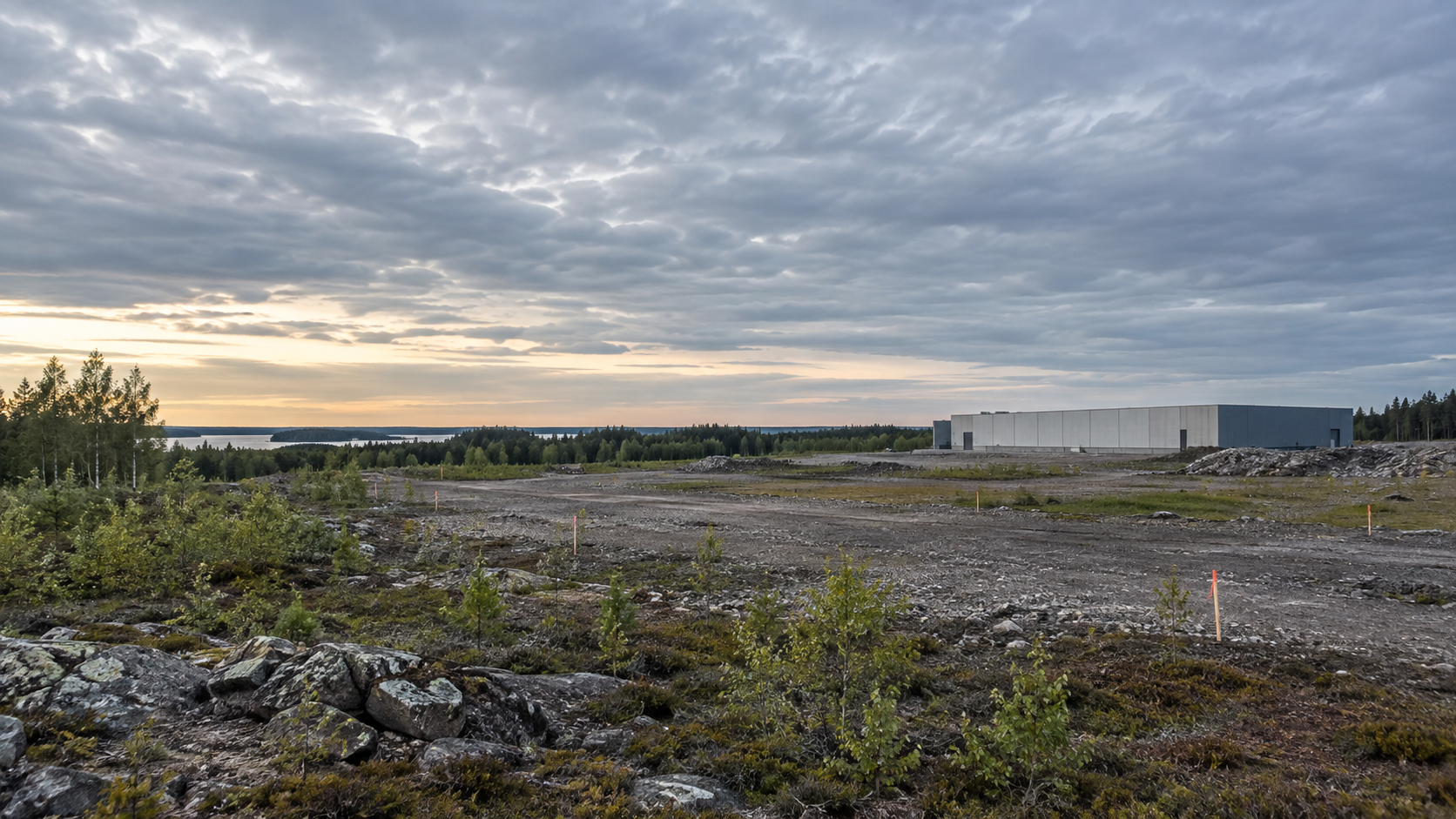
One gigawatt is a striking number. It is also a maximum, not a delivery record. Applied Digital’s 6 October announcement describes an agreement “providing access to up to 1 GW of potential power capacity” and a campus that could scale to as much as 1 GW. Those qualifiers matter. The company says it has begun marketing the site, is talking with global hyperscalers and anticipates initial power availability beginning in 2028. It does not say that a tenant has signed for any portion of that power or that construction has begun.
The announcement is best read as a development option: a foothold that may become valuable if the next commitments line up. The release says Applied Digital’s near-term priorities remain its U.S. pipeline. For Finland, future investment and development decisions depend on customer demand, commercial milestones and necessary regulatory and development requirements. That is more informative than the headline capacity because it identifies conditions that still stand between access and a campus.
The first missing conversion is from “Finland” to a site with enforceable control. The release names no municipality or parcel and does not describe ownership, a lease, exclusivity or the duration and conditions of the arrangement. Site marketing can be a sensible way to test demand before committing capital. But a prospective customer cannot evaluate a power-intensive campus on a national label alone: it needs a location, land-use envelope, connection point, phasing and a route through local approvals. These details may exist privately; they are not in the public announcement.
The second conversion is from potential power to a defined grid position. Fingrid’s connection-agreement process offers a useful benchmark, not proof of Applied Digital’s own status. Its current application rules cover consumption sites of at least 2 MW and require a legally binding land-use plan and building or construction permit before a connection-agreement application. A main-grid connection agreement is not itself the final electricity-service arrangement: transmission is covered by a main-grid contract before a connection is commissioned and energized, with technical conditions and an open electricity-supplier agreement in place.
A press release about access to potential capacity does not identify which of these steps, if any, has been completed for this site.
This distinction matters in a market with many competing plans. Fingrid reported that, by mid-August, Finnish data-centre projects with signed connection agreements represented nearly 5 GW of planned final capacity, based on information from developers. That is a more specific stage than a connection enquiry or an announcement of potential access, but it is still a pipeline figure, not proof that every project will be built. Nor does the national total tell us whether Applied Digital’s Finnish project is included. It should not be counted as a signed grid project without project-specific evidence.
There is a third conversion: from available power to contracted demand. Applied Digital says it is in discussions with hyperscalers. Discussions are evidence of market development, not a lease, capacity reservation or revenue stream. The useful disclosures would be a customer commitment, the amount and timing of its load, conditions tied to permits and delivery, and the obligations on each side if the schedule slips. Without those terms, neither the 1 GW ceiling nor the 2028 expectation can be translated into rent, utilization or return on capital.
Then comes capital and construction. A project of this scale would require coordinated decisions about land, grid infrastructure, buildings, cooling, equipment and financing. The announcement supplies no project budget, committed financing, investment approval or construction start. This is not evidence that the project lacks funding or that the schedule is impossible; it is a limit on what an investor can currently underwrite. Applied Digital itself says future investment decisions will depend on customers, commercial milestones and regulatory and development requirements.
That sequence separates this Finnish opportunity from the company’s recent U.S. milestone at Polaris Forge 1. The 250 MW RFS story asks how operational capacity converts into customer control and recognized rent. Finland is earlier in the chain: the public question is whether access can become a specified, permitted, grid-connected and customer-backed project. Treating both as simply “megawatts added” would erase the very risks that distinguish development from operation.
The commercial signal is real but conditional. Applied Digital has added an international option at a time when Finland is attracting data-centre proposals, and a power opportunity can be strategically valuable. The proof will arrive in a different vocabulary from the headline: a named site, binding rights, effective permits, a defined connection and service structure, a customer contract, approved capital, construction progress and eventually energized IT load. Until then, 1 GW describes the upper edge of a possible campus—not its contracted scale, its delivered electricity or its earnings power.
Sources
Member Briefing
Deeper Profile Context
Sign in with the right membership level to unlock the full briefing and source notes.
Only for Strategic Circle
Strategic Circle
Open to all readers. Unlock profile briefings after joining and signing in.
Join Strategic CircleOnly for Leadership Alliance
Leadership Alliance
For qualified IP-asset owners and management; sign in to unlock alliance briefings.
Join Leadership Alliance