Summary
- Alphabet's executed data-centre payment backstops had a $48.012 billion credit-derivative notional value at 30 September 2026, up from $16.940 billion at the end of 2025. Their recorded fair-value liability was $606 million.
- A specified default can give Alphabet the right to assume the underlying lease for its own use or to sublet it. The agreements run for up to 15 more years, and a further $27.7 billion of promised future backstops sits outside the executed $48.0 billion component.
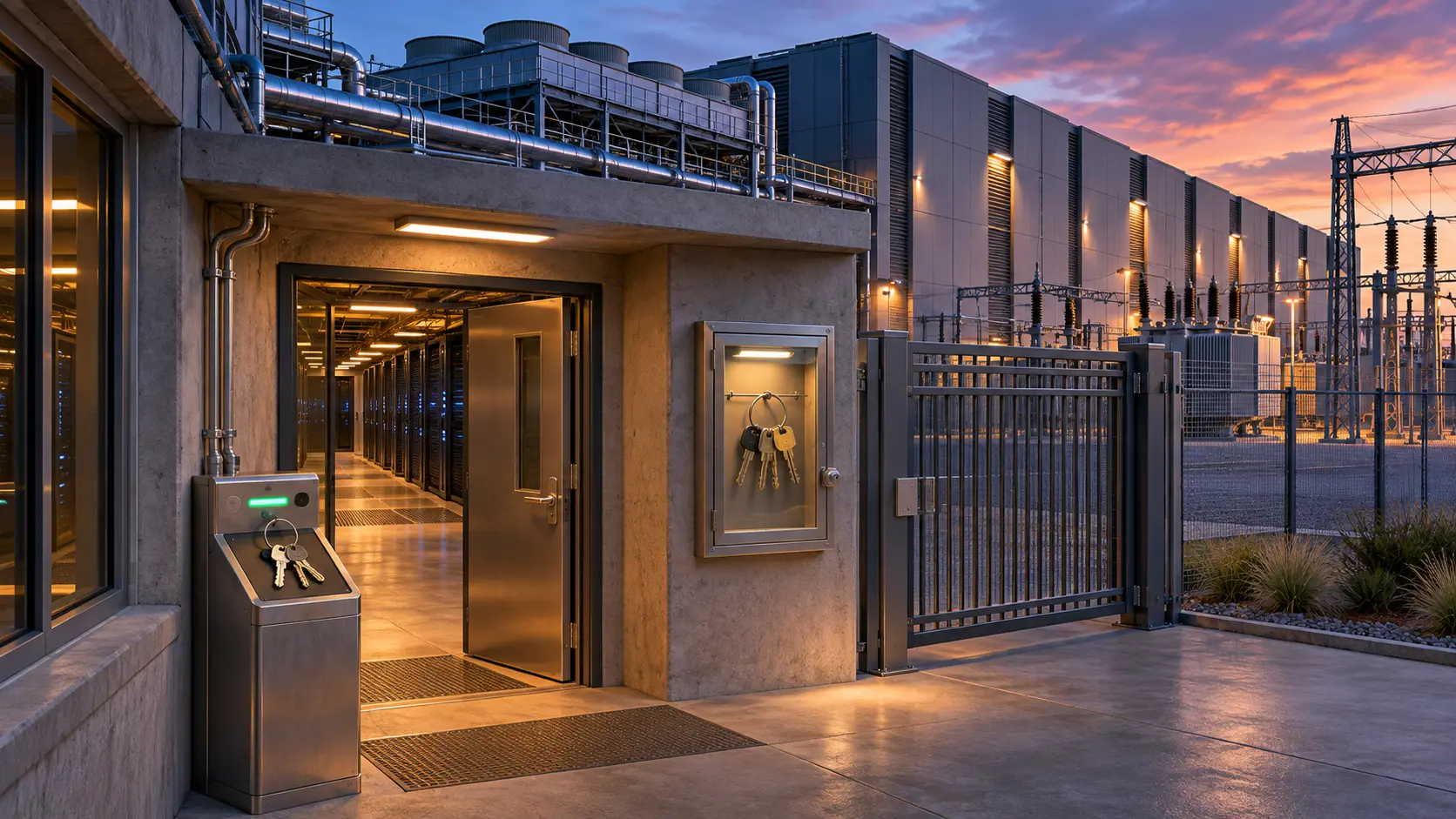
The most interesting line in a data-centre contract may be the one that hands someone else the keys. Alphabet's September 2026 Form 10-Q describes agreements that backstop specified payments by other parties, including data-centre rent and some associated energy costs. Alphabet accounts for the executed agreements as credit derivatives. If an underlying party defaults, it has the contractual right to assume the lease for internal use or sublease the space to another party.
That option changes the shape of a guarantee. The operator keeps running the site while the arrangement performs. Alphabet supplies credit support and a possible fallback occupant. Note 5 says Alphabet does not direct the activities that most affect the relevant unconsolidated data-centre entities, so it is not their primary beneficiary. The lease takeover right becomes operative in the specified default setting; it is not day-to-day control of those companies.
The maximum executed exposure had a $48.012 billion notional value at September's end, up from $16.940 billion in December 2025. The balance sheet carried a $606 million fair-value liability for the credit derivatives, versus $69 million at the earlier date. The notional measures the maximum future payments under specified default scenarios. Fair value measures the instrument on the reporting date, using a model that includes counterparty risk and default assumptions. One is the size of the contractual tail; the other is its accounting mark.
Alphabet also gives the market a wider $75.7 billion data-centre backstop figure. It comprises about $48.0 billion already executed with third-party data-centre providers and $27.7 billion of obligations to put future backstops in place for data-centre and energy infrastructure. The latter includes $10.0 billion tied to Crux AI, a related party. That $27.7 billion describes the next layer of support to arrange, while the $48.0 billion describes existing credit derivatives. A headline that treats both as cash spent today would make the company look as though it had paid a bill that has not arrived.
The executed backstops have remaining terms of up to 15 years. Their total potential exposure declines as underlying parties meet their payment obligations. On a default, Alphabet may use the space itself or sublease it; under specific conditions or after a set period it may instead make a termination payment. Equity or cash received from counterparties could partly offset such a payment, and those possible inflows sit outside the notional figure. This is a contract that allocates a future decision, not merely a balance-sheet footnote.
Other large numbers in the filing occupy different ledgers. Alphabet reports $130.5 billion in payments for leases that have yet to commence and $924.4 billion of material purchase commitments. It separately lists $22.8 billion of financial guarantees, mainly to support long-lead equipment procurement. The data-centre backstop is a credit-support arrangement attached to others' payment performance. The economic question is which facilities and counterparties could move from that support layer into an actual lease or termination payment.
The 10-Q supplies the mechanism but not a facility-by-facility default trigger, recovery estimate or timetable for the $27.7 billion future support. Those contract-level terms would change the estimate of how much of this credit tail could become cash cost or useful operating space. For now, the clearest fact is the allocation of power: a provider operates the hall; Alphabet stands behind a specified payment stream and keeps a route to the lease if it breaks.
Member Briefing
Deeper Profile Context
Sign in with the right membership level to unlock the full briefing and source notes.
Only for Strategic Circle
Strategic Circle
Open to all readers. Unlock profile briefings after joining and signing in.
Join Strategic CircleOnly for Leadership Alliance
Leadership Alliance
For qualified IP-asset owners and management; sign in to unlock alliance briefings.
Join Leadership Alliance