Summary
- TRAI's Phase-II direction of 27 November 2026 extends the 1601 series to thirteen more sectors — hospitals, diagnostic laboratories, e-commerce, food and ride-hailing aggregators among them — and gives access providers 180 days to onboard them, with a status report to the regulator every fifteen days.
- In May 2024 the same prefix meant the opposite: an announcement said calls from entities tied to RBI, SEBI, PFRDA and IRDA would start with 1601, while the 2026 instruments put banking and government on 1600 and hand 1601 to everyone else.
- The directions require named, numbered, sector-level reports to TRAI. No reviewed page publishes them, so the series still classifies a call without certifying a caller.
Since May 2024, India has been teaching its citizens a simple rule: if the call starts with 1601, the caller is someone you already do business with. On 27 November, TRAI quietly changed who that is.
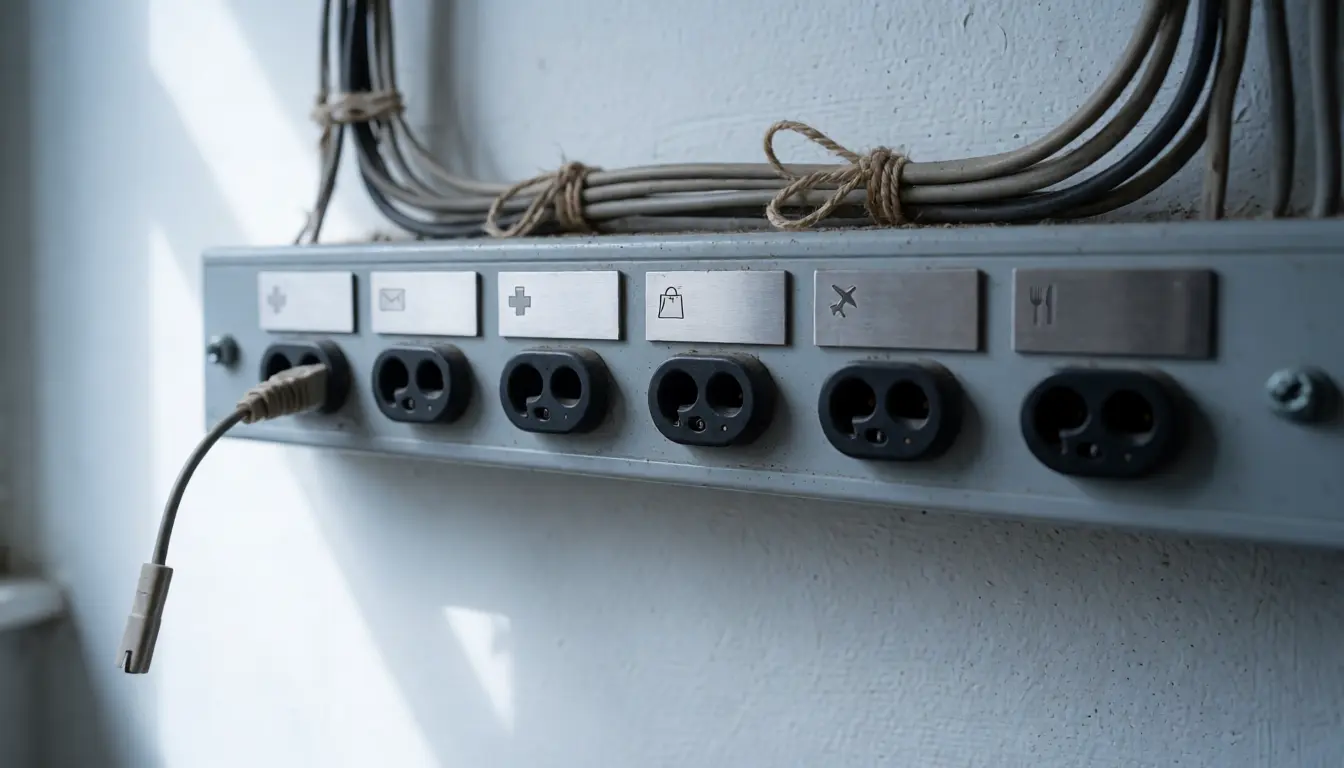
The instrument is titled, with the bureaucratic finality that only TRAI can manage, "mandatory adoption of the 1601 numbering series by eligible entities in sectors other than BFSI and Government" (TRAI, 27 November 2026). It names retail chains, e-commerce, hospitals, diagnostic laboratories, telecom service providers, internet service providers, automobile sales, automobile repair and servicing, travel agencies, commercial airlines, food aggregators, ride-hailing aggregators and lending service providers (TRAI press release 164/2026). Distribution platform operators — DTH, HITS, IPTV and MSOs — qualify on a separate test.
That is thirteen new sectors plus distribution. Read them as a list and something odd happens: the caller who dials you about a hospital bed and the caller who dials you about a late parcel now wear the same six digits.
The test is a balance sheet, not a relationship
To hold a 1601 number an entity needs annual turnover of at least Rs 500 crore in one of the preceding three financial years, or a million subscribers in any month of the past year if it distributes television. Numbers go only to companies registered in India (TRAI press release 164/2026).
The obligation lands on the access provider, not the hospital: onboarding and migration within 180 days of the direction, a status report every fifteen days, and a final compliance report fifteen days after the period closes (PIB, 27 November 2026). Annexure-II then narrows what the number may be used for — service and transactional calls inside a qualifying customer relationship, promotional calls prohibited, inquiry-based calling limited to seven days and application-based calling to three months, all behind KYC, DLT registration, a declared purpose and a signed undertaking (TRAI direction).
That is a real permission with real conditions. It is also a permission whose holder register lives in a fifteen-day spreadsheet sent to a regulator.
The document from 2024 says the reverse
The series is older than the sectors. In May 2024 the Department of Telecommunications announced the 160xxxxxxx block for service and transactional calls and stated that calls from financial entities associated with RBI, SEBI, PFRDA and IRDA would begin with 1601 (PIB, 30 May 2024).
By August 2026 the allocation had been rebuilt: banking, financial services, insurance and government communications sit on 1600, and every other eligible sector sits on 1601 (PIB, 10 August 2026). The Phase-I direction dates that allocation to a Department of Telecommunications letter of 30 June 2026 and traces it back to a TRAI letter of 6 April 2026, which puts utilities and courier firms on the new block first, with ninety days to migrate and ten-day reports (TRAI, 10 August 2026).
The digits never moved. Their meaning did, once, quietly, between two press releases. TRAI's directions index now lists both instruments under their own dates (TRAI directions).
Six digits, and no name behind them
For each eligible entity the direction requires a report carrying its name, its sector and the number allocated to it. What a stranger can actually see, standing in a kitchen with a phone to one ear, is six digits after 1601 and nothing else. Not on any reviewed page: the legal name behind the number, the date of allocation, how many numbers one entity holds, the term the allocation runs for, or the date and ground of any withdrawal.
That absence is a finding of this review, not proof of a void. Some register may exist inside the department. The point is that the only party able to check a 1601 number against a legal person is the party that issued it, and the reporting clause points inward.
The arithmetic of a prefix
BTW's own arithmetic, offered as arithmetic and not as TRAI's figure: 1601 followed by six digits yields 1,000,000 ten-digit numbers. Neither direction says how many of them one entity may hold, or how many have been handed out. If supply were the constraint, a regulator would print the count.
Nor is the clock generous. One hundred and eighty days from 27 November 2026 lands on 26 May 2027; the final compliance report is due 10 June 2027. A fifteen-day reporting cadence is roughly twenty-four reports a year per access provider, against the ten-day cadence of about thirty-six that Phase I demanded.
So the scarce resource is not numbers. It is the line in a spreadsheet that says which company answers when the phone rings.
A prefix is a bookkeeper, not a certificate
A numbering plan does what a registry does: it records a category, not a reason, and it issues the label without vouching for the behaviour underneath it. The record describes reality; it does not create it. The 2024 to 2026 reversal is the cleanest evidence available that the label is administrative rather than evidential. Nobody changed a hospital's conduct between those dates; the number in front of it changed.
Which leaves the practical question in the wrong place. TRAI has extended a trust mark to more sectors and again declined to print the trust. A caller who knows that 1601 means "some company with a customer relationship" knows exactly as much as a caller who knows nothing, minus the false comfort.
Print the holder next to the number and the series becomes auditable. Leave the holder in a fifteen-day report and the series becomes a sorting hat: it tells you the shape of the caller and hides the one fact worth dialling back about. TRAI has built a better label. What it has not built is a ledger anyone can read.
Member Briefing
Read the full trend briefing
Members read the full briefing with the source notes behind every finding.
Strategic Circle
A daily briefing in your language, built from changes we have verified.
Join for USD 20/monthCancel anytime.
Members also get the full research library, a daily briefing on the networks they follow and the private forum.