Summary
- RFC 1345 defined character mnemonics made from a small common set of symbols so text outside a transport's repertoire could still be represented and converted back.
- Its
intro=0option removed the marker that distinguished an escaped character from ordinary text. The RFC called the result easier to read and explicitly acknowledged information loss;mnemonic+ascii+0became equivalent to plain ASCII.
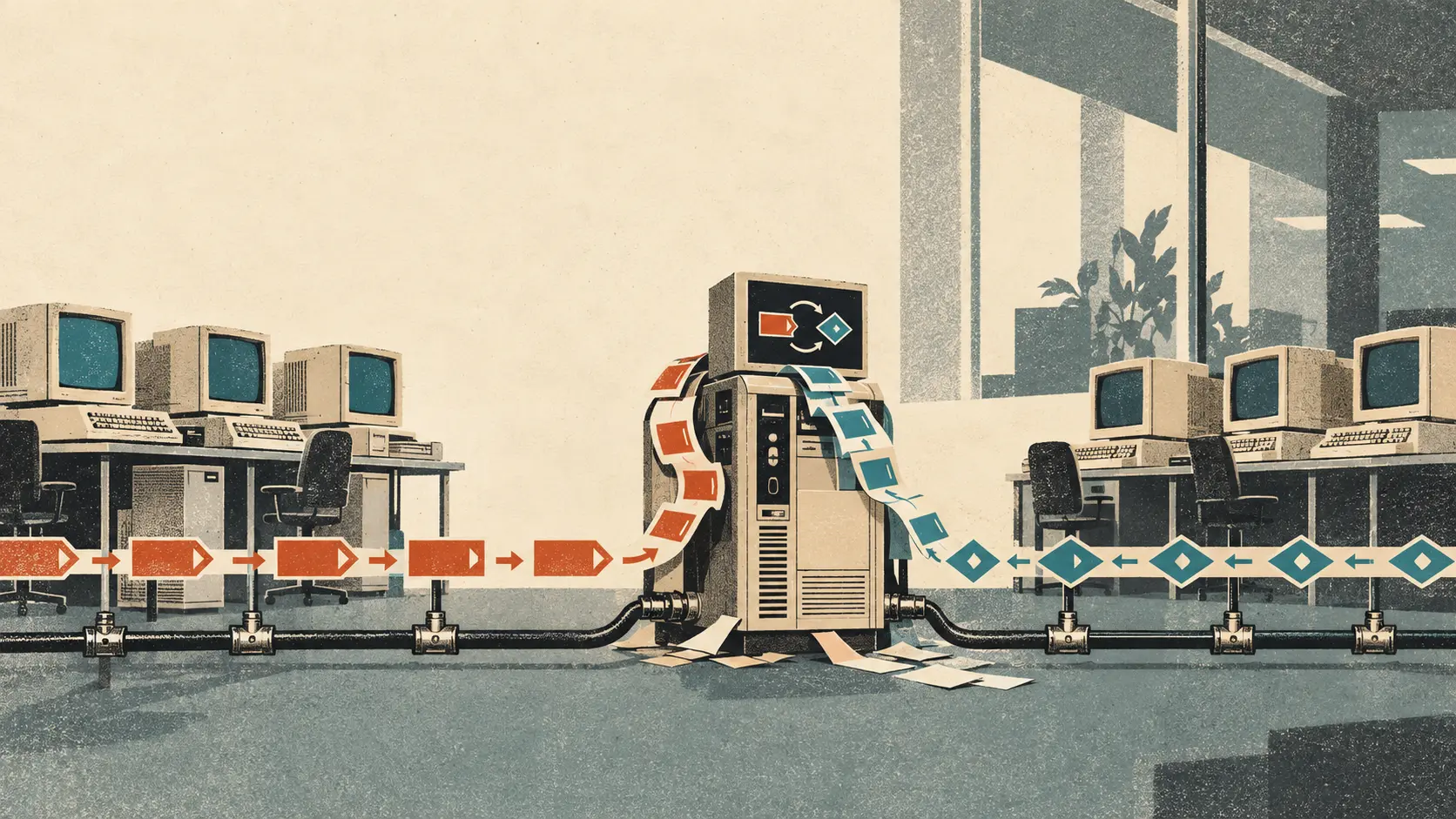
Imagine sending a name through a mail path that knows only a small alphabet. The name contains a character outside that alphabet. You can drop it, replace it with a guess, or spell it using characters the path can carry. In June 1992, Keld Simonsen's RFC 1345 made the third option systematic. It gave characters mnemonic names and described a family of encodings that could carry those names across narrower character sets.
The clever part was also visibly inconvenient. A mnemonic needs a boundary. Otherwise a reader cannot tell whether a pair of ordinary letters was typed by the sender or stands for some other character. RFC 1345 recommended decimal 38, the ASCII ampersand, as an introduction sequence. A literal occurrence of the introduction sequence had to be doubled. Mnemonics longer than two characters were surrounded by underscores. These little marks were the receipt for a reversible journey: the receiver could identify where the substitute began and ended.
The RFC's common vocabulary drew on 83 graphical characters invariant across ISO 646 variants. Two-character mnemonics mainly served alphabetic scripts, including Latin, Greek, Cyrillic, Hebrew and Arabic. Variable-length names served many non-alphabetic scripts, including Japanese and Chinese. The scheme tried to make a character identifiable without requiring the receiving machine to display the character itself. The sender, transport and viewer could have different capabilities, yet the encoded record could still carry the distinction.
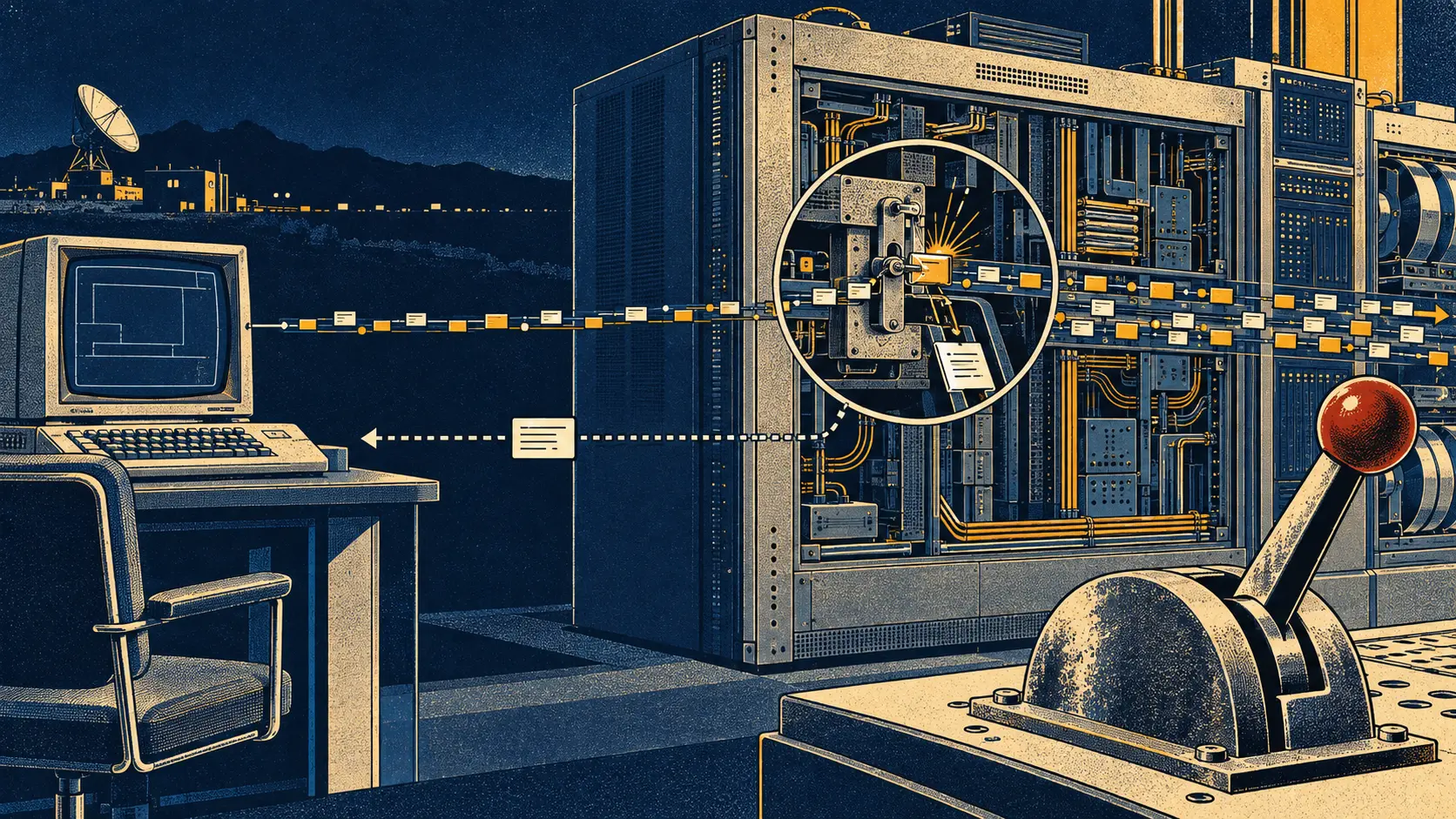
Then came the tempting zero. Section 4.3.2 allowed the introduction sequence to be set to 0. In that mode, the marker vanished from transport. The underscores around longer mnemonics vanished too. The line became less cluttered for someone reading it directly. It also stopped telling a future decoder which visible run was an encoded character and which run had always been ordinary text. The RFC said the change eliminated reversibility and introduced information loss. It made the equivalence explicit: mnemonic+ascii+0 is ordinary ascii.
That is a sharper trade than “better compatibility.” The marked form treats the character's identity as cargo worth preserving, even when its glyph cannot be drawn. The zero form treats immediate readability as the higher priority. One record can be pleasant to scan and useless for reconstructing the source; another can look fussy and retain the distinction. The switch was part of the specification, not a freak accident in a damaged mail relay.
The author's caveat about Chinese characters stops the design from becoming a triumphal universal keyboard story. RFC 1345 discouraged using mnemonics for Chinese characters of Chinese, Japanese or Korean origin. For the intended recipient, equipment could often handle the original encoding, while long mnemonic names would be cumbersome. An escape that is possible on paper is not automatically a humane reading interface. A sensible sender had to know the recipient and the path, not merely the table of names.
The RFC was informational. It mapped character sets and named a conversion mechanism; it did not compel every mail system to use it. Its durable lesson lies in the explicit choice it exposed. If an archive keeps only the zero-intro output, a later reader may enjoy a cleaner line but cannot reconstruct the distinctions that the sender chose not to mark. The missing boundary is the missing evidence.
Source: RFC 1345, Character Mnemonics & Character Sets, sections 2 and 4.3; RFC Editor record.
Member Briefing
Deeper Profile Context
Sign in with the right membership level to unlock the full briefing and source notes.
Only for Strategic Circle
Strategic Circle
Open to all readers. Unlock profile briefings after joining and signing in.
Join Strategic CircleOnly for Leadership Alliance
Leadership Alliance
For qualified IP-asset owners and management; sign in to unlock alliance briefings.
Join Leadership Alliance