
Summary
- VoIPline's official page says Yury Kirsanov co-founded the company in 2008 and identifies him as co-founder and chief technology officer. That is first-party role evidence, not independent proof of wider impact. [1]
- Official VoIPline and VoIPcloud pages narrowly attribute to Kirsanov work on a voice backbone, a private branch exchange interface, and billing software. Company growth and every platform outcome remain team and company matters. [1][2]
- A May 2022 OpenSIPS mailing-list record preserves his detailed questions about Network Address Translation contact handling between OpenSIPS 3.2.4 and an Asterisk registrar. It is a public operator report, not a code contribution. [3]
- An Asterisk issue record documents recurring PJSIP lockups, a maintainer's configuration hypothesis, Kirsanov's removal of stale configuration, and his report of no further outages in the observed period. That observation is deployment-specific, not a universal product fix. [4]
- The durable lesson is that voice-service continuity depends on disciplined observation, configuration control, reversible changes, and public troubleshooting records whose authorship and evidentiary limits remain clear.
The contribution is visible in the troubleshooting trail
Profiles of technical leaders often begin with a title and then expand into a broad account of influence. That approach is not useful here. The strongest public material about Kirsanov does not establish a sweeping personal impact claim. It shows a narrower sequence of actions inside running voice systems: describe an operational symptom, place it in a specific software and configuration context, engage with maintainers, test a proposed explanation, change a bounded setting, and report the observation that followed.
That sequence matters because voice infrastructure is judged by continuity. A business telephone service, contact centre, emergency line, or distributed team does not experience a protocol as an abstract standard. Users experience whether a call is established, whether registration persists, whether audio continues, and whether recovery occurs when a component behaves unexpectedly. A public troubleshooting record cannot prove every part of that experience. It can, however, expose the practical reasoning by which an operator turns an intermittent symptom into a testable question.
The official VoIPline page supplies the identity bridge. It says Kirsanov co-founded the company in 2008 and identifies him as co-founder and chief technology officer. The affiliated VoIPcloud page places the same name in a matching operating context. Those pages also attribute work on a voice-over-Internet-Protocol backbone, a graphical interface for a private branch exchange, and a billing system. These are first-party statements. They support a bounded account of role and work; they do not independently prove market success, platform-wide reliability, customer growth, or sole authorship. [1][2]
The technical archives add something different. They preserve dated, named interactions about particular behaviour in OpenSIPS and Asterisk. OpenSIPS is software commonly used to route and control Session Initiation Protocol signalling. Asterisk is a communications platform used in many private branch exchange and telephony deployments. Their public archives are not performance audits, and an issue reporter is not automatically a developer. They are nevertheless primary records of what a named participant asked, observed, or tested.
Taken together, the company pages and technical records support a person-level story without turning it into biography. The role pages explain why Kirsanov was operating in this technical domain. The archives show concrete participation in troubleshooting. Neither source class can replace the other. A corporate biography cannot prove that a configuration change resolved a problem, while an issue report cannot prove every company claim or current job title.
Why SIP, PBX, NAT, and PJSIP create difficult operating questions
Session Initiation Protocol, usually shortened to SIP, coordinates the signalling that starts, changes, and ends many Internet-based voice sessions. SIP does not carry the audio by itself. It helps endpoints and servers agree on identities, addresses, capabilities, and session state. A private branch exchange, or PBX, manages calls for an organisation, connecting internal users with each other and with external telephone networks. Software such as Asterisk can provide PBX functions, while a SIP proxy or routing layer such as OpenSIPS can direct signalling across a larger service.
These systems cross several boundaries. A telephone or software client may sit behind Network Address Translation, known as NAT, which lets many private devices share a public network address. A registrar records where a SIP user can currently be reached. A proxy makes routing decisions. Authentication verifies whether a request is permitted. Each component can be functioning according to its local rules while the end-to-end result still fails.
NAT makes the problem especially subtle. A SIP message can contain contact information that describes where future requests should be sent. The address visible inside the message may differ from the address visible to a server on the public side of the translation boundary. A system may therefore need to distinguish between what an endpoint declares and what the network path reveals. If different components rewrite, store, or interpret that contact differently, registration can appear successful while a later request follows an unusable path.
PJSIP is a SIP, media, and NAT traversal project used by Asterisk. In an operational discussion, the name may refer to the library, Asterisk's PJSIP-based channel driver, or configuration objects built around it. That ambiguity is one reason precise records matter. A report that says only “SIP stopped working” is difficult to act on. A useful report specifies versions, roles, observed symptoms, configuration assumptions, and the change that was tested, while avoiding disclosure of credentials or customer data.
The public records associated with Kirsanov illustrate this form of specificity. They should not be copied as raw logs into a public article, and no contact details or addresses are needed here. Their value lies in the structure of the questions: which component held the relevant state, which setting might be stale, what was removed, and what was observed afterward.
The May 2022 OpenSIPS question was an operator's boundary problem
A May 2022 OpenSIPS users-list record attributes to Kirsanov a detailed report and questions concerning NAT contact handling between OpenSIPS 3.2.4 and an Asterisk registrar. The record is useful because it sits at the boundary between two systems. It was not simply a complaint about OpenSIPS or Asterisk in isolation. It asked how contact information should be understood when a proxy and registrar participate in the same signalling path. [3]
That is a classic operational boundary. One component can observe the transport source of a request, another can store a declared contact, and a third can later attempt to reach the endpoint. The desired behaviour depends on the network design, the NAT policy, and the configuration of each product. When a call or registration fails, the visible symptom can appear far from the decision that caused it.
The public message supports several bounded statements. Kirsanov was participating in the OpenSIPS user community under his own name. He described a real configuration context involving OpenSIPS 3.2.4 and an Asterisk registrar. He asked technically specific questions about NAT contact handling. It does not establish that he authored a patch, changed the OpenSIPS codebase, or solved a universal defect. It also does not establish the commercial scale or customer impact of the deployment.
Its contribution is diagnostic clarity. An operator who identifies the relevant boundary gives maintainers and peers something they can reason about. Product documentation often explains components separately. An operating report exposes the assumptions at their intersection. That difference can save time for the next team that encounters similar symptoms, even if its final configuration is not identical.
The record also demonstrates why public technical archives must be read as conversations rather than verdicts. A mailing-list answer may propose a configuration pattern, ask for more detail, or correct a misunderstanding. None of those steps alone proves an outcome. The reliable unit of analysis is the chain: initial observation, stated environment, proposed explanation, test, and subsequent report. Where the chain stops, the article must stop too.
The Asterisk lockup record shows the value of a bounded configuration test
An Asterisk issue archive provides the clearest action-and-observation sequence in the source set. ASTERISK-28997 records Kirsanov reporting recurring PJSIP lockups. The archive shows a maintainer advancing a configuration hypothesis, Kirsanov testing it, removal of stale sorcery configuration, and a later report that no further outages had occurred during the period he observed. [4]
“Sorcery” in Asterisk is a configuration and data abstraction that can map objects to different storage mechanisms. The name sounds unusual outside the project, but the operating question is familiar: what configuration objects exist, where are they loaded from, and whether an old or duplicate definition remains active. Stale configuration can survive a migration or earlier experiment. It can create behaviour that looks random because the visible file is not the only source of truth.
The issue record does not justify the sentence “Kirsanov fixed Asterisk.” It supports a narrower account. He reported recurring lockups in his deployment. A maintainer proposed that configuration was involved. Kirsanov removed stale configuration and reported no further outages over the observed interval. The upstream product, the deployment environment, and the diagnostic exchange all contributed to that outcome. The public record does not establish a committed patch, a product-wide regression test, or independent replication.
That distinction is not pedantic. It separates two kinds of infrastructure contribution. A developer may alter code and submit a patch. An operator may isolate a configuration condition, test a hypothesis in a running environment, and report the result. Both can improve shared understanding. Calling the second action a code fix would erase the maintainer's role and misstate the evidence. Treating it as insignificant would erase the operational knowledge that issue trackers are designed to capture.
The observed no-outage period also needs careful language. An absence of further outages after a change can support a working hypothesis. It is not proof that the same change will solve every lockup, or that no other variable changed. The strength of the observation increases with time, repeated load, comparable conditions, and the absence of competing explanations. The public archive provides only the observation it records. A responsible article does not invent a longer follow-up window.
For operators, the practical pattern is still valuable. Remove one suspected stale element rather than rewriting the entire environment. Preserve enough state to reverse the change. Observe the system under normal and stressful conditions. Record what did and did not recur. If the symptom returns, the earlier test remains informative because it narrows the search rather than pretending to have ended it.
Reporter credit is valuable without becoming code authorship
Other Asterisk records identify Kirsanov as a reporter in a 2020 PJSIP authentication issue and in the Asterisk 20.2.0 release summary. These records show sustained participation across more than one operational question. They do not show that he wrote the eventual code changes or owned the upstream release process. [5][6]
Issue trackers assign several roles that public summaries often collapse. A reporter describes a problem. A maintainer triages it. A contributor may reproduce it, propose a test, or supply a patch. A reviewer examines a change. A release manager decides when a fix ships. One person can hold several roles, but the archive must establish each one. A name in a release summary can preserve reporter credit while still distinguishing that credit from authoring the fix.
That distinction protects the integrity of the project record. Open-source maintenance depends on people who make problems observable as well as people who change code. A high-quality report can reduce the maintainer's search space, reveal an environment that tests did not cover, and create a case against which later changes can be assessed. The value comes from accuracy and reproducibility, not from upgrading every participant into an inventor.
It also protects the subject. Inflated attribution can sound flattering, but it creates claims that the sources cannot sustain. A reader who later checks the archive may find only reporter credit and conclude that the entire article is unreliable. Precise attribution produces a stronger profile: Kirsanov's documented contribution is the operator's work of observing, testing, and reporting voice-system behaviour.
Public troubleshooting records are a continuity asset
Telecom continuity is often discussed through redundancy: more links, more servers, more sites, and more suppliers. Redundancy matters, but it cannot compensate for an environment whose state is poorly understood. A duplicated configuration mistake can fail twice. A failover system can inherit stale objects. A second platform can remain unreachable if contact handling is wrong at the shared signalling boundary.
Troubleshooting records support a different form of resilience: retained operational knowledge. They show which symptoms occurred, which assumptions were tested, and which observations followed. When names, dates, versions, and boundaries are preserved, a future operator can decide whether an old case resembles a current one. The record does not eliminate diagnosis. It prevents the organisation from starting from zero.
This is where running-code evidence matters. A title can indicate responsibility, and a company page can describe an intended product. Neither proves how software behaved under a particular condition. A public issue report cannot prove overall service quality, but it can show that a concrete symptom existed and that someone tested a specific explanation. The reality of the running system disciplines the narrative.
The same principle applies inside a private operation. Teams need incident notes that distinguish confirmed facts from hypotheses, configuration changes from code changes, and observations from causal conclusions. A note that says “the outage stopped after we changed this setting” is stronger than a note that says “the setting caused the outage,” unless the team has ruled out alternatives. The more reversible the test and the clearer the observation window, the more useful the note becomes.
Public archives add a further benefit: outside scrutiny. Other operators can challenge an assumption, ask for a missing condition, or recognise a related pattern. That does not make the crowd automatically correct. It makes reasoning visible. For infrastructure that crosses organisational boundaries, visible reasoning can be more durable than an answer held by one engineer or vendor.
What the company pages establish—and what they do not
The official pages give the article a legitimate person and role context. VoIPline says Kirsanov co-founded the company in 2008 and identifies him as co-founder and chief technology officer. VoIPline and VoIPcloud attribute work on the voice backbone, PBX interface, and billing system to him. These statements explain why his name appears in detailed SIP and Asterisk discussions. [1][2]
They remain marketing or company-controlled sources. The pages do not independently establish that he personally designed every part of the platform, implemented every deployment, or delivered every operational outcome. They do not justify assigning company growth, geographic expansion, customer acquisition, market status, or autonomous-system activity to him. This article does not need those claims.
The distinction between role and action can be stated positively. A role tells readers where to look for responsibility. An action record shows what the person did in a specific instance. The role pages support the identity bridge; the technical archives support the troubleshooting record. The article's thesis depends on the combination, not on exaggerating either source.
Current-tense wording also requires restraint. A page may identify a role when it was captured, but the source set does not establish every later change. The durable historical facts are the 2008 co-founding statement and the archived technical participation. Readers do not need an unsupported claim about present employment to understand the contribution.
The software-lifecycle lesson is configuration visibility
Software lifecycle risk is often framed as a choice between an old version and a new one. Voice infrastructure shows why the real problem is broader. A service includes code versions, modules, configuration objects, storage backends, endpoints, network translation, authentication, monitoring, and operating procedures. A team can upgrade one layer while carrying old assumptions into the next.
The Asterisk configuration episode illustrates that risk without proving a general rule about the product. Stale configuration was relevant in the recorded deployment. The operator's task was not merely to install a release. It was to understand which configuration source remained active and whether the system's actual state matched the intended design.
This is a form of lock-in that is not limited to a vendor contract. An organisation can become locked into undocumented local knowledge, fragile configuration order, or a troubleshooting habit that only one person understands. Replacing software does not remove that dependency. It may conceal it until a failure forces the team to rediscover the state under pressure.
Public records can reduce that dependency when they are written with boundaries. They help operators recognise that a similar symptom might involve contact rewriting, registrar state, authentication configuration, or stale objects. They do not prescribe a universal command. The durable asset is a method for asking what the system is actually loading and observing.
For leaders, the relevant investment is not only in newer software. It is in configuration inventory, change review, reproducible tests, version-aware documentation, and enough staffing that knowledge survives turnover. A service can run for years on mature software if its state is controlled. A new release can remain fragile if nobody can explain how it was assembled.
Practical questions for operators and buyers
An operator reviewing a SIP or PBX environment should begin with state. Which component is authoritative for registration? Which addresses are declared by endpoints, and which are observed after NAT? Which configuration stores are active? Are duplicate or stale objects detectable? Can a change be rolled back without losing the evidence needed to compare behaviour?
The next questions concern observation. What exactly counts as a lockup, failed registration, or authentication failure? Is the metric taken at an endpoint, proxy, registrar, PBX, or customer application? What time window is long enough to say that a recurring incident did not reappear? Which unrelated changes occurred during that window?
For buyers, the questions are similar but framed as assurance. Does a supplier preserve issue history and provide an accountable route for escalation? Can it explain whether a remedy was configuration-specific or product-wide? Does it separate a reporter's observation from a tested fix? Will it provide evidence that a change worked in the buyer's environment rather than relying on a generic success story?
These questions do not assume that public discussion is always possible. Voice systems can contain sensitive account details, customer identities, telephone numbers, addresses, and logs. Responsible reporting removes that material while preserving the technical structure. The sources used here contain more operational detail than should be reproduced in a general article; the analysis needs only the bounded actions and results.
Procurement should also ask about continuity of knowledge. If a named specialist leaves, can another operator reconstruct the configuration and incident history? If a vendor changes ownership or product direction, can the service be maintained or migrated? If an upstream project changes an interface, does the team know which local assumptions need retesting?
The central control question is who can establish which configuration the running system actually loaded, who can approve a change, and who can stop or reverse it when the evidence is weak. A PBX team may own call logic, a network team may own translation and routing, and a platform team may own deployment. If each group sees only its local state, an end-to-end failure can sit between their responsibilities.
Configuration visibility also changes staffing. When knowledge is documented, senior specialists spend less time reconstructing old state and more time reviewing hard cases. Junior operators can learn from bounded incidents without copying commands blindly. The organisation becomes less dependent on a single person, which is especially important for long-lived voice systems that outlast individual roles.
Public issue participation can strengthen an upstream project by revealing environments not represented in its test suite. The benefit depends on report quality. Raw confidential data, vague complaints, or inflated conclusions create cost rather than shared knowledge. A strong report strips sensitive material, preserves enough context to reason, and follows up when a proposed test changes the symptom.
Accurate credit has its own effect. When reporters receive reporter credit and developers receive authorship credit, communities can value both forms of work without competition. Inflated biographies are less necessary because operational contribution is visible on its own terms. That supports a healthier maintenance culture and more reliable public analysis.
Limits and evidence that would change the assessment
The source set has clear limitations. Two pages are controlled by the companies they describe. The OpenSIPS and Asterisk archives are primary technical records, not independent evaluations of Kirsanov's overall performance. An issue report records a problem and a conversation; it does not measure company-wide availability or customer impact.
The strongest positive evidence is therefore narrow. The identity and role context are consistent. The technical records are dated and attributable. The Asterisk lockup issue includes a testable configuration sequence and a bounded follow-up observation. The release record preserves reporter credit. Together they support a profile of operational troubleshooting, not a claim of invention or broad industry transformation.
Independent case analysis could strengthen the assessment if it confirmed that one of these reports led to a documented change used by other operators. A public patch record could change the attribution if it named Kirsanov as an author. Longer deployment observations could strengthen the continuity result if their conditions and measurement method were available. None of that evidence is present here, so none is implied.
Contrary evidence would also matter. If a later record showed that the suspected configuration was unrelated, the interpretation of the lockup episode would need to change. If the official biography were outdated or conflated two people, the identity bridge would need to be revisited. The current compound match is strong because the exact name, voice-system context, and repeated technical identity align, but transparency requires acknowledging what would reopen the question.
Image disclosure
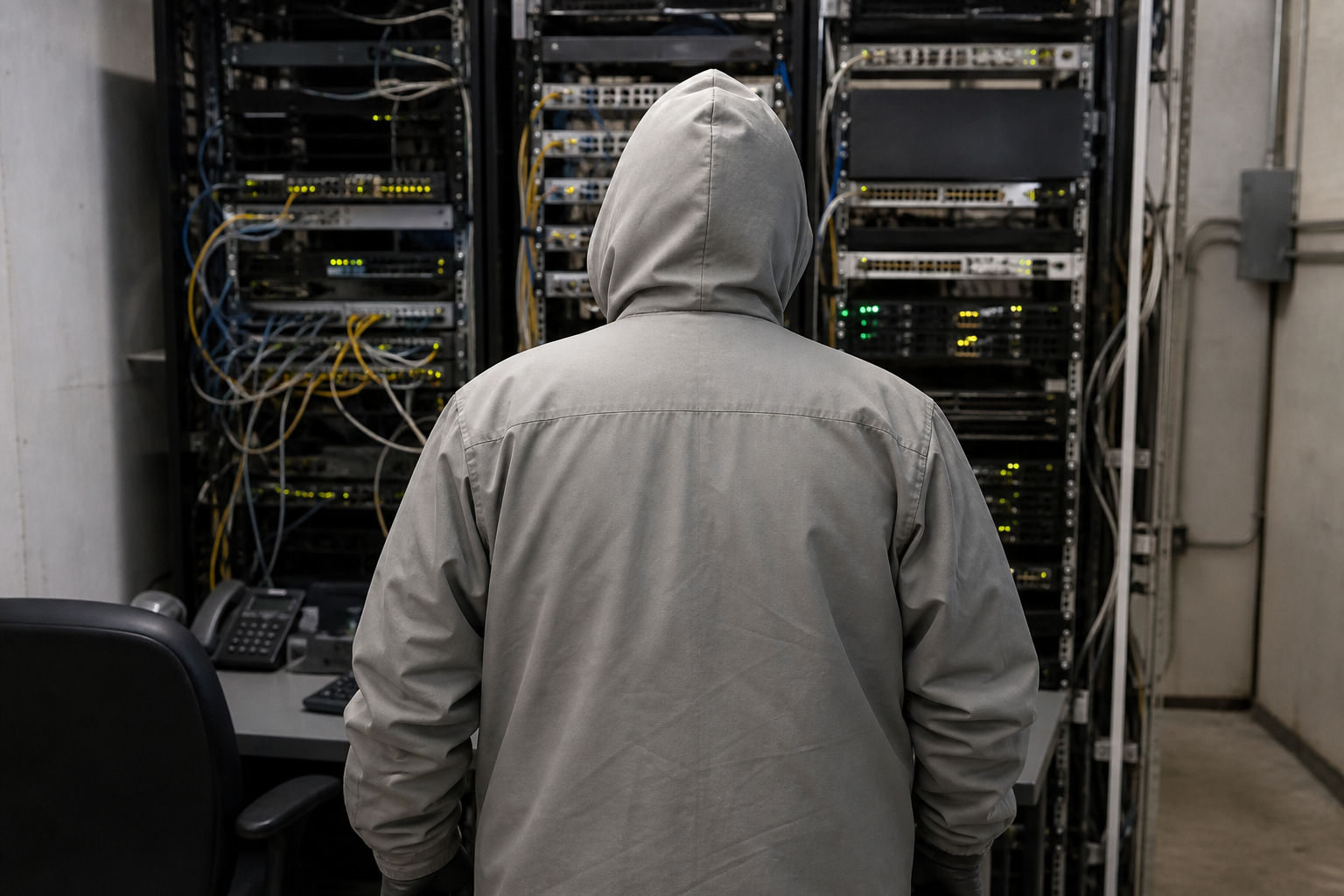
Alt text: AI-generated photorealistic editorial scene of an anonymous, fully concealed telecom-operations worker viewed from behind in an unbranded network workspace.
Caption: AI-generated photorealistic editorial scene illustrating telecom-operations troubleshooting; the anonymous figure is not a photograph or likeness of Yury Kirsanov.
Sources
- VoIPline Telecom, official company history and role context: https://www.voiplinetelecom.co.uk/about-us
- VoIPcloud, affiliated team and technical context: https://www.voipcloud.online/meet
- OpenSIPS users archive, May 2022 NAT contact-handling discussion: https://opensips.org/pipermail/users/2022-May/045862.html
- Asterisk issue archive, PJSIP lockup and configuration investigation: https://issues-archive.asterisk.org/ASTERISK-28997
- Asterisk issue archive, PJSIP authentication report: https://issues-archive.asterisk.org/ASTERISK-29095
- Asterisk 20.2.0 release summary, reporter credit: https://downloads.asterisk.org/pub/telephony/asterisk/releases/asterisk-20.2.0-summary.html
Member Briefing
Deeper Profile Context
Sign in with the right membership level to unlock the full briefing and source notes.
Only for Strategic Circle
Strategic Circle
Open to all readers. Unlock profile briefings after joining and signing in.
Join Strategic CircleOnly for Leadership Alliance
Leadership Alliance
For qualified IP-asset owners and management; sign in to unlock alliance briefings.
Join Leadership Alliance