

- A characteristic of augmented reality is that it blends digital information with the real world in a smooth way. It gives many uses from helping in decision making to offering entertainment in different areas.
- AR technology uses hardware parts like processors, sensors, and displays. Mobile devices are common platforms because they already have these parts built in. Progress in AR technology includes Apple’s ARKit and Google’s ARCore.
Today, smartphone gaming, mixed-reality headsets, and heads-up displays in car windshields are leading consumer AR products. AR technology also reaches into many other fields. It is used in healthcare for training and patient support. It is used in public safety for real-time information during emergencies. It is used in gas and oil for equipment checks and field tasks. It is used in tourism for guided experiences and virtual tours. It is used in marketing for interactive ads and customer engagement. Each sector shows how AR adds digital layers to real-world activity.
Also read: What is Augmented Reality?
Also read: What AI voice generator is everyone using?
Also read: Generative AI in the pharmaceutical industry
What is a characteristic of augmented reality?
Augmented reality, or AR, puts digital information into the user’s real environment in real time. Virtual reality, or VR, makes a fully artificial setting. AR instead adds digital images or data onto the real world. This gives the user an experience that mixes both. AR has many uses. It helps with decision making. It also gives entertainment. It can change how natural surroundings look. It can also give extra information that supports what the user sees. The main strength of AR is that it joins digital parts with three-dimensional elements and the user’s real-world view.
Utilising devices such as smartphones, glasses, or headsets, AR delivers visual, auditory, and sensory cues to users. These overlays create an immersive experience, altering users’ perception by integrating digital content with their physical environment. The overlaid information can seamlessly blend into the surroundings or selectively obscure parts of the natural environment.
AR works through devices like smartphones, glasses, or headsets. It gives visual, sound, and other sensory signals to the user. These overlays make the experience feel immersive. They change how the user sees by adding digital content to the physical space. The added data can blend into the surroundings. It can also hide parts of the real environment.
The phrase “augmented reality” was first used in 1990 by Thomas Caudell, who worked at Boeing Computer Services, Research, and Technology. He used it to explain head-mounted displays that helped electricians build complex wiring harnesses. A well-known early use of AR for the public came in 1998 with the yellow first-down marker shown in televised football games.
How does augmented reality function?
Augmented reality can be used with smartphones, glasses, and headsets. Work is also being done to make AR contact lenses. The technology depends on hardware parts like processors, sensors, displays, and input tools. Smartphones and tablets already include these parts. This makes AR easy for people to use. These devices often have: cameras, accelerometers, and compasses.
These parts make location tracking and orientation detection possible. Advanced AR systems are built for military training. They use machine vision, entity recognition, and gesture recognition. AR also needs strong computing power. The work of processing can be shared with other devices when needed. AR systems in research and industry may also link with cloud computing. This allows large amounts of data to be handled in real time. It also helps AR run smoothly without depending only on one device.
Augmented reality applications can work with marker-based or markerless methods. Marker-based AR uses digital information linked to markers in the real world. When the device detects a marker, it shows related images or actions. This makes the experience simple and direct. Markerless AR is harder to build. It does not use fixed markers. It works with recognition algorithms that can find entities in the environment. Once entities are found, digital content is placed on top of them.
Distinguish the characteristics of AR from VR
Virtual reality builds a digital environment with software. Users see and hear this space as if it is real. The experience is immersive and is given through headsets that provide sight and sound. Augmented reality works in a different way. It adds virtual information to the real world around the user. VR puts the user fully into a digital world. AR keeps the user in the real world and places digital parts into it. The devices used are also different. VR uses headsets to give the full experience.
AR can use phones, glasses, projections, or heads-up displays. In VR, users move and act in a 3D digital space. In AR, users stay in the real world and see digital images on top of it. VR can show a forest or a city that does not exist. AR can show a web browser on a table in the living room. Some headsets such as Apple Vision Pro and Meta Quest 3 use passthrough. This feature lets users see the real world through cameras while also viewing digital layers. The phrase mixed reality is often used in the same way as AR. It means adding virtual content to the real world for interaction.
A headset like Apple Vision Pro can place a virtual keyboard for typing. The main difference is that mixed reality lets the user act with the digital display and not only view it.
The future of augmented reality technology
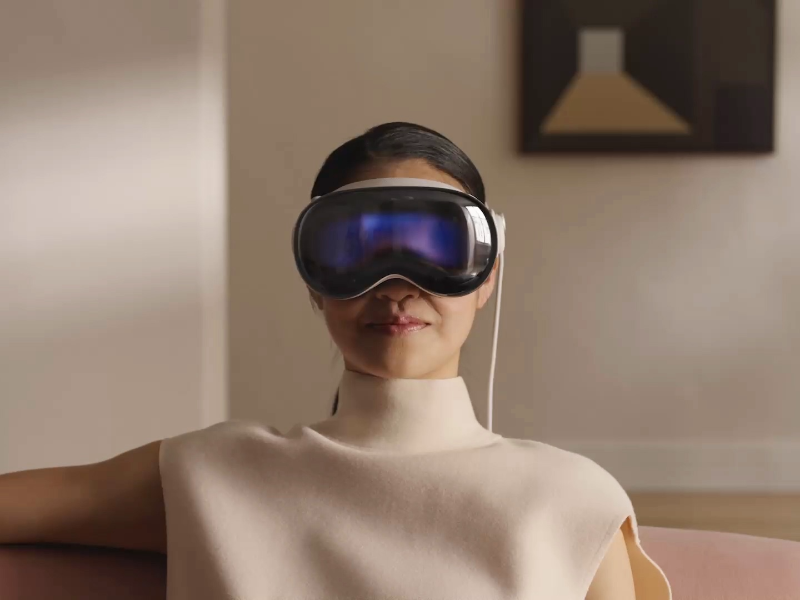
The growth of AR technology can be seen in apps and games. Pokemon Go is a well-known example. AR is also used in retail stores to give customers a better shopping experience. Apple is improving ARKit, which is a toolkit for mobile AR development. Many companies like Target and Ikea use ARKit in their shopping apps on iOS. ARKit 6 adds new tools such as high dynamic range 4K rendering.
It also gives better image and video capture. ARKit 6 has a Depth API that helps cameras measure entity size and shape. It uses per-pixel depth information and scene geometry mapping to make this work. Google is also building ARCore, which is a platform for AR on Android and iOS. ARCore uses a geospatial API that relies on Google Earth 3D models and Street View image data from Google Maps. ARCore also has stronger depth-sensing tools that allow longer-range detection.