
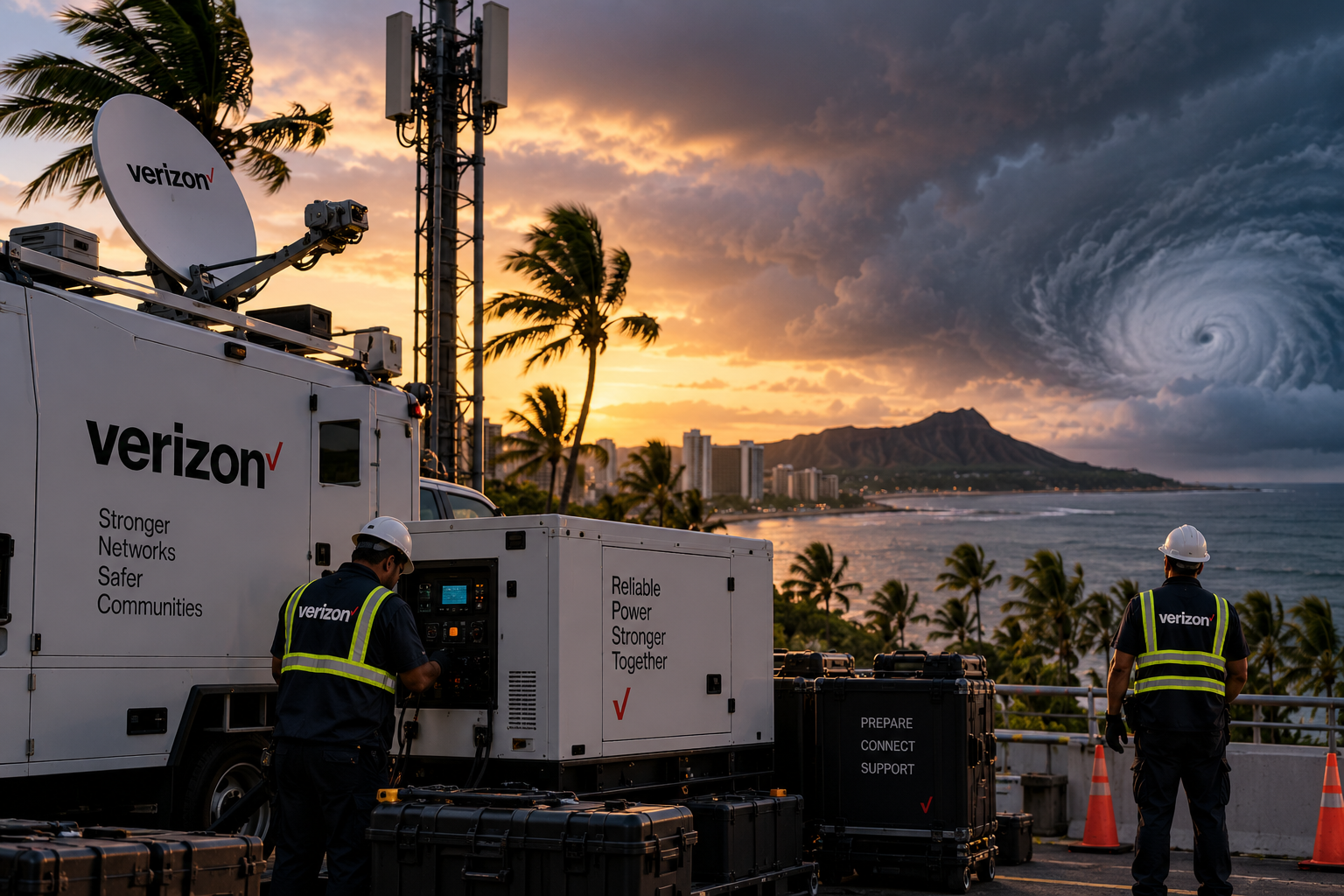
- Verizon has positioned generators, satellite assets and other equipment in Hawai‘i ahead of Hurricane Lowell
- The operator is coordinating with emergency agencies and power providers, while compatible phones can use satellite messaging if terrestrial service fails
The fact
Verizon said on 5 September that it had prepared its Hawai‘i network for Hurricane Lowell by positioning backup generators, satellite assets and other equipment before the storm’s expected effects.
The company said it was coordinating with Hawai‘i emergency agencies, local power providers and public-safety officials. It also advised customers with compatible satellite-enabled phones to prepare satellite messaging in case terrestrial connectivity became unavailable.
The National Hurricane Center was issuing advisories for Lowell as the storm approached the islands. Verizon had not reported storm-related network failures when it announced the preparations, so the measures were being taken before the extent of any damage or service disruption was known.
The assessment
Moving equipment before the storm gives Verizon more options if grid power fails or damaged roads make sites difficult to reach. Generators and other equipment can be deployed while crews still have access, rather than transported into affected areas after conditions deteriorate.
That does not mean outages will be avoided. A generator can keep a site running when commercial power fails, but it cannot by itself repair damaged network connections or make an inaccessible site reachable. The value of the preparation will depend on where disruption occurs and whether crews can continue reaching and supplying affected sites.
For BTW readers, the test is what happens after Lowell passes. If sites lose commercial power, Verizon’s restoration times and use of the equipment already in place will show how much pre-staging helped keep the network operating or return it to service.
What to watch
Watch whether commercial power losses lead to cell-site outages and how quickly Verizon restores affected sites. Post-storm updates on generator use, fuel access and any deployment of satellite assets would show whether the equipment positioned before Lowell reduced the time needed to maintain or restore service.
Member Briefing
Deeper Profile Context
Sign in with the right membership level to unlock the full briefing and source notes.
Only for Strategic Circle
Strategic Circle
Open to all readers. Unlock profile briefings after joining and signing in.
Join Strategic CircleOnly for Leadership Alliance
Leadership Alliance
For qualified IP-asset owners and management; sign in to unlock alliance briefings.
Join Leadership Alliance