Summary
- Crown Castle manages and operates two tower bundles originally described as approximately 6,200 and 6,400 sites. Its purchase route is split: roughly $2.0 billion of options exercisable by tranche from 2035 to 2049, and a separate roughly $2.3 billion all-or-nothing option near the inherited lease's expiry.
- T-Mobile did not account for either arrangement as a sale of the towers. At 30 September 2026 it reported $3.419 billion of tower obligations and $1.815 billion of related property and equipment, net.
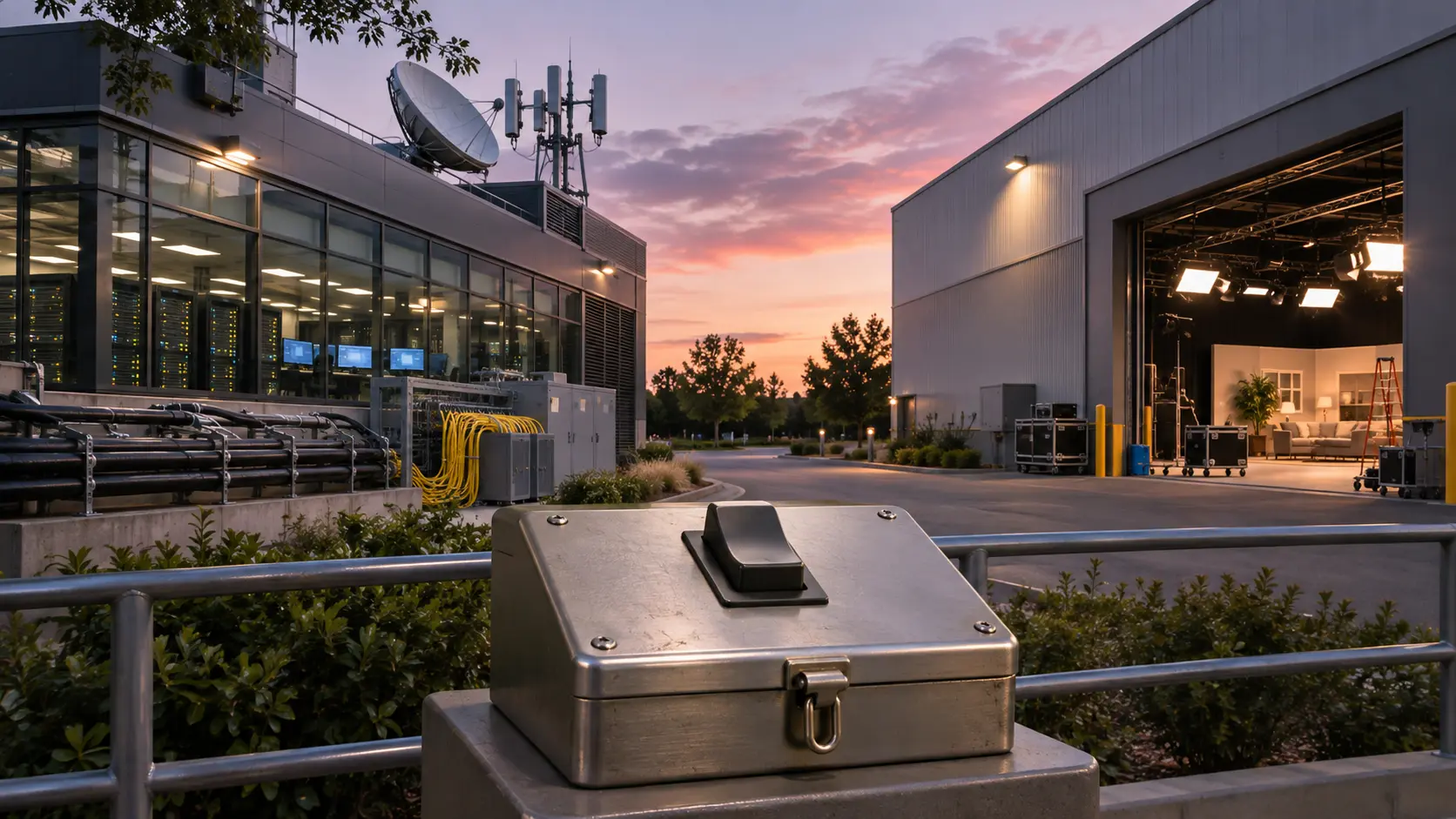
The entrance to a mobile tower is a poor guide to its balance sheet. Crown Castle has the exclusive right to manage and operate the sites in two longstanding T-Mobile arrangements. T-Mobile's September 2026 Form 10-Q keeps the tower assets and a financing obligation on the carrier's books. The keys, the accounting and the right to purchase later sit in different places.
The first bundle dates from 2012, when T-Mobile conveyed operating and management rights over approximately 6,200 towers through a master prepaid lease. The individual site terms run 23 to 37 years. Crown Castle can buy the sites at fixed prices totalling approximately $2.0 billion, but only as their tranches reach the end of their terms. The exercise windows run annually from the end of 2035 through 2049. Exercising a tranche means buying every tower in that tranche. It is a staged purchase mechanism, not a single switch for the entire bundle.
The second bundle arrived through Sprint. Sprint had conveyed the rights to approximately 6,400 sites to Global Signal, later acquired by Crown Castle. When T-Mobile acquired Sprint, the lease-out had approximately 17 years remaining and no renewal option. Crown Castle's fixed-price option here is about $2.3 billion and covers all, but not fewer than all, of the leased or subleased sites. It opens one year before the agreement expires and shuts 120 days before expiration. The filing gives an approximate remaining term at the merger, not a precise future exercise date.
Those two options shape a future negotiation. One allows a series of tranche decisions over fourteen years; the other is one large decision in a narrow window. Neither is a completed purchase. The reported $2.0 billion and $2.3 billion are conditional future prices, separate from T-Mobile's existing tower obligation. Treating them as a bill due today would confuse the gate's spare key with its current rent.
T-Mobile explains why the towers stayed on its accounts. Special-purpose entities in the 2012 arrangement hold assets including ground leases, towers and tenant subleases and owe ground rent, taxes and other costs. Crown Castle directs tenant management, leases, maintenance and the economics of the purchase option. T-Mobile says it does not control the activities that most affect those entities' economics. Yet T-Mobile also judged that the transfer did not satisfy the test to derecognize the towers as a sale. It recorded financing instead. Operational authority and accounting sale treatment answer different questions.
The balance-sheet result at September's end was $1.815 billion of related property and equipment, net, and $3.419 billion of tower obligations, down from $1.922 billion and $3.532 billion respectively at the end of 2025. Future minimum tower-obligation payments include approximately $396 million in the twelve months ending September 2027 and $2.9 billion after September 2031. T-Mobile remains contingently liable for future ground lease payments even where Crown Castle contractually owes them. At roughly 850 sites T-Mobile remains primarily liable, with $233 million of operating lease liabilities.
Those 850 are a subset of the arrangements, not a third tower portfolio.
The disclosure does not give a current tower count, per-tranche values or the economics Crown Castle would face when an option becomes exercisable. Those site-level figures would change the purchase case. Until then, the useful market map is specific: Crown Castle operates; T-Mobile carries assets and financing; purchase rights wait for their contract windows.
Member Briefing
Deeper Profile Context
Sign in with the right membership level to unlock the full briefing and source notes.
Only for Strategic Circle
Strategic Circle
Open to all readers. Unlock profile briefings after joining and signing in.
Join Strategic CircleOnly for Leadership Alliance
Leadership Alliance
For qualified IP-asset owners and management; sign in to unlock alliance briefings.
Join Leadership Alliance