

- China’s internet courts are institutions dedicated to resolving disputes arising from e-commerce and digital transactions.
- Internet courts offer accessibility and convenience by allowing litigants to file cases online, leveraging advanced technologies like blockchain and AI to enhance transparency and efficiency.
- Internet courts have achieved remarkable success in China, with over 90% of cases filed, heard, and solved online. The average resolution time is significantly faster than traditional courts, promoting trust and confidence among litigants.
- However, criticisms include concerns about transparency, due process, and data security, which need to be addressed for further improvement.
China’s internet courts: Reshaping dispute resolution in the digital age
China’s internet courts have emerged as pioneering institutions in the field of online dispute resolution, addressing the challenges posed by the rapid growth of e-commerce and digital transactions. Established in 2017, these specialized courts are dedicated to efficiently resolving disputes that arise in the realm of cyberspace, transforming the way justice is delivered in China.

As the world’s largest e-commerce market, China witnessed a surge in online transactions. With millions of transactions taking place daily, disputes and conflicts inevitably arise.
Traditional courts struggled to cope with the sheer volume of cases and the complexities inherent in resolving online conflicts. Internet courts fortunately provide a specialized and dedicated platform for resolving these cases efficiently and effectively.
Recognizing the need for an innovative approach, China pioneered the establishment of internet courts to provide a swift and effective resolution mechanism for this burgeoning digital landscape.
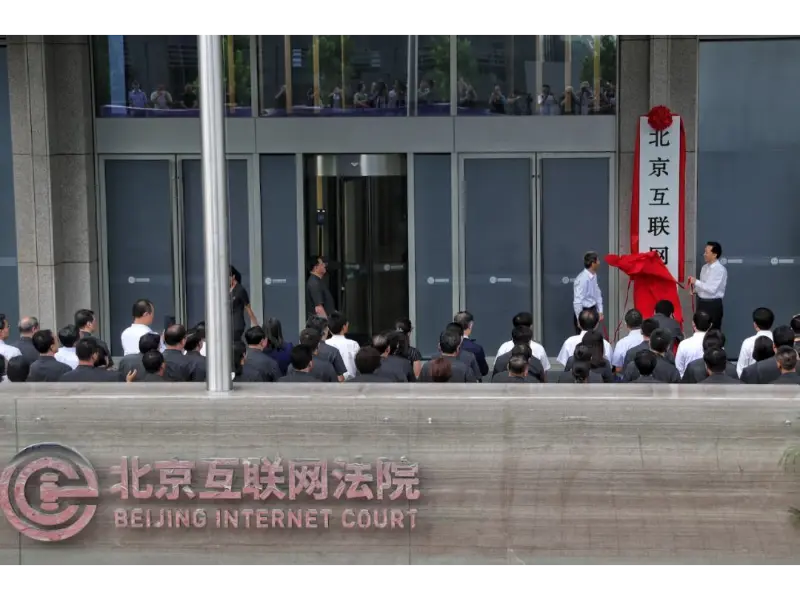
The world’s first internet court was set up in Hangzhou, the capital of Zhejiang Province, in August 2017. Its success led to the opening of two more internet courts in Beijing and Guangzhou. These specialized courts handle a wide range of cases, including e-commerce disputes, copyright infringement, online finance, and internet-related civil lawsuits, which traditional courts may struggle to address. By focusing solely on digital disputes, they possess the expertise and understanding required to navigate the intricacies of cyberspace law.
Also read: TikTok Ventures into E-Commerce
Advantages and innovations: How China’s internet courts lead the way
One of the key advantages of China’s internet courts is their accessibility and convenience. Litigants can file cases online, eliminating the need for physical travel and reducing costs. This streamlined process enables individuals and businesses, regardless of their geographical location, to seek redress efficiently. Furthermore, the courts leverage advanced technologies such as blockchain and AI to enhance transparency and efficiency throughout the litigation process.

Blockchain technology has been used to secure and authenticate the evidence presented by the parties in a case. By leveraging the decentralized nature of blockchain, the internet courts ensure that evidence cannot be tampered with or altered, assuring both parties of a fair and reliable decision-making process. Blockchain also provides a transparent and immutable record of the proceedings, making it easier to track the progress of a case and ensuring that the verdict is based on trustworthy evidence.

AI algorithms are also employed in internet courts to aid in evidence verification, analysis, and decision-making. Using machine learning techniques, AI can quickly and accurately analyze large volumes of data, including complex legal documents, to identify relevant information and patterns. This expedites the proceedings and reduces the chances of human error. AI can also assist in streamlining the case management process, facilitating communication between parties and judges, and reducing human error and the time required for hearings.
Success and criticisms: Evaluating China’s internet courts’ impact
The success of China’s internet courts is evident in their remarkable track record. More than 90% of cases in the country’s three internet courts have been filed, heard and solved online, with more litigation services supplied through smartphone applications and WeChat mini programs, meaning legal services can be accessed at any place and any time, according to a report issued by the Chinese Academy of Social Sciences (CASS).
Since their inception, millions of legal cases are now being decided by internet courts that do not require citizens to appear in court, with the average resolution time being just 38 days – significantly faster than traditional courts. This accelerated dispute resolution process not only saves time but also delivers justice swiftly, promoting trust and confidence among litigants.
While China’s internet courts have received widespread acclaim, they are not without criticism. Some argue that these specialized courts may lack transparency and due process compared to traditional courts. The proceedings of internet courts are not open to the public. This lack of transparency makes it difficult for individuals and organizations to scrutinize the judicial process and assess the quality of justice being delivered. Meanwhile, the judges in internet courts are not trained in traditional legal procedures.
In contrast, they receive specialized training in internet law and technology, which may lead to a lack of familiarity with traditional legal principles and procedures. This lack of experience may contribute to a lack of transparency, particularly in comparison to traditional courts.
Concerns have also been raised regarding data privacy and security, given the sensitive information involved in many online cases.
However, ongoing efforts are being made to address these concerns and further improve the judicial system.
Pop quiz
Which is an example of the kind of case the internet court would deal with?
A. Traffic violations
B. Environmental issues
C. Copyright disputes
D. Government lawsuits
Find the answer at the bottom of the article.
Does the rest of the world need to implement internet courts like China?
China’s internet courts have set a precedent for other countries grappling with the challenges of digital dispute resolution. As e-commerce continues to grow globally, specialized courts like these may offer a viable solution for efficient and effective dispute resolution in the digital age. By harnessing the power of technology and adapting legal processes accordingly, these courts exemplify how innovation can transform access to justice and meet the evolving needs of a rapidly growing digital world.
While it may not be feasible for every country to replicate China’s model, there are compelling reasons why the rest of the world should consider implementing similar internet courts.
Specialized expertise
Digital disputes often involve complex technical and legal issues that require specialized expertise. Internet courts, as demonstrated in China, can provide judges and legal professionals with the necessary knowledge to understanding digital technologies, cybersecurity, data protection, and emerging legal frameworks. This expertise ensures fair and informed decisions in resolving disputes effectively.
Consistency and predictability
Internet courts are expected to establish consistent and standardized rules for resolving digital disputes. By applying well-defined legal principles and precedents, they ensure predictability in decision-making and enhance trust in the justice system. This consistency helps businesses and individuals navigate the complexities of the digital landscape, fostering a fair and stable online environment.
Technological Integration
Internet courts leverage technology to enhance the efficiency and effectiveness of dispute resolution processes. Blockchain, AI, big data, cloud computing, and other emerging technologies can be employed to authenticate evidence, ensure data integrity, and facilitate secure online transactions. Such integration promotes innovation and keeps pace with evolving digital challenges.
However, implementing internet courts is not without its challenges. It requires significant investment in technology and infrastructure, as well as careful consideration of legal and regulatory frameworks. It also requires a high level of trust in the judicial system, which may be lacking in some countries.
Establishing and maintaining internet courts require substantial resources, including technological infrastructure, trained personnel, and financial investments. Many countries may lack the necessary funding and expertise to create and sustain dedicated courts solely for online conflicts.
Besides, each country has its own legal system and cultural norms, making it difficult to transplant a foreign court model without significant adaptation. Legal frameworks, procedural rules, and cultural sensitivities vary across jurisdictions, requiring a tailored approach to resolve digital disputes effectively.
In China, data protection laws have been evolving rapidly over the past few years. The country’s Cybersecurity Law establishes rules for the collection, processing, and storage of personal data, requiring entities to obtain consent before collecting or using personal data. Any digital dispute resolution approach in China must consider the country’s unique data protection laws and regulations. In the US, in comparison, there is no comprehensive federal data protection law. Instead, data protection is governed by a patchwork of state and federal laws. The Federal Trade Commission (FTC) enforces laws that protect consumers from unfair or deceptive practices, including those related to data protection. Any digital dispute resolution approach in the US must consider the various federal and state laws and regulations governing data protection.
Introducing a novel court system may also face resistance and skepticism from the public, who may perceive it as an infringement on their rights or an unnecessary duplication of existing legal mechanisms. Building trust and acceptance among citizens is crucial for the success of any new court model. It also requires political will and support from government authorities.
Expecting the rise of internet courts worldwide
While the mechanism is not one size fits all, the need for expertise, efficient resolution of digital disputes, online accessibility, consistency, predictability, and technological integration are strong arguments in favor of establishing internet courts. By adapting these principles and tailoring them to their own legal systems, countries can address the unique challenges posed by the digital age and ensure fair and effective resolution of digital disputes.
As e-commerce and other digital activities continue to burgeon around the world, it’s likely that we’ll see more countries exploring the use of specialized courts like these.
Also read: Short videos have revolutionised the e-commerce industry, but is quality giving way to profit?
Answer to the quiz: C. Copyright disputes