
UK startup KETS develops compact quantum security for telecoms is tracked as a internet infrastructure institution within the internet infrastructure ecosystem.
UK startup KETS develops compact quantum security for telecoms has public-source relevance to network operations, governance, dependency mapping, or market structure.
UK startup KETS develops compact quantum security for telecoms is tracked as a internet infrastructure institution within the internet infrastructure ecosystem.
Public-source signals support medium-impact monitoring for infrastructure visibility and dependency analysis.
| 0.90–1.00 | A | High — direct sources |
| 0.75–0.89 | A/B | Strong |
| 0.55–0.74 | B/C | Medium |
| 0.35–0.54 | C/D | Weak–medium |
| 0.10–0.34 | D | Weak signal |
| 0.00–0.09 | D | Internal monitoring |
Several public sources
- KETS has completed a £1.7 million government contract to develop chip-scale quantum key distribution (QKD) devices.
- The technology aims to detect interception attempts and bolster telecom network security.
What happened: KETS completes development of compact quantum security devices for telecoms
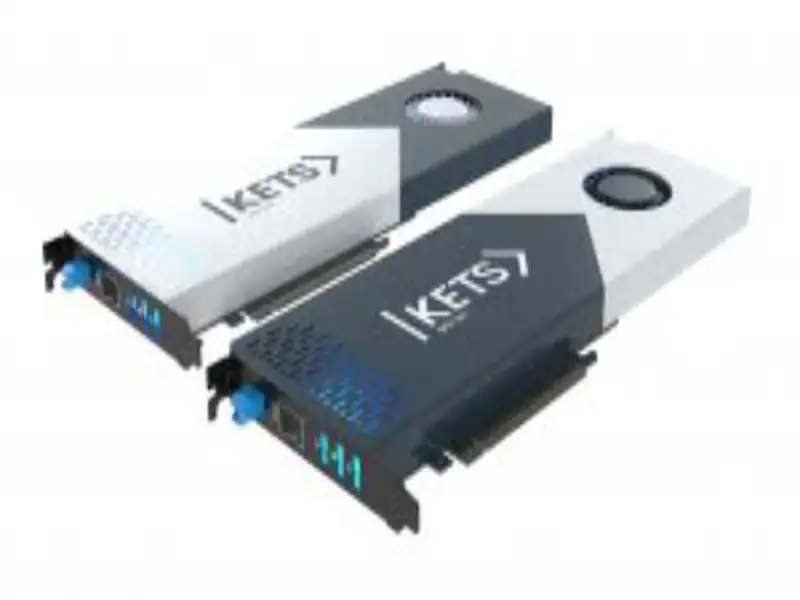
KETS Quantum Security, a startup originating from the University of Bristol, has successfully fulfilled a £1.7 million contract awarded under the UK government’s Small Business Research Initiative (SBRI). The project focused on advancing the company’s chip-scale quantum key distribution (QKD) technology, which is designed to enhance the security of telecommunications networks by detecting potential interception attempts.
The miniaturised QKD devices developed by KETS are intended to be integrated into existing telecom infrastructure, providing an added layer of security against emerging cyber threats. By leveraging quantum mechanics principles, these devices can generate and distribute encryption keys that are theoretically immune to interception, thereby safeguarding sensitive communications.
Also read: Ori partners with Kao Data for UK AI cloud
Also read: UK leads Europe in GenAI startups, Accel reveals
Why it’s important
As quantum computing advances, current encryption methods face growing risks of becoming outdated. KETS’s development of miniaturised QKD devices is a proactive move to protect telecom infrastructure. These devices can detect interception attempts and enable secure key distribution, helping to keep communications safe in the quantum era.
Completing this project proves that quantum security can work within existing networks. It also strengthens the UK’s position as a leader in quantum-safe technology development.
Domain of operation
UK startup KETS develops compact quantum security for telecoms is profiled by BTW Media because published evidence links it to internet infrastructure, governance, operational dependencies, or market visibility.
- Public role: UK startup KETS develops compact quantum security for telecoms is framed by uk startup kets develops compact quantum security for telecoms is tracked as a internet infrastructure institution within the internet infrastructure ecosystem. and public security context. Evidence basis: UK startup KETS develops compact quantum security for telecoms article record; UK startup KETS develops compact quantum security for telecoms article record
- Operating surface: Market and Europe and Middle East provide the public context for this institution profile. Evidence basis: UK startup KETS develops compact quantum security for telecoms article record; UK startup KETS develops compact quantum security for telecoms article record
Timeline
- UK startup KETS develops compact quantum security for telecoms public profile updated
Public coverage records UK startup KETS develops compact quantum security for telecoms as a subject for role, operating context, and evidence review.
At A Glance
- Name: UK startup KETS develops compact quantum security for telecoms
- Type: Internet infrastructure institution
- Base: Europe and Middle East
- Profile focus: Institution
What It Does
- Public records support monitoring of its role, services, and key relationships.
Why It Matters
- Public-source signals support medium-impact monitoring for infrastructure visibility and dependency analysis.
- Operational criticality: Medium
- Time horizon: Next quarter
What To Watch
- Monitoring focuses on verified service continuity, governance changes, and relationship signals.
Track verified source updates, role changes, and current public evidence.
Public-source signals support medium-impact monitoring for infrastructure visibility and dependency analysis.
Longer-term relevance depends on verified operating, policy, and relationship changes.
Member Briefing
Deeper Profile Context
Login is required to unlock the full profile briefing and source notes.
Only for Strategy Circle
Strategic Circle Access
Open to all readers. Unlock profile briefings after joining and logging in.
Join Strategic CircleOnly for Leadership Alliance
Leadership Alliance Access
For owners and management of IP-holding companies. Login required to unlock.
Join Leadership AlliancePublic View
The public read of UK startup KETS develops compact quantum security for telecoms is limited to visible role, operating context, and relationship evidence.
Watchpoints
- New public role, affiliation, product, policy, or market disclosures.
- Verified relationship changes involving named organizations or people.
Caveats
- Private or unverified claims are excluded from this public view.
FAQ
Why is UK startup KETS develops compact quantum security for telecoms included?
UK startup KETS develops compact quantum security for telecoms has public evidence that makes the institution relevant to BTW's coverage of digital infrastructure, governance, or markets.
What is public about this profile?
The public layer covers visible role, operating context, linked organizations, and evidence-backed watchpoints.
What should readers watch next?
Readers should watch for source-backed role changes, new partnerships, regulatory exposure, operating expansion, or evidence that changes the public assessment.


