
Europe and Middle East Institutional Trends
Europe and Middle East Institutional Trends
Institutional trend intelligence tracks institutional market trends, regulatory pressure, standards activity, public-sector digital policy, governance reform, and infrastructure funding in Europe and the Middle East, giving readers a fuller view of the demand shifts, capacity constraints, platform strategies, capital timing, regulatory pressure, and operating assumptions behind the market.

Latest Coverage
Latest from Europe and Middle East Institutional Trends
319 articles

Europe and Middle East Institutional Trends
A Riyadh Postbox, a Registry Key, and the Half of SAIX Nobody Publishes
The registry will tell you exactly what to call the Saudi Arabian Internet Exchange and where to send its post. It will not tell you who is plugged in. Measured on 4 November 2026, that gap is the finding.

Europe and Middle East Institutional Trends
Finland's Biggest Internet Exchange Rents Its Resilience From Two Landlords
FICIX lists five exchange sites under three platform labels. Two of them sit inside buildings named for Telia and Equinix — and a facilities list is not a redundancy claim.

Europe and Middle East Institutional Trends
One Krona From Zero: Sweden's Cyber Fee Trips at Exactly SEK 30 Million
At SEK 29,999,999 in relevant turnover, Sweden's cybersecurity fee is nothing. One krona later it exists. PTS's rule says 'or more,' its announcement said 'over,' and a missing revenue return lets the regulator write the number itself.

Europe and Middle East Institutional Trends
Brussels Wants the Cloud Gone in 12 Months. Sweden Counted the Steps.
A draft EU cloud rule would start a one-year migration clock the moment a public body's risk review demands a move. Sweden's telecom regulator read the clock beside the work order — end the contract, study a replacement, procure it, then build it. Critical systems do not change…

Europe and Middle East Institutional Trends
Finland Renamed Your Dinner Reservation “Spam.” The Check Failed, Not the Booking.
Finland now lets carriers overwrite an unverified sender name with “Roskaposti” — Spam — even when the message is a real booking confirmation. The label records a failed rights check, not a fake dinner.

Europe and Middle East Institutional Trends
One App, Three Age Ratings: Ofcom Exposes the Store Gate That Trusts a Typed Birth Date
WhatsApp is 13+ on Apple's store, parental guidance on Google Play and PEGI 3 on Microsoft's. Ofcom's app-store report shows one shelf handing out three verdicts — and a download gate that mostly asks users to type their own age.

Europe and Middle East Institutional Trends
Ofcom Wants the Autopsy at Day 90, Even If the Patient Is Still Breathing
Two UK online-safety code amendments took effect on 2 November 2026. They ask covered services to pick crisis indicators, stand up a senior response team and record a private decision analysis by day 90 — even if the emergency is still running.

Europe and Middle East Institutional Trends
The Smart-Meter Network Moved. The Old Licence Is Still Holding the Bag.
DCC2 took over Britain's smart-meter communications service on 2 November 2026. The former operator keeps a licence until September 2027 — and still needs its successor's data to finish the books.

Europe and Middle East Institutional Trends
Your bank cleared the transfer. RIPE NCC's ledger may still suspend you.
A bank transfer and a registry receipt are different records. RIPE NCC says an unclear payment reference can leave a paid invoice showing as outstanding — and at day 60 without received payment, its rules suspend the member and halt requests. The reference field is a small box…

Europe and Middle East Institutional Trends
The EU Is Buying the Map Before the Cable: Inside the €400,000 TEN-D Backbone Census
Brussels is paying up to €400,000 to draw the map of Europe's Internet backbones — and whoever draws the baseline decides which gaps get called strategic and which get quietly funded.

Europe and Middle East Institutional Trends
Canada Joined Europe's Supercomputer Board. The EU Kept Half the Votes.
Canada became EuroHPC's 39th participating state on 30 October 2026 and walked away with a board seat. The statute kept the European Union's indivisible 50% of voting rights exactly where it was — and the accession notice published no Canadian contribution and no compute hours.
Europe and Middle East Institutional Trends
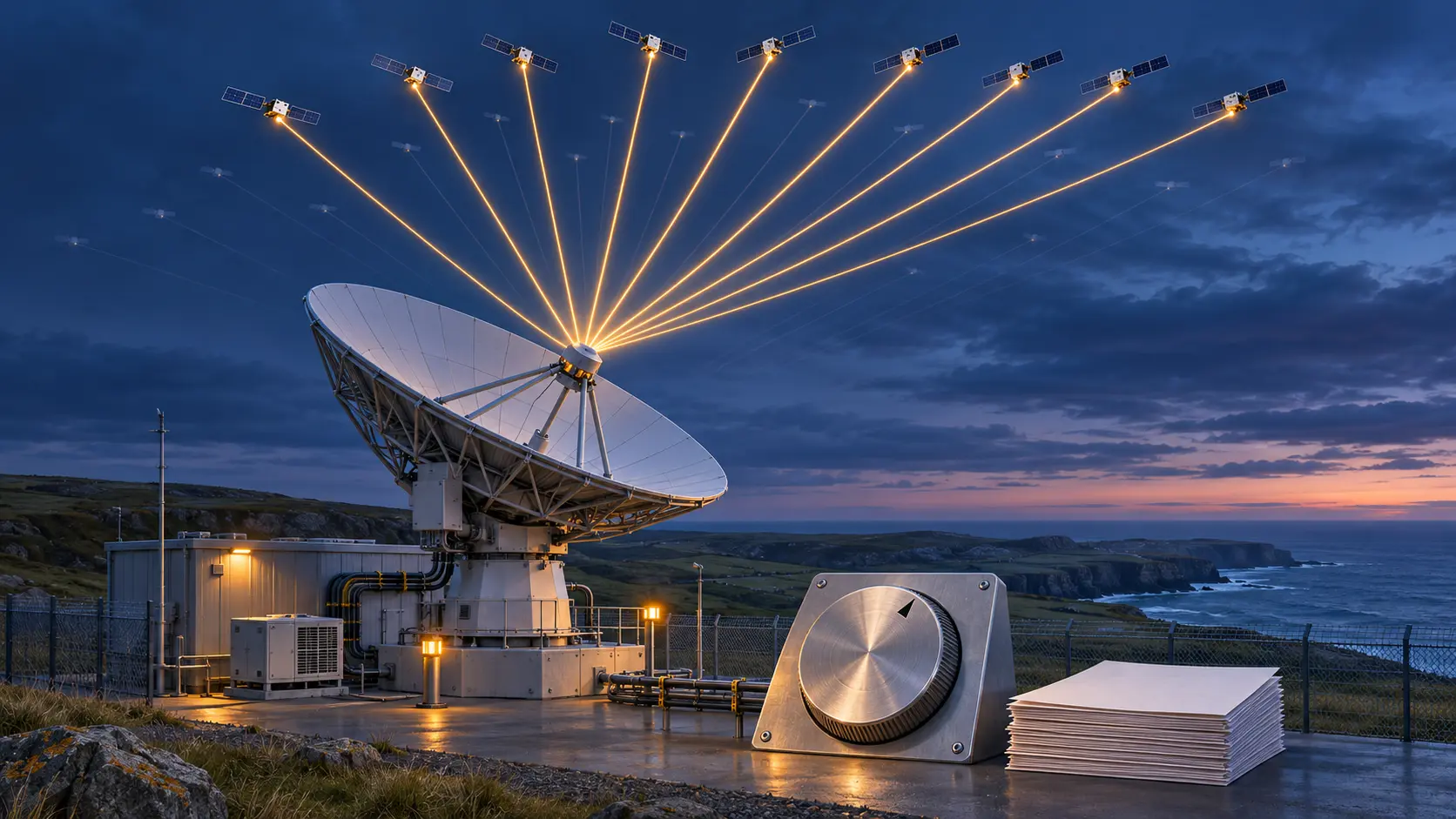
Ofcom Replaces the £500 Satellite Gateway Bill With a Ten-Path Equation
The UK regulator has put legal text behind its plan to replace a £500 flat NGSO gateway fee. The proposed bill follows a site's authorised radio paths — and Ofcom's own three-band example lands at £20,900.

Europe and Middle East Institutional Trends
Brussels Picked a Winner for Its Science Hub. It Hasn't Bought the Handover Yet.
The Commission handed a single-lot, four-year framework for the EOSC EU Node to one consortium. The public timetable still separates the award from a takeover order — and from the first baseline operating contract, due 14 February 2027.

Europe and Middle East Institutional Trends
Ofcom Just Drew the Wi-Fi Line at 6585 MHz — and It Goes Live on 10 November
Britain's upper-6-GHz argument has produced something better than a slogan: a 160 MHz boundary at 6585 MHz, a power class for every radio, and a 10 November start date. What the instrument changes — and what the 540 MHz above it still owes to a different bargain.

Europe and Middle East Institutional Trends
Europe Has Its Science-Cloud Crew. The €40m Is Still an Estimate.
The EU's research-data hub has a new operating consortium, a four-year framework and a 14 February handover date. The €40m in the tender is an estimate; real continuity arrives through specific orders, one service at a time.

Europe and Middle East Institutional Trends
Brussels Opens the Telecom File, and the Veto Shrinks in Daylight
The European Commission has published its Article 32/33 telecom decisions on CIRCABC, first-phase files included. The archive is welcome. It also makes the Commission's hard stop legible: the veto reaches market definition and significant market power — a fight over remedies gets…

Europe and Middle East Institutional Trends
RIPE's Policy Manual: Why a Verbatim Copy Is Never Just a Copy
At RIPE 93, Remco van Mook proposed an index first, then verbatim chapter moves. The sharpest question is who gets to call a change 'editorial' — and what precedent survives the copy-paste.

Europe and Middle East Institutional Trends
Ofcom Wants Two New Harm Categories. Its Tracker Started Counting Them Too Late
Ofcom recommends promoting body-stigma and depression content to the section 62 priority list — but its Children's Online Safety Tracker only began asking about those categories after the child-safety duties were already live.

Europe and Middle East Institutional Trends
Britain Trusts a Bank Card at the Polls. A Digital ID Still Has to Pass a Human Eyeball Test.
The Representation of the People Bill adds physical payment cards to the documents accepted at polling stations, while a digital credential must survive a visual inspection by the officer standing in front of it. The Lords take it up on 2 November.

Europe and Middle East Institutional Trends
Ofcom's 1.4 GHz Auction Names a Winner Only After the Money Clears
Ofcom will seal bids for the 25 MHz lot at noon, then give each bidder until 11:59 the next business day to hold cleared funds at least equal to its own offer. Individual results stay private until that cash deadline passes — miss it and the bid is void, with the £1 million entry…