
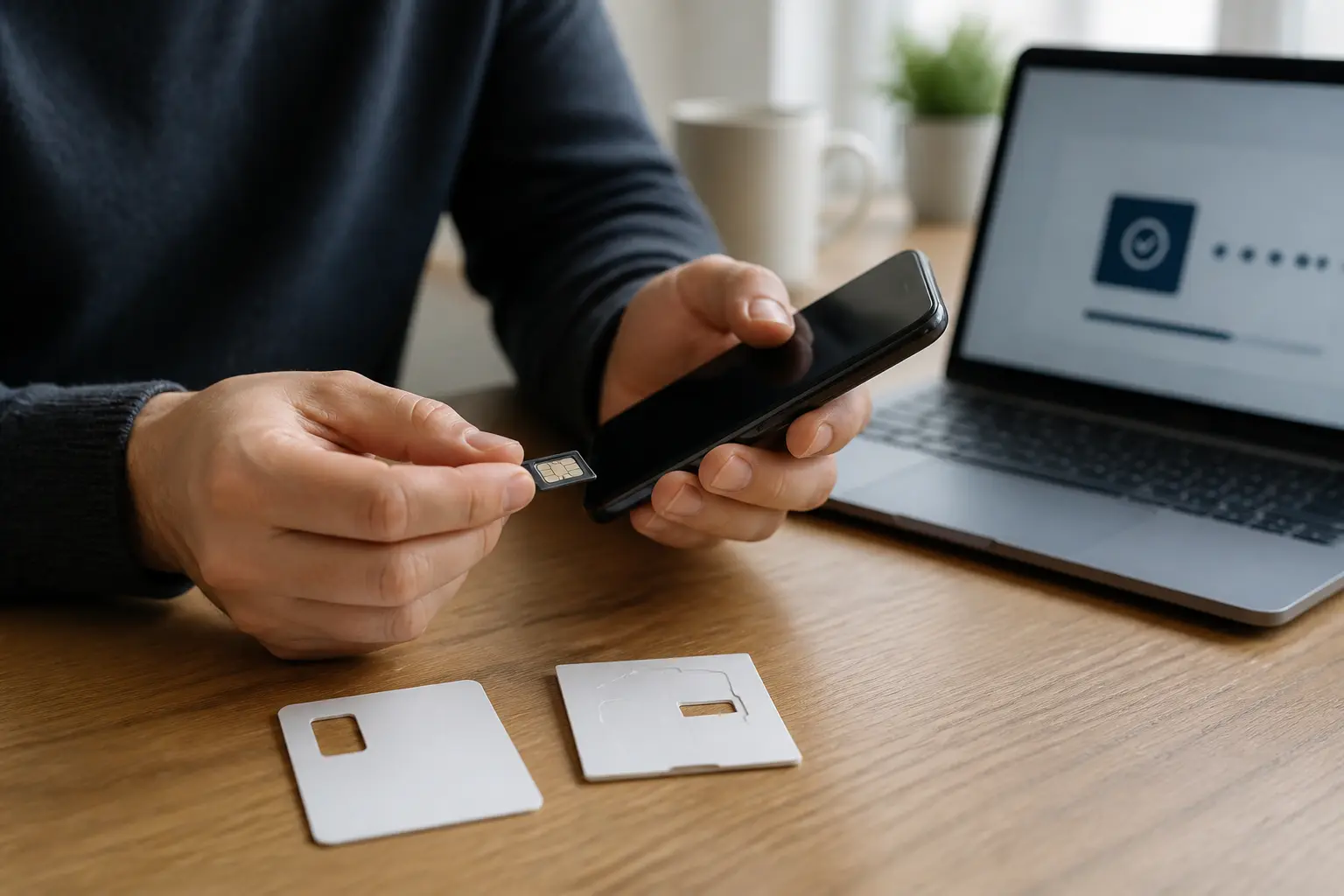
Summary
- A prepaid mobile service is paid for before use. Activation is the provider-controlled moment when it becomes available for ordinary calls, messages and data, beyond contact with the provider and emergency calls.
- ACMA formed the view that Telstra contravened subsection 101(1) on 18,388 occasions between 30 November 2024 and 19 February 2025 because the identity method used for those activations was not authorised under the process then in force.
- Telstra did conduct identity checks. The described Digital ID process used an accredited third-party service and identity information previously checked by an identity-service provider, such as a bank, with customer agreement and consent to transfer name, address and date of birth.
- The public finding is about method eligibility and the absence of an approved compliance plan, not a disclosed technical failure. ACMA said the non-compliance caused no consumer harm and that Telstra had no earlier compliance or enforcement action under these prepaid identity-check rules.
- ACMA issued a formal warning, not a fine, conviction or court judgment. The warning artifact is dated July 2025, while ACMA published the investigation package and public announcement in December 2025.
- Telstra later received a dispensation. A December 2025 amendment then added government-accredited Digital ID as an approved method, subject to consent, necessary-information, statutory verification and method-record requirements.
- The accountability lesson is that four evidence layers must align: the identity check, the method's eligibility under the rule or an approved plan, the customer's consent and transferred data, and the final activation record. A green result in one layer cannot silently stand in for the other three.
The paradox at the centre of the case
Many compliance stories begin with a control that was absent. This one begins with a control that was present. Telstra used an identity-checking process. The person asking to activate the service went through a Digital ID flow. Information was checked and shared with consent. Yet ACMA concluded that the resulting activations did not follow Part 4 of the prepaid identity-check determination then in force.
That is why the case matters beyond one company or one rule. A large operational system can perform a real technical check and still lack the evidence needed to show that the check belonged to the authorised path for that decision. The technical event and the governance event are connected, but they are not interchangeable. One asks whether a transaction ran. The other asks whether the operator was entitled to rely on that transaction, on that date, for that kind of activation, and whether the record can prove it.
The distinction is easy to lose in everyday language. If a dashboard says “verified”, staff may reasonably think the identity requirement has been completed. But a regulator, auditor or incident reviewer needs a more complete answer. Which verification method produced the result? Was that method on the applicable list at the time? If not, was there an approved alternative plan? What information did the customer consent to share? Which record links the result to the specific service activation?
ACMA's finding provides a practical example of why those questions cannot be postponed until an audit. Once a prepaid service is activated, it becomes a live communications service. The operator has moved from collecting an application to enabling ordinary use of network facilities. The identity evidence must therefore be ready at the same moment as the activation decision, not reconstructed later from assumptions about what a vendor normally does.
This article uses the regulator's public record to separate what is known from what is only an operational lesson. ACMA's findings, Telstra-supplied figures recorded in the report, the later amendment and the current status of the determination are source-backed facts. The four-layer model used to explain accountability is an editorial framework. It does not reveal Telstra's unpublished architecture, approval chain or internal controls.
What prepaid activation changes
A prepaid mobile service is a service for which the customer pays before using an allowance or credit. Buying a SIM, opening an account or entering personal details does not necessarily mean the service has reached full operating state. Activation is the point at which the provider enables communications beyond limited contact with the provider and emergency calls. In plain language, it is the decision that turns the service on for ordinary use.
The person asking for that change is the service activator. The activator may be the customer or another person acting in a permitted capacity, but the provider still needs to collect the required customer information and follow the identity-check path that applies. The check is not simply a background administrative task. It is part of the boundary between an inert or restricted service and a working mobile connection.
That boundary matters for network accountability because a mobile service is not just an entry in a sales system. Once enabled, it can place and receive communications, connect to data services and become part of the public telecommunications environment. The activation record is the operator's evidence of who asked for that service state, how identity was checked, and why the system allowed the transition.
This is also why the Telstra event should not be described as mobile-number porting. Porting moves an existing number between providers and is governed by a separate pre-port verification standard. The investigated Telstra activity concerned prepaid activation under the prepaid identity-check determination. A person could encounter both processes in a broader customer journey, but they are different control surfaces, with different legal tests and different evidence.
For a non-specialist, a useful comparison is the opening of a controlled facility. A guard may inspect a valid identity credential at the entrance. That is the identity-check layer. The facility must also have a policy that permits that type of credential for that entrance at that time. That is the method-eligibility layer. The visitor must understand and agree to the use of the information. That is the consent layer. Finally, the entry log must connect the person, credential, rule and opened door. That is the decision record.
If only the first layer is visible, an observer can say that a check happened, but cannot yet say that the complete control operated as authorised. This does not make the credential false or the guard incompetent. It means the evidence needed for the final decision is wider than the evidence produced by the credential check alone.
What ACMA said happened
ACMA's public announcement is dated 23 December 2025. Its investigation file is identified as ACMA2025/126 and identifies Telstra Limited, ACN 086 174 781, as a carrier and carriage service provider. ACMA formed the view that Telstra contravened subsection 101(1) of the Telecommunications Act 1997 on 18,388 occasions between 30 November 2024 and 19 February 2025.
The unit is important. The public record describes occasions or activations. It does not establish that 18,388 means 18,388 unique people, customers or victims. One person may have more than one service or activation, and the redacted material does not provide a customer-level dataset from which an outside reader could settle the question. The number should therefore stay attached to the operational events identified by ACMA.
The date range is equally specific. It begins on 30 November 2024 and ends on 19 February 2025. It should not be broadened into a claim about all Telstra prepaid activations, all uses of Digital ID, or all of 2024 and 2025. The investigation began on 18 February 2025, according to the report, because the method being used did not fall within the methods then listed in Schedule 1.
At the time, the determination required a provider to comply with Part 4 or use an approved compliance plan before activating a prepaid service. An approved compliance plan is an alternative verification arrangement reviewed and approved by ACMA. It is not simply an internal document, a vendor certification or a project plan. In the regulator's account, no approved compliance plan covered the method at issue, and the exemptions Telstra cited did not apply.
The methods described in the investigation report included government online verification, an existing post-paid account, a whitelisted email service, a real-time or delayed financial transaction, an eligible prepaid account, and visual examination of identity documents. The Digital ID service used in the investigated activations was not then one of those standard listed routes. ACMA's position was therefore not that no human being had been checked; it was that the way the result entered the activation decision sat outside the authorised Part 4 route.
ACMA issued Telstra a formal warning. A formal warning is a regulatory notice that identifies a compliance failure and signals that it must be addressed. It is not a court decision, a criminal conviction or a fine. The official warning is dated 31 July 2025, while the investigation package, register entry and public announcement appeared in December 2025. Keeping those dates separate avoids turning an enforcement chronology into one artificial event date.
ACMA's announcement also states two facts that materially narrow the story. It said the non-compliance caused no consumer harm. It also said Telstra had no prior compliance or enforcement action in relation to these prepaid identity-check rules. Those statements rule out an alarmist narrative about disclosed fraud victims or customer losses. The case is about control governance and auditable authorisation, not recovery from a published harm event.
What the Digital ID process actually did
A Digital ID service, in this setting, allows a person to use identity information that has already been checked by an identity-service provider for a new transaction. The public report gives a bank as an example of such a provider. That example must not be used to identify the redacted service, vendor or institution in the Telstra case. The public material does not name them.
The report describes a process in which the customer agreed to use the service, checked the information to be transferred and expressly consented to the transfer of name, address and date of birth. Those details matter because they show that the disclosed process was not an empty label. There was identity information, prior verification by an institution, customer interaction and consent.
ACMA also publicly said Telstra did conduct identity checks through an accredited third-party identity-verification service. It would therefore be inaccurate to describe the 18,388 activations as anonymous, unchecked, fraudulent or supported by a technically failed service. The published record does not establish any identity-data error, false match, security compromise or failure to authenticate the customer.
The regulator's conclusion was narrower and more exact. The method required special authorisation under the rules then operating. Telstra did not have an approved compliance plan for it during the investigated period, and ACMA did not accept that the cited exemptions supplied another permitted route. In other words, the check produced an identity result, but the operator could not rely on that method through the rule path ACMA considered applicable at the time.
This distinction protects factual accuracy in both directions. It prevents the case from being minimised as a paperwork mismatch, because the method used to open a live service is part of the control itself. It also prevents the case from being exaggerated into a technical-security failure that ACMA did not disclose. The reliable account must hold both facts at once: a check occurred, and ACMA still found the activation process non-compliant.
The record does not explain every technical step between the third-party result and Telstra's final activation system. It does not disclose the vendor contract, application interfaces, matching logic, fraud controls, accuracy rates or internal approval history. Any diagram that filled those spaces would be speculation. The strongest operational lesson comes from the boundary the public record does reveal: the identity result, its method status and the activation decision needed to be joined by evidence.
Four evidence layers, not one green light
The first layer is the identity check itself. It answers whether the service activator completed a process that returned a verified identity result. The public record says such checking occurred. Operators need enough technical evidence to identify the transaction, the service that performed it, the result, its time and the customer information to which it applied.
The second layer is method eligibility. It answers why that kind of check was permitted for that activation on that date. The answer may be a method listed in the applicable rule, a valid dispensation, or an approved compliance plan. This evidence has a version dimension. A method permitted today may not have been permitted six months earlier, and a temporary dispensation may have a defined start and end.
The third layer is consent and information handling. It answers what the customer agreed to, what information was necessary for the check, what was transferred and what was recorded. Consent is not merely a screen impression. A reviewer should be able to connect the consent event to the same activation, the same method and the same information categories without exposing the underlying personal data more widely than necessary.
The fourth layer is the activation decision. It answers whether the operator's live system joined the first three layers before enabling ordinary communications. A complete record should identify the service, activator, method, rule or approved plan, consent evidence, result, time and final decision. It should also show a no-activate result when a required layer is absent.
These layers explain why “verified” can be true but incomplete. A verification provider may accurately report that its transaction succeeded. That statement does not, by itself, identify the telecommunications rule version, establish that the method was eligible for prepaid activation, or prove that the carrier's activation record retained the required description. Each system can behave as designed while the combined path still lacks an authorised join.
For operators, this is not an invitation to add ceremony around a working service. It is a reason to make the dependency explicit in the running path. The activation service should receive an unambiguous method identity and evaluate it against a date-effective policy or approved-plan record. If the mapping is missing, expired or uncertain, the safe outcome is not to activate and investigate later. The decision should stop before the service opens.
The public record does not state whether Telstra's system had or lacked any particular version-control feature. The four-layer model is an editorial inference from the accountability problem, not a finding about Telstra's unpublished design. It is useful because it converts a legal-method question into operational evidence that engineers, compliance teams and boards can inspect together.
Why authorisation belongs in the live control
It can be tempting to treat method authorisation as a legal wrapper placed around the “real” technical check. That view is too narrow for a regulated activation system. The allowed-method rule tells the operator which forms of evidence may justify opening the service. If that mapping is absent from the decision, the live system can produce a technically successful outcome without proving that the organisation was entitled to act on it.
The reverse mistake is also possible. Formal permission cannot prove that a live check is accurate, secure or effective. A listed method or approved plan is only one evidence layer. The operator still needs to show that the customer consented, the necessary information was handled correctly, the verification really occurred, and the activation record corresponds to that result. Permission is not a substitute for running evidence.
The accountability test therefore runs in both directions. Technical teams should not assume that a successful vendor response settles regulatory eligibility. Legal and compliance teams should not assume that an approval document settles technical performance. Each side needs the identifiers and records required to test the other side's claim against the same activation.
A practical implementation could maintain a method inventory with a stable identifier for every verification route. Each entry would show the rule provision, approved plan or dispensation that permits it; the effective dates; the required consent and information fields; the systems allowed to produce the result; and the record that the activation platform must retain. This is a general control design, not a description of Telstra's internal environment.
At decision time, the activation service could evaluate the actual method identifier against that inventory. At review time, an auditor could select any activation and trace it back through the same chain. The important quality is not a particular software product. It is the absence of an undocumented gap between the identity result and the authority relied on to open the service.
This approach also makes change safer. If a rule amendment adds a method, the new eligibility can begin on the correct effective date rather than being applied retroactively to earlier transactions. If a dispensation expires, the activation path can stop relying on it automatically. If an approved plan changes, the version used for each decision remains visible.
The figures that must not be forced to reconcile
The investigation report records more than one activation figure. Telstra initially supplied information concerning 20,141 activations. In a letter dated 9 May 2025, it adjusted the figure examined by ACMA to 18,388. The report separately says 1,680 activations were verified through an existing post-paid or eligible prepaid account.
Those facts do not give an outside reader permission to solve for a hidden category. The public report is redacted, and the relationship among the figures is not fully disclosed. Subtracting 1,680 from 20,141 and comparing the result with 18,388 might produce an arithmetic remainder, but it would not prove what that remainder represents. It could reflect scope, duplication, timing, classification or information hidden by redaction. The responsible approach is to report each figure only in its stated context.
The same discipline applies to the number 18,388. It should not be converted into a count of unique customers, affected individuals, victims, incorrect identity matches or anonymous services. ACMA framed it as occasions on which it considered the activation rule was contravened. No public customer dataset or independent activation log was available in the public record.
This restraint is not pedantry. Operational metrics often use units that look similar but answer different questions. An activation event, a SIM, an account, a service, a customer and a verification transaction can be related without being identical. When a public record does not publish the relationship, the article should not manufacture one for narrative convenience.
The no-consumer-harm statement belongs beside the figures for the same reason. It prevents a reader from assuming that a large count automatically means a large victim group. The count is still material because it shows the scale at which the unauthorised method path was used. Its significance is control reach, not disclosed consumer loss.
The formal warning and the absence of disclosed harm
ACMA's enforcement outcome was a formal warning. The separately published investigation report identifies Telstra, subsection 101(1), the 18,388 count and the 30 November 2024 to 19 February 2025 period. The investigations register lists breaches of paragraph 2.3(1)(a) of the 2017 determination and subsection 101(1) of the Act. None of these materials turns the outcome into a fine, conviction or court judgment.
A warning can still matter operationally. It creates a clear regulatory record of what ACMA considered non-compliant and places future conduct against that history. For management, its value is not measured only by a monetary amount. It identifies the need to align the live method, the rule path and the evidence retained for activation.
ACMA's statement that no consumer harm resulted is equally important. It means the public case does not support claims of financial loss, identity theft, service abuse or failed identity matching. It also means the remediation question is prospective: how to prevent a control-governance gap from persisting or combining with another failure in a future case.
No disclosed harm does not turn the event into a harmless abstraction. Prepaid identity rules exist because activation opens a communications service and creates a customer-to-service record. If the evidence path cannot reliably show why an activation was authorised, investigation and assurance become harder even when the underlying identity result was accurate.
The balanced reading is therefore neither alarm nor dismissal. The public record describes a high-volume compliance finding without disclosed consumer harm and without a published technical failure. That makes it a clean example of control alignment: the organisation must be able to prove not only that something useful happened, but that the right evidence, permission and record supported the production decision.
What changed in December 2025
The rule environment did not remain static. ACMA's consultation in September and October 2025 proposed adding government-accredited Digital ID services to the approved methods. The consultation explained that, before amendment, a provider wishing to use Digital ID needed an ACMA-approved compliance plan.
Telstra later sought and received the required dispensation. ACMA says that dispensation operated until the amended rules commenced. A dispensation is a time-bounded legal route; it should not be projected backwards onto activations that occurred before it applied. It also should not be treated as proof that every technical or recordkeeping feature of a method is sound.
The amendment instrument is dated 11 December 2025 and commenced the day after registration. It added Schedule 1 item 9 for a government-accredited Digital ID service. Under the added route, the customer must consent to use the service, provide the information necessary for verification, and have identity verified in accordance with the Digital ID Act. The provider must also record the method as a government-accredited Digital ID service.
The Federal Register lists the base 2017 determination as in force, with compilation F2026C00020 C01 dated 16 December 2025. This current status matters because the article should not leave readers believing that government-accredited Digital ID remains outside the approved framework. The historical finding and the current rule can both be true.
That coexistence is the core of a versioned control story. ACMA assessed the activations against the rule and authorisations applicable between November 2024 and February 2025. The later dispensation created a route for a later period. The amendment then changed the listed methods prospectively. Neither later event erases the earlier finding, just as the earlier finding does not prohibit the amended method now.
For an operator, this means a method name is not enough. “Digital ID” can describe a family of services and legal states. The activation record needs to show the relevant method identity, accreditation or eligibility evidence, customer consent, and the authority effective at the time. A reviewer should not have to infer historical compliance from today's configuration.
Version-aware controls for changing rules
Rules, dispensations and approved plans change on calendar dates. Production systems change through releases, configuration updates and vendor deployments. Accountability depends on connecting those clocks. If a rule changes at midnight but the production mapping changes later, or if a configuration changes early, a gap can appear even though every team believes it acted within its own schedule.
A version-aware control record should preserve both legal and technical time. The legal side includes the effective period of the listed method, plan or dispensation. The technical side includes the configuration version, deployment time and method identifier used for the transaction. The activation event joins them.
This does not require personal identity documents to be copied into broad operational logs. Good evidence can minimise exposure. A record may retain references, timestamps, outcome codes, consent receipts and cryptographic or system identifiers while keeping sensitive attributes in a properly controlled store. The purpose is to prove the decision, not to duplicate identity data everywhere.
Change approval should also test the negative path. If a method is no longer eligible, what actually prevents activation? If the rule lookup is unavailable, does the system fail closed or silently accept a cached result? If the consent receipt is missing, can an operator override the decision, and how is that override governed? If a dispensation expires, which inventory item changes state and who confirms it in production?
These questions are not findings about Telstra. They are general checks derived from the public accountability problem. They help an operator show that governance exists in running systems, while also preventing a paperwork-only response that adds documents without improving the production decision.
A strong review samples real activation records across change boundaries. It includes transactions just before and after a rule effective date, configuration release, vendor update or plan approval. The reviewer verifies that the method, consent, legal basis and activation result all refer to the correct version. Aggregate percentages are useful, but a small number of mismatched records can reveal a systemic mapping problem.
What operators should be able to show
First, maintain a complete inventory of identity methods that can reach the activation service. Marketing labels are not precise enough. Each route needs a stable identifier, an owner, a technical producer, an applicable rule or approved plan, effective dates and a record schema. Hidden fallback routes and manual exceptions belong in the same inventory.
Second, bind the customer's consent to the actual transaction. The record should indicate that the customer agreed to use the method and to the necessary information transfer. It should identify the information categories without needlessly exposing their values. A generic acceptance recorded at account creation may not prove consent for a later activation method.
Third, make the no-activate rule observable. When method eligibility, consent, verification or required data is missing, the system should return a clear stop state. Monitoring should count those stops, identify attempted overrides and show whether a downstream component nevertheless opened the service.
Fourth, test the activation record as an investigator would. Select a service and ask who activated it, which method checked identity, what result returned, what consent supported the transfer, which rule or approved plan permitted the method, and which system made the final decision. If the answer requires joining undocumented spreadsheets or relying on staff memory, the evidence chain is fragile.
Fifth, review method changes with the same discipline as network changes. A new identity vendor or verification route can alter a service-control dependency even when it does not touch radio equipment or routing. Release approval should include legal eligibility, privacy and consent, operational resilience, record compatibility, expiry handling and rollback.
Sixth, report exceptions to leadership in units that expose risk. The number of successful checks alone is not enough. Boards should see activations with an unknown method version, missing consent reference, expired authority, manual override, delayed record, or mismatch between verification and service state. The oldest unresolved exception often says more than the average completion rate.
Seventh, keep current authorisation separate from historical evidence. When a method becomes approved, do not overwrite old records to display the new status. The original decision needs the authority that existed when it was made. This protects both the regulator's historical finding and the operator's ability to demonstrate compliant use after the rule changed.
Eighth, use independent testing to connect policy with production. A reviewer should inspect the rule mapping, trigger real negative cases in a safe environment, trace sample activations and confirm that evidence survives system boundaries. Reading a policy document or vendor accreditation alone cannot establish that the combined activation path works.
What the public record does not show
The redacted report does not name the Digital ID provider or the identity-service provider used in the investigated process. The example of a bank explains the kind of prior identity relationship involved; it is not a clue that permits the article to name a specific institution. Nor does the record disclose the vendor contract or commercial arrangement.
The sources do not publish Telstra's complete system architecture, API flow, configuration history, control owner, internal approval chain, motive or rollout plan. They do not establish whether a particular team misunderstood the rule, whether a technical setting was missing, or whether an internal review raised concerns. Assigning those explanations would convert an evidentiary gap into speculation.
There is no public independent technical audit, customer dataset or activation log in the public record. The record does not support conclusions about the accuracy of the Digital ID result, the fraud rate, false acceptance, false rejection, data quality or security of the service. ACMA's public statement that no consumer harm occurred must remain the controlling boundary.
The figures cannot be independently reconciled beyond their source descriptions. The public material does not establish the number of unique people among 18,388 activation occasions, the relationship between the adjusted population and the 1,680 existing-account checks, or the reason for every adjustment from 20,141.
The sources also do not describe current implementation outcomes after the dispensation and amendment. The rule now provides an approved route for government-accredited Digital ID, but that legal change does not tell the public how Telstra or any other provider configured, tested or monitored the method. Current effectiveness would require current operational evidence.
These limits strengthen rather than weaken the article. They allow the accountability question to stay exactly where the evidence supports it: how a carrier binds a real identity check to an authorised method and an auditable activation decision under the rule effective at that moment.
Accountability without approval theatre
One poor response would be to argue that a modern Digital ID check should count regardless of the rule. That would treat technical plausibility as self-authorisation and leave the operator unable to show a consistent public control. Another poor response would be to assume that adding a method to a list automatically makes every live implementation trustworthy. That would turn approval into theatre.
The more durable position sits between them. An operator should use methods that can perform the intended check, obtain meaningful customer consent, retain accurate evidence, map the method to a valid rule or approved plan, and stop activation when those elements do not align. Each element constrains the others.
This protects innovation better than an informal exception. A new identity method can be introduced through a visible, time-bounded and testable path. Regulators and operators can distinguish an experimental or alternative method from the standard list. Customers can understand what information is used. Engineers can implement a stable method identifier. Auditors can reconstruct the decision.
It also protects the public record from hindsight. When the rule changes, historical transactions remain judged against their real context instead of being relabelled by the current configuration. When a warning identifies a historical gap, it does not become a permanent ban on a method later admitted through a different rule.
Telstra's case therefore offers a precise infrastructure lesson. A working check is evidence, but not the whole control. The activation boundary needs a joined record of identity result, method eligibility, consent, information and decision. If any part is missing, the system should not rely on a green label to complete the activation.
Sources
- ACMA — Digital ID verification consumer protections
- ACMA — Consultation on amending the prepaid determination
- ACMA — Identity checks for prepaid mobiles
- ACMA — Investigations into telco providers
- ACMA — Telstra investigation report and formal warning package
- ACMA — Telstra investigation report, July 2025
- ACMA — Formal warning to Telstra, July 2025
- Federal Register of Legislation — Original 2017 prepaid identity-check determination
- Federal Register of Legislation — December 2025 amendment text
- Federal Register of Legislation — Determination series and current compilation
Member Briefing
Deeper Profile Context
Sign in with the right membership level to unlock the full briefing and source notes.
Only for Strategic Circle
Strategic Circle
Open to all readers. Unlock profile briefings after joining and signing in.
Join Strategic CircleOnly for Leadership Alliance
Leadership Alliance
For qualified IP-asset owners and management; sign in to unlock alliance briefings.
Join Leadership Alliance