
Taiwan puts Huawei and SMIC on export control list is profiled by BTW Media because published evidence links it to internet infrastructure, governance, operational dependencies, or market visibility.
Taiwan puts Huawei and SMIC on export control list is tracked as a internet infrastructure institution within the internet infrastructure ecosystem.
Taiwan puts Huawei and SMIC on export control list has public-source relevance to network operations, governance, dependency mapping, or market structure.
Taiwan puts Huawei and SMIC on export control list is tracked as a internet infrastructure institution within the internet infrastructure ecosystem.
Public-source signals support medium-impact monitoring for infrastructure visibility and dependency analysis.
Taiwan puts Huawei and SMIC on export control list is profiled by BTW Media because published evidence links it to internet infrastructure, governance, operational dependencies, or market visibility.
Public-source signals support medium-impact monitoring for infrastructure visibility and dependency analysis.
| 0.90–1.00 | A | High — direct sources |
| 0.75–0.89 | A/B | Strong |
| 0.55–0.74 | B/C | Medium |
| 0.35–0.54 | C/D | Weak–medium |
| 0.10–0.34 | D | Weak signal |
| 0.00–0.09 | D | Internal monitoring |
Several public sources
- Huawei and SMIC added to Taiwan’s strategic export control list, alongside groups like the Taliban and al-Qaeda
- Taiwanese firms must now apply for special licences to export to the two sanctioned Chinese tech giants
What happened: Taipei tightens scrutiny on Chinese tech giants Huawei and SMIC
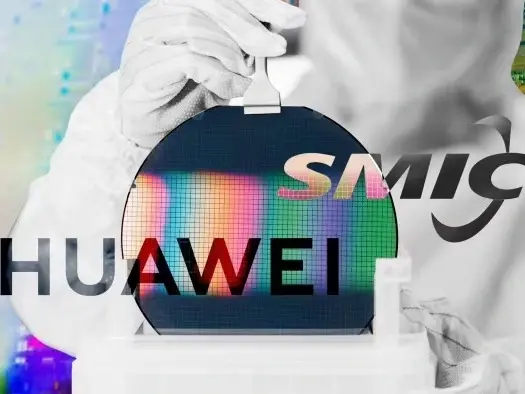
Taiwan’s Ministry of Economic Affairs has added Chinese chipmakers Huawei Technologies and Semiconductor Manufacturing International Corporation (SMIC) to its export control list, a significant policy shift that requires Taiwanese companies to seek government approval before selling high-tech goods to the two firms.
The updated “strategic high-tech commodities” list was published on Sunday, categorising Huawei and SMIC alongside restricted entities such as the Taliban, al-Qaeda, and several sanctioned firms in Iran and China. Neither Huawei nor SMIC has issued a response to their new classification.
This move interferes more into China’s development of semiconductor technologies just as Huawei and SMIC are trying to enhance their capabilities in their AI chip industry. Both the companies are at the central point of China’s vision to end its over-dependence on American suppliers especially for modern AI chips, data centers, and military technologies.
Also read: US warns against Huawei AI chips
Also read: Chinese chip maker SMIC may have violated US law to make Huawei chip
Why it’s important
The timing of Taiwan’s action is no coincidence. As US-China tensions intensify over AI leadership and supply chain control, Taiwan—home to the world’s largest contract chipmaker, TSMC, a critical supplier to Nvidia—is increasingly seen as a strategic player in the global tech chessboard.
By incorporating Huawei and SMIC to the export control list, Taiwan conveys its desire to be more in line with assistances from the West in hindering PRC’s semiconductor advancements and parallels the increasing geopolitical tensions faced by Taiwanese firms, who must now be cautious while managing their commercial interests vis-a-vis the national and international security aspects.
As for China, restrictions embodied serve yet another challenge to China’s ambition to achieve semi-conductor self-sufficiency, the recent attempts by HTC to outsource production to DAC’s foundries yields little progress as it becomes harder to access the tools and technology provided by the Taiwanese.
At A Glance
- Name: Taiwan puts Huawei and SMIC on export control list
- Type: Internet infrastructure institution
- Base: Asia Pacific
- Profile focus: Institution
What It Does
- Public records support monitoring of its role, services, and key relationships.
Why It Matters
- Public-source signals support medium-impact monitoring for infrastructure visibility and dependency analysis.
- Operational criticality: Medium
- Time horizon: Next quarter
What To Watch
- Monitoring focuses on verified service continuity, governance changes, and relationship signals.
Track verified source updates, role changes, and current public evidence.
Public-source signals support medium-impact monitoring for infrastructure visibility and dependency analysis.
Longer-term relevance depends on verified operating, policy, and relationship changes.
Member Briefing
Deeper Profile Context
Login is required to unlock the full profile briefing and source notes.
Only for Strategy Circle
Strategic Circle Access
Open to all readers. Unlock profile briefings after joining and logging in.
Join Strategic CircleOnly for Leadership Alliance
Leadership Alliance Access
For owners and management of IP-holding companies. Login required to unlock.
Join Leadership Alliance


