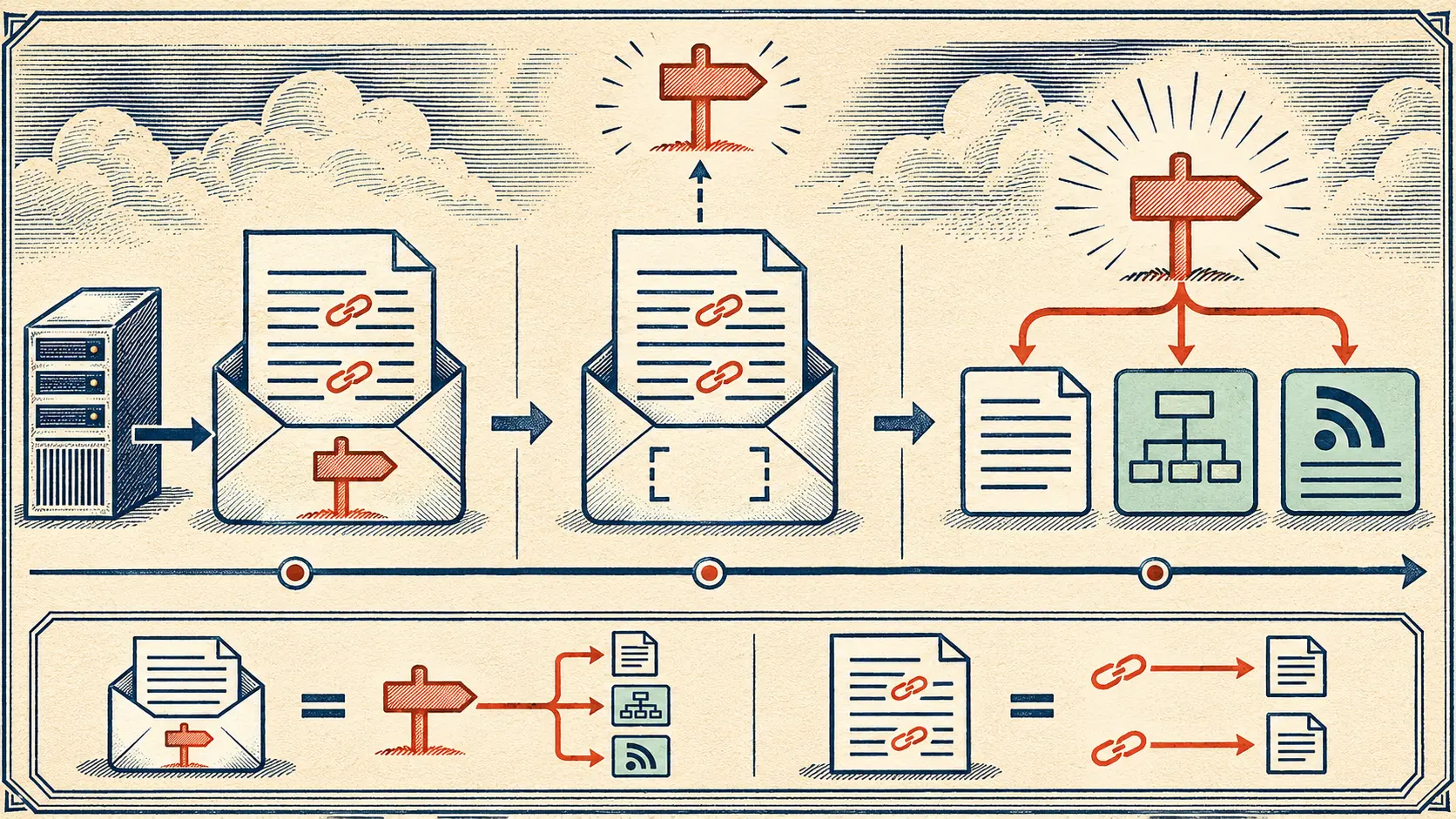
Summary
- The IETF's first HTTP/2 working draft in November 2012 was titled SPDY Protocol. It called SPDY a starting point and warned that the text did not yet express working-group consensus.
- By February 2015 the IETF had approved HTTP/2 and HPACK after substantial changes. Chrome announced that it would add HTTP/2 support and remove SPDY and its NPN negotiation extension in favor of HTTP/2 and ALPN.
A prototype arrived with its own name on the cover
The first HTTPBIS draft displayed its ancestry in the title. Dated November 2012, it was called SPDY Protocol. Its lower layer framed multiple concurrent streams, with priorities and compression; its upper layer carried HTTP-like semantics so existing applications could make sense of the exchange. The editorial note called it a provisional starting point awaiting working-group decisions. Google had built something that ran. The standards group would decide what survived.
The IETF's February 2015 account says the group chose SPDY as its starting point in 2012 and held six interim meetings as participants tested successive drafts. Its leaders counted more than 200 design issues, 17 drafts and 30 implementations during the work. Those figures describe the standards process; Web-site adoption would require a separate measure. The result changed the format, compression scheme and mapping to HTTP semantics. At the end of that process, the IETF steering group approved both HTTP/2 and HPACK for publication on the standards track.
Compression was where the prototype paid a bill
One change exposed the cost of treating a fast prototype as finished infrastructure. RFC 7541 says SPDY compressed headers with DEFLATE. That reduced repeated header data but exposed a security risk demonstrated by the CRIME attack. The working group defined HPACK instead, with bounded memory and reduced exposure to known compression attacks. The final HTTP/2 specification, published in May 2015, gave the protocol its own h2 identifier over TLS through ALPN. Multiplexed streams survived; the wire contract and its safeguards were a shared product.
Chrome's February 2015 announcement made the commercial endpoint explicit. The browser planned to roll out HTTP/2 support, then remove SPDY and the NPN negotiation extension in favor of HTTP/2 and ALPN. A later update on that original post named Chrome 51 for removal. The post establishes the plan and its updated target; a dated Chrome 51 release record would establish the completed cutover. Google had supplied a starting design, but keeping a separate SPDY path once the standard was ready meant maintaining a second protocol in the browser.
The IETF took running code seriously enough to begin with it, changed it under multi-party review, and issued a protocol that the original sponsor planned to implement in place of its own precursor. The prototype won admission to the room. The room wrote a different contract.
Sources
Member Briefing
Deeper Profile Context
Sign in with the right membership level to unlock the full briefing and source notes.
Only for Strategic Circle
Strategic Circle
Open to all readers. Unlock profile briefings after joining and signing in.
Join Strategic CircleOnly for Leadership Alliance
Leadership Alliance
For qualified IP-asset owners and management; sign in to unlock alliance briefings.
Join Leadership Alliance