Summary
- Dated 1 April 1991, RFC 1217 answered RFC 1216’s fictional-sounding call for Ultra Low-Speed Networking with a mock research programme. Its most compact engineering joke recursively nested the seven OSI layers into forty-nine, adding enough retransmission and flow control to threaten the delivery of any information at all.
- The memo also assigned long codes to frequent symbols, selected the least likely decoded message, paired unrelated jars of fireflies as cryptographic keys, and proposed routing systems that return packets to senders or avoid their actual destination. Every device reversed a useful network goal while keeping the vocabulary of a serious proposal.
The packet entered a grant application
RFC 1217 reads like a response to a call that asked the wrong question. The preceding RFC 1216, also dated 1 April 1991, had offered Ultra Low-Speed Networking as an answer to the supposed economics of gigabit networks. Cerf’s reply, signed as the Consortium for Slow Commotion Research, proposed a major programme of low-speed, low-efficiency research lasting several eons. A long programme is easier to fund, the joke implied, when completion has been removed from the schedule.
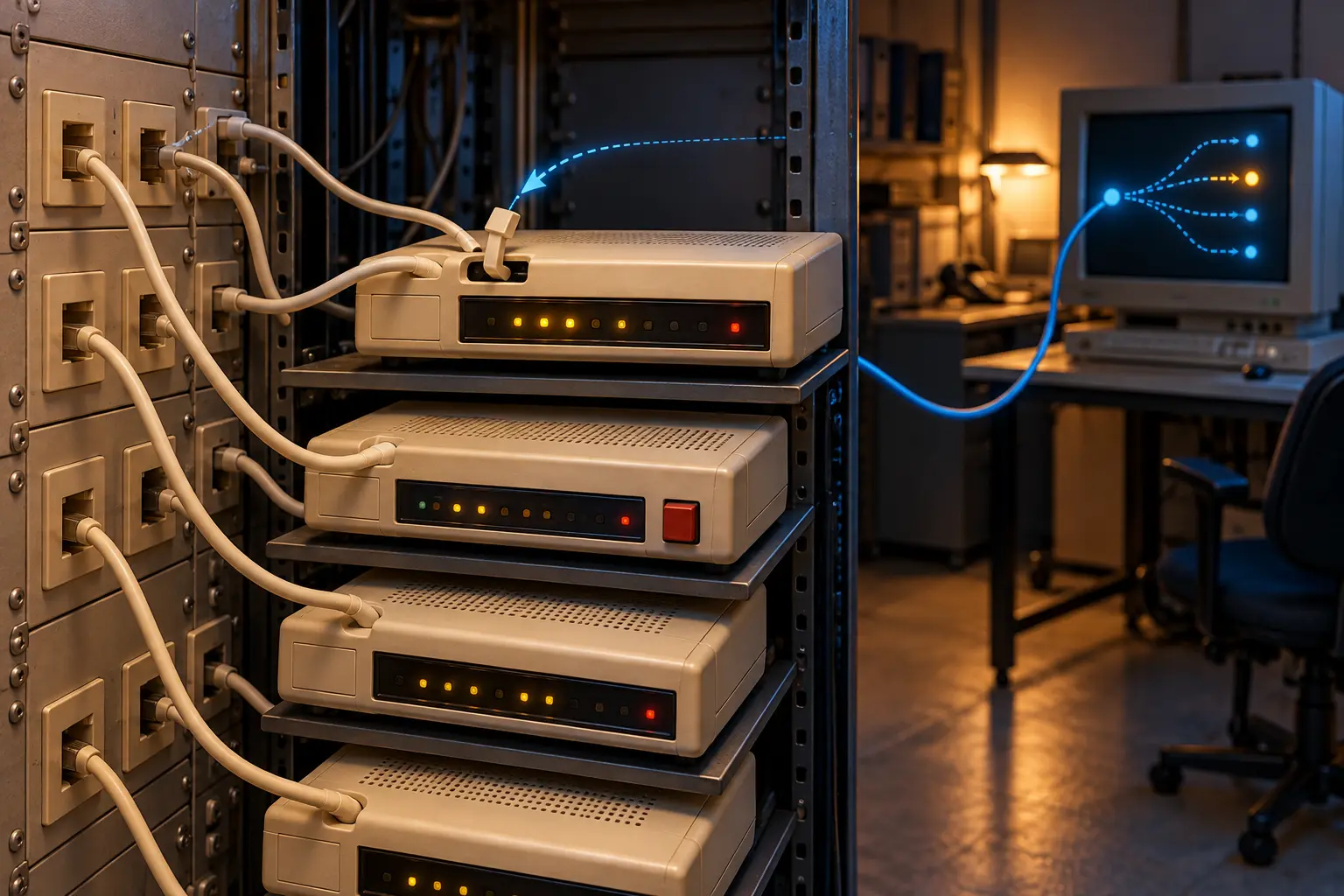
The reply borrowed the furniture of a research bid: a stated military need, extreme robustness, multiple approaches, references, and a promise of further discussion. Its proposed data path did not begin with a working modem. It began with tanks painted 0 and 1, forward observers, satellites, codebook decoding, Morse-code relay and runners. Each additional handoff made delivery harder while letting the proposal boast of redundancy. This was not a record of a field experiment. It was a deliberate inversion of the language used to sell complicated systems.
Cerf then moved under the sea. One design made battleship guns an acoustic transmitter; another chose neutrinos, which could pass through extraordinary obstacles but would be difficult to detect. The memo imagined a cubic mile of seawater as a receiver, a source that could aim only through Earth toward Tierra del Fuego, and submarines scheduled to pass near the receiving site. The source could produce roughly one burst every twenty seconds. The transmitter had become an itinerary for every intended listener. “Survivability” had won its grant argument by making ordinary use almost impossible.
These physical absurdities prepared the sharper technical section. The memo asked how to reduce effective throughput even further, then started breaking the familiar promises of coding, decoding, layering and routing one by one. A reader who knew what a network was supposed to accomplish could see the cost of each impressive feature without a spreadsheet.
A better code for wasting bits
Huffman coding shortens common symbols because that choice can reduce the average length of a message. The memo proposed “Anti-Huffman Coding”: give the most frequent symbol the longest code and shorten codes as symbols become less likely. The packets would grow most where traffic was most common. It offered “minimum likelihood decoding” next, choosing the least likely interpretation of a received symbol to maximize mistakes. Neither scheme was an implementation proposal. Each used a respectable technical shape to do the opposite of its job.
The cryptographic idea was even more generous with failure. A jar of fireflies supplied a random optical signal to encrypt; a different jar at the receiver supplied the key to decrypt. The two jars would scarcely correlate, so successful decipherment would be rare. The joke works because the ingredients sound like security: randomness, optical combination, separate sites. The missing ingredient is the one a recipient actually needs, a shared way to recover the message.
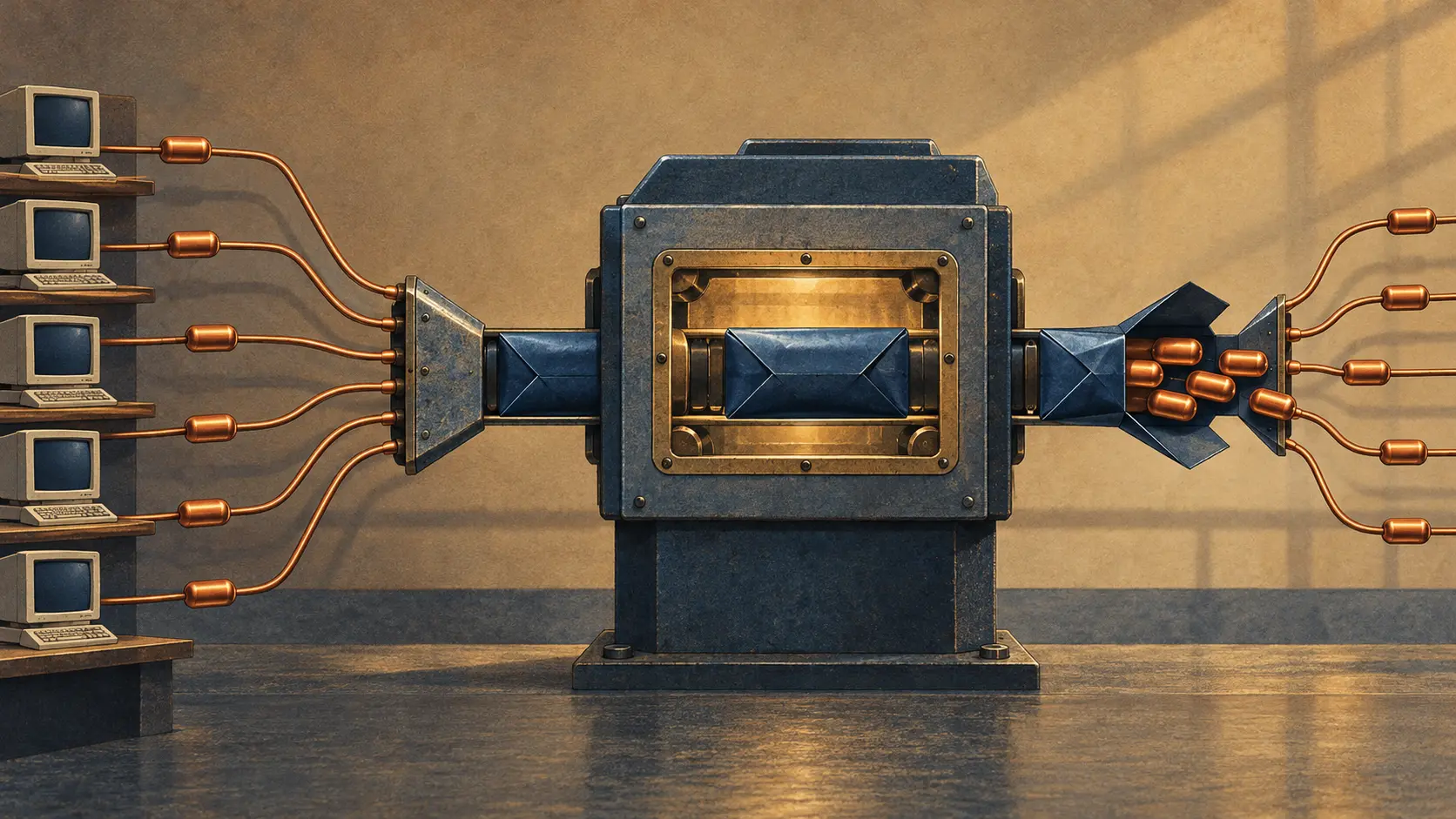
Then came the paper tower. The memo reasoned that layered communication was good, so more layers must be better. It recursively placed each of the seven OSI layers inside the others, arriving at a forty-nine-layer model. Redundancy, retransmission and flow control would pile up until effective bandwidth became extremely low, perhaps zero. The imagined top-level application used ASN.1 in a thirty-two-bit-per-character set. The exact arithmetic was the punchline: seven times seven layers of work to deliver less.
Routing that protects the wrong address
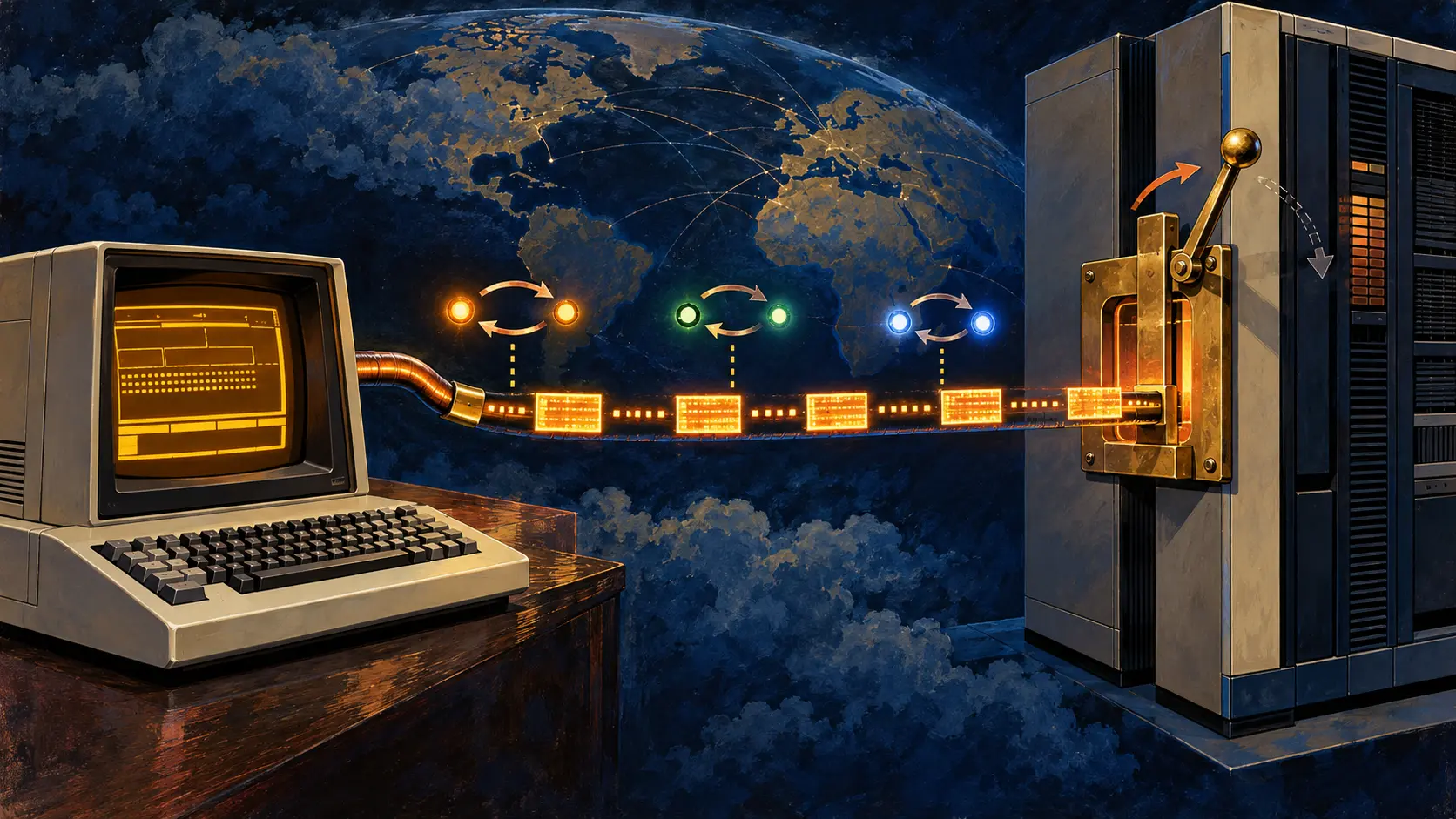
A route can be long, inefficient or expensive and still eventually lead somewhere. RFC 1217 refused that concession. Its “Mashed Potato Routing” stored incoming packets for long periods, removed random bits if storage filled, then sent them back to the origin. Its “Airline Baggage Routing” mislabeled packets at each switch and performed a special check to keep them away from the true destination. One design corrupted the data and reversed direction; the other made failure to deliver an operating requirement.
The last sentence finished the recursion. The consortium looked forward to a drawn-out, fruitless discussion once it could work out how to transmit the proposal itself. A research programme about communication had acquired so many conditions that even its application might not arrive. The ending is funny because every earlier section prepared it: if you reward delay, layers and procedural motion while forgetting the recipient, the paperwork becomes the only thing left to transport.
The April date and the document’s impossible machinery settle its genre. It is a satire written inside the RFC series, not a specification for tanks, neutrinos or forty-nine operational layers. It also records a real argument in the culture around networking: what is the unit of progress? A programme can enumerate components and promise resilience. An operator still needs a message to reach the right place, in a usable time, with the right bits.
Source
- RFC 1217, Memo from the Consortium for Slow Commotion Research (1 April 1991) — original reply, invented designs and closing line.
- RFC 1216, Gigabit Network Economics and Paradigm Shifts (1 April 1991) — the Ultra Low-Speed Networking prompt to which RFC 1217 responded.
Member Briefing
Deeper Profile Context
Sign in with the right membership level to unlock the full briefing and source notes.
Only for Strategic Circle
Strategic Circle
Open to all readers. Unlock profile briefings after joining and signing in.
Join Strategic CircleOnly for Leadership Alliance
Leadership Alliance
For qualified IP-asset owners and management; sign in to unlock alliance briefings.
Join Leadership Alliance