
Summary
- NNSA selected Amentum to enter negotiations for a phased lease at the Savannah River Site; the agency expressly says this is not a final lease award.
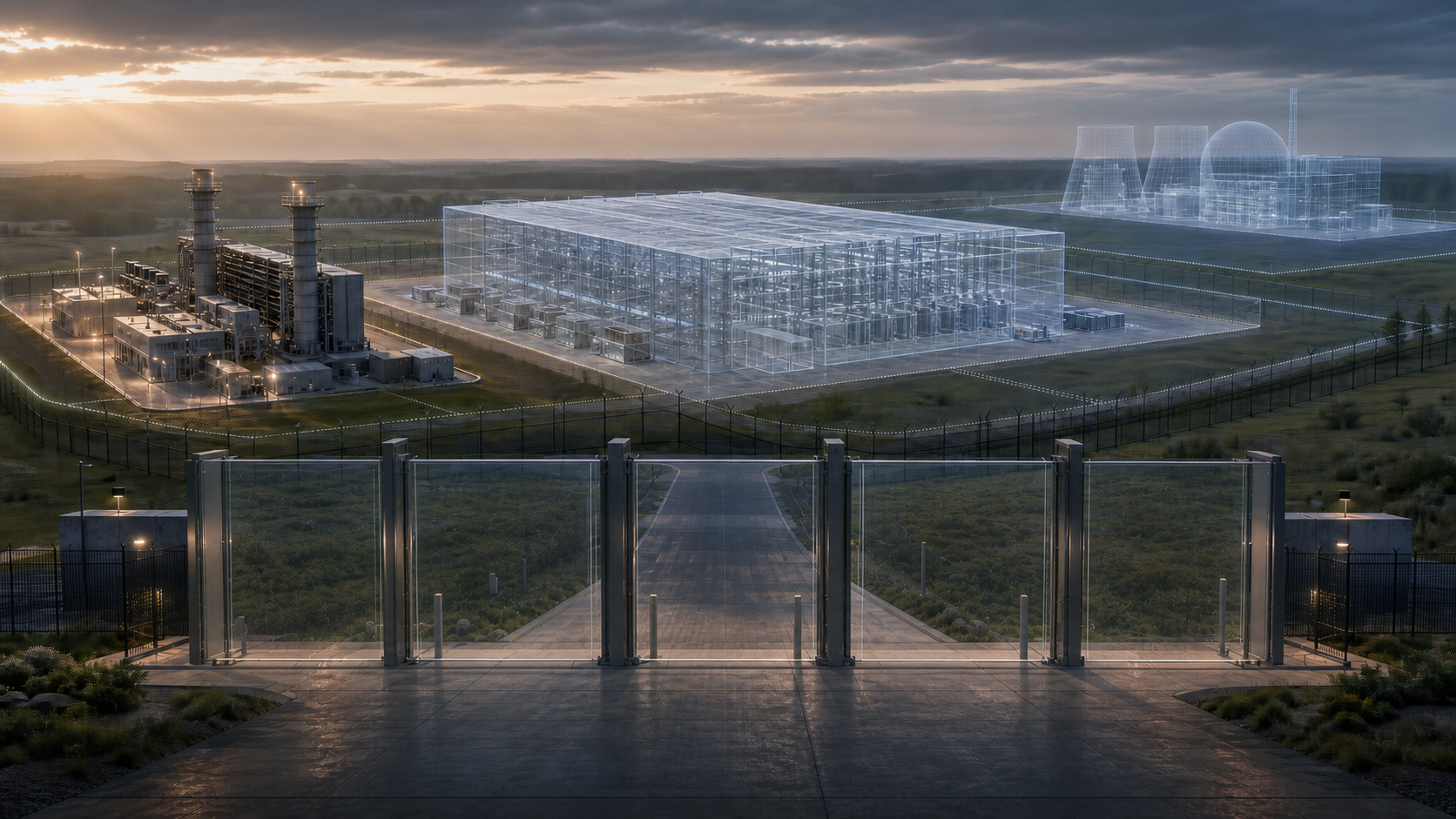
- The proposal combines a one-gigawatt data centre with about two gigawatts of on-site generation, described as natural gas bridging to nuclear energy.
- DC BLOX is the consortium's digital-infrastructure partner. The private side would still have to finance, build, operate and ultimately decommission the project.
- Permitting, safety and security evaluations, other federal approvals and utility interconnection remain unresolved. The next meaningful evidence is a signed lease and a defined first phase.
An infrastructure project can win a competition and still own no buildable right.
That is the precise state of the Savannah River Site AI proposal. On 20 July, the US National Nuclear Security Administration chose Amentum to enter negotiations for a phased lease. The announcement gives the consortium a place at the negotiating table. It does not transfer a tract, close financing, approve a reactor, authorise construction or put a watt behind a server.
The distinction is particularly important because the advertised scale is so easy to mistake for delivery. NNSA describes a one-gigawatt data-centre campus paired with approximately two gigawatts of dedicated on-site generation. DC BLOX, which identifies itself as the consortium's digital-infrastructure partner, repeats those figures. They are the perimeter of a proposal, not meter readings.
The critical path has changed shape
A conventional large data-centre project often waits on land, utility interconnection and transmission. Putting generation beside compute can reduce dependence on one part of that sequence. It can also create a denser chain of linked approvals.
The Savannah River proposal must first become a lease. The parties then need to settle which tract and phase are covered, what each party must deliver, how security boundaries operate, who funds common infrastructure and what happens if a later phase does not proceed. Only then can site, environmental, generation, interconnection and construction decisions be tested against an agreed perimeter.
NNSA's original solicitation identified ten tracts totalling 3,103 acres. It made private partners responsible for building, operating and decommissioning their projects and required them to obtain utility interconnection agreements. Federal land therefore does not eliminate the commercial developer's obligations. It places them inside a landlord relationship with a nuclear-security agency.
That landlord matters. Savannah River Site supports national-security missions. A commercial data-centre programme must coexist with safety, physical security, access and mission-continuity requirements that ordinary industrial land does not carry in the same way. NNSA lists successful negotiations, permitting, safety and security evaluations and other federal approvals as conditions for any agreement.
Two gigawatts is not an answer to every power question
The ratio between two gigawatts of proposed generation and one gigawatt of proposed compute invites simple arithmetic: one for the campus and one for the grid. The sources do not establish that result.
Nameplate generation is not average output. A one-gigawatt data-centre label is not necessarily one gigawatt of commissioned IT load. Plant availability, auxiliary consumption, reserve requirements, construction phases, cooling, network facilities and grid conditions all sit between those labels and an export profile. The NNSA statement says the project intends to increase power available to the grid; it does not assign a firm export quantity.
The same caution applies to cost. The administration presents dedicated generation as a way to meet the project's needs without shifting costs to existing utility customers. That is a design objective. Its credibility will depend on the lease, interconnection agreement, cost allocation, fuel contracts, transmission work and regulatory treatment. No reviewed document demonstrates the outcome yet.
Gas is a bridge whose far bank is unspecified
NNSA describes on-site generation as natural gas bridging to nuclear energy. That sequence could address two different clocks. Gas generation can generally be developed on a different timetable from a new nuclear plant, while nuclear could offer a later long-duration supply. But “bridging” is not a schedule.
The announcement does not identify a reactor design, developer, licence path, fuel arrangement, capital budget or commissioning date. It does not say how long gas would remain the main source, or whether later nuclear output would replace it, supplement it or support the grid. Any article that calls the campus nuclear-powered today would skip the most consequential engineering and regulatory decisions.
For investors and suppliers, this uncertainty changes the order of diligence. Turbine availability, gas delivery and emissions permits may govern an early phase. Nuclear licensing, supply chain and capital formation may govern a later one. The compute campus cannot be assessed with a single blended power date until the phases are defined.
Selection creates an option, not an asset
The useful economic interpretation is option-like. Amentum and its partners have earned the opportunity to negotiate a development path on scarce federal land. NNSA gains a counterpart with which it can refine terms. Both sides can spend money on design and diligence before a final commitment.
That option has value, but it also has expiry risks. Negotiations can fail. A tract can prove unsuitable for a phase. Security conditions can change cost or layout. Generation approvals can lag server demand. Financing can require firmer customer commitments. Interconnection work can remain necessary even when the campus has its own plants.
DC BLOX brings experience in building and operating digital infrastructure across the US Southeast. That helps identify the responsible operating surface. It does not prove that capital has been committed to this particular campus or that ground has been broken.
The next announcement should therefore be read for verbs, not adjectives. “Signed” would move the lease state. “Permitted” would move a regulatory state. “Financed” would move a capital state. “Under construction” would move a physical state. “Energised” and “commissioned” would move the capacity state.
On 20 July only the first verb changed: the consortium was selected to negotiate. The proposed gigawatts make the opportunity material. The unresolved chain makes discipline more valuable than scale.