Summary
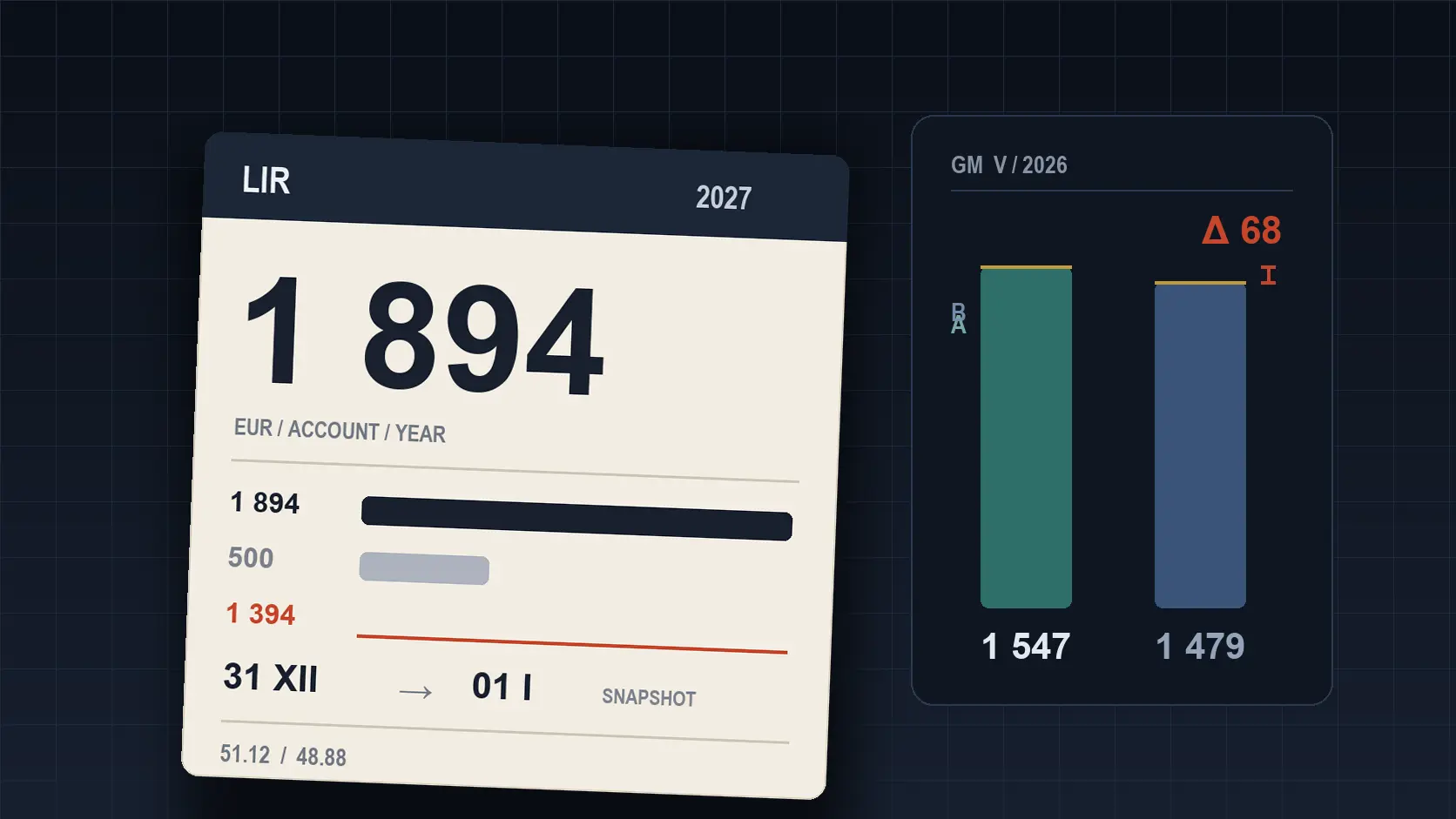
- RIPE NCC allocates recovered IPv4 from its waiting list at one /24 per LIR account, and only to an LIR that has never received an IPv4 allocation. The same account is the unit the registry bills: €1,894 a year from 2027, up from €1,800.
- The Executive Board stopped members from acquiring additional LIR accounts on 29 September 2026 without requiring existing accounts to close, and the 31 December 2026 closure deadline is the only point at which a holder can drop an account before the next invoice — after making its resources transferable first.
The invoice and the queue use the same unit
RIPE NCC does not sell addresses. It rents the account that can hold them, and it rations recovered space by that account. Its waiting-list page says an allocation is a /24, 256 addresses, that there is one allocation per LIR account, and that a requesting LIR must not have received an IPv4 allocation from RIPE NCC before, including one from the waiting list itself. The November member update counts 842 LIRs on that list and 493 days of waiting for the LIR at the front.
That front position is not a forecast. It is the age of the oldest surviving request, and the registry says plainly that it cannot predict how many addresses it will recover or how long anyone waits. What it can predict is the bill. RIPE-867 sets the 2027 annual contribution at €1,894 per LIR account, €94 above 2026, keeps the one-time €1,000 sign-up fee for a new account, folds the first ASN assignment into the annual fee, and puts €50 on every additional ASN. Legacy IPv4 under a direct contract stops being free and pays €75 per registration. The unit in every one of those lines is an object the member holds — an account, an ASN, a registration.
Put two facts in one sentence and the market shape appears. A queue place has a subscription price. A member with five never-allocated LIR accounts can hold five positions in the same list at €1,894 each per year. A member with one account holds one. The registry calls this membership; the arithmetic calls it a lottery with an annual fee.
The Board shut the door and left the tickets in place
On 29 September 2026 the Executive Board restricted members' ability to acquire additional LIR accounts, and the resolution covered requests already in progress. The same notice removes the obvious objection: existing accounts do not have to close or consolidate, no timetable phases them out, and holders of several accounts will be engaged one by one. After a merger or acquisition, resources can move into the acquirer's account at any time, so keeping the purchased company's account is not required by policy.
Read together, those sentences describe a door being closed on new tickets while the old tickets stay valid. The published counts make the size of the ticket book visible without naming anyone: 20,704 LIR accounts against 20,041 members. The 663-account gap is arithmetic on two published numbers, not a survey of who holds what, but every account in that gap is an account somebody chose to keep — and, for the 2027 invoice, an account somebody chose to pay for.
31 December is the only day you can leave
The way out is not a cancellation button. The member update tells members to submit a complete and valid LIR closure request before 31 December 2026 to avoid the 2027 invoice, and attaches conditions that turn an accounting formality into a disposal decision. Resources must be transferable at the time of the request. IPv6 allocation transfers may need additional evaluation, and the registry suggests excluding the IPv6 resource and handing it back to the free pool when there is no real need for it. Billing details must be current before January, or the member gets reminders and closure warnings instead of an invoice.
So the cheap accounts to shed are the ones with nothing attached. The expensive decision sits with the holders whose accounts carry a waiting-list place, a small allocation, a legacy registration or a sponsored customer. Closing any of them means moving the objects first, and moving them is not free of policy: a transfer needs a recipient, and the registry's own words are that the resources must be transferable when the request lands.
Every exit is somebody else's /24
The queue is fed by the same decisions. RIPE NCC's waiting-list page says recovered addresses are the ones de-registered when members go out of business or are closed down, or those members choose to return. Recovered blocks sit through a quarantine before allocation, so a prefix released in December does not appear at the head of the queue in December. The 842 queued LIRs are waiting on other members' exits, mainly on the annual exercise of deciding whether the account is still worth €1,894.
That makes the December deadline a supply event as well as a billing one, and it makes the price of patience legible. An account that closes in 2026 stops paying and stops queueing. An account that stays pays again and keeps its place, immovable in a line whose head is already 16 months old. Both choices are rational; only one of them ever puts 256 more addresses back into circulation.
The transfer market is the third option, and it is not a big one. The same November update reports 740,096 IPv4 addresses transferred in October, 1,433,344 fewer than the figure it gave for the previous month. One month of all recorded transfers in the RIPE region is a few thousand /24s against a queue of 842 accounts that want exactly one each. The queue is not competing with a torrent of supply. It is competing with whatever trickles out of it.
Sources
Member Briefing
Read the full trend briefing
Members read the full briefing with the source notes behind every finding.
Strategic Circle
A daily briefing in your language, built from changes we have verified.
Join for USD 20/monthCancel anytime.
Members also get the full research library, a daily briefing on the networks they follow and the private forum.