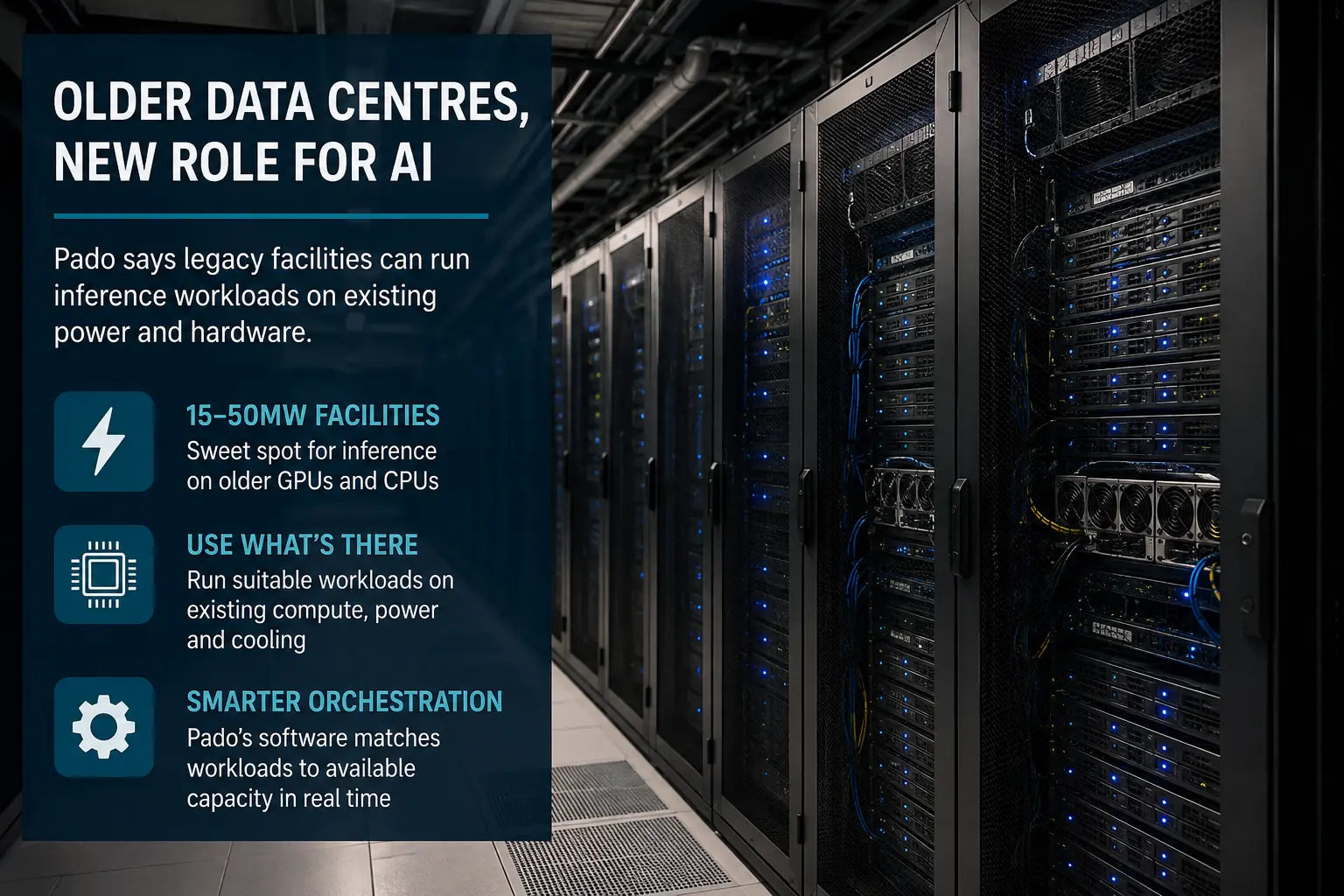
- Pado says 15–50MW legacy facilities are the strongest fit for inference workloads that can run on older GPUs and CPUs
- Its software targets mid-market colocation sites by matching workloads to available compute, power and cooling capacity
The fact
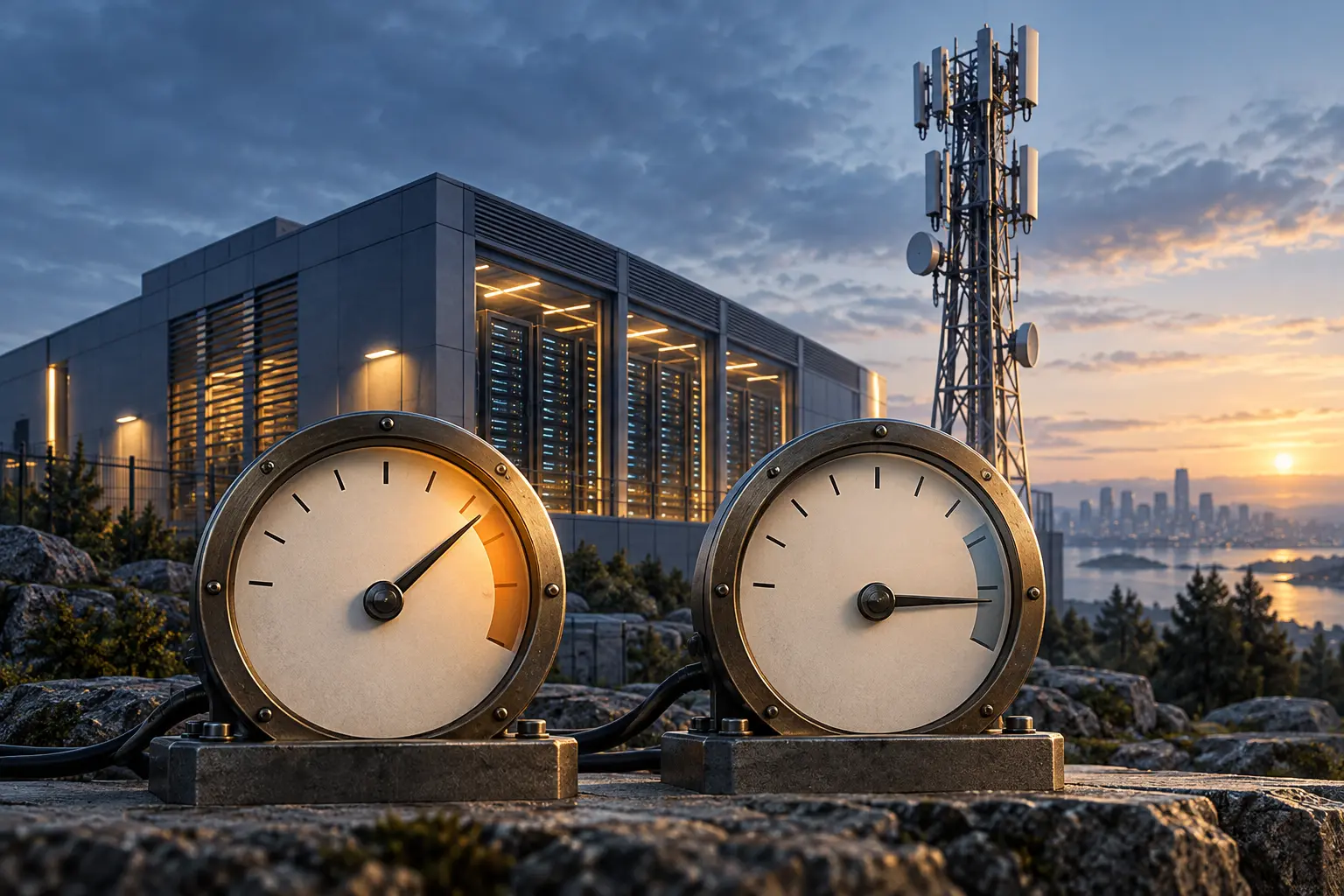
Older data centres may be able to run more AI inference workloads without being rebuilt for high-density computing, Pado AI founder and CEO Wannie Park told ESG Dive. Park said legacy sites are generally 100MW or smaller, with 15–50MW facilities the best fit. Many inference jobs can still run on older GPUs or traditional CPUs, although older cooling systems may be less efficient than those in newer AI facilities.
Pado develops software that manages how data centres use power, computing capacity, and cooling. The company is backed by LG NOVA, LG Electronics’ North America Innovation Center, and raised $6 million in March to expand into mid-market colocation. ESG Dive did not report how much AI demand legacy sites could handle in practice or identify a specific deployment proving the approach.
The assessment
Older data centres are often poorly suited to the highest-density AI hardware, but that does not make them unusable for AI altogether. Inference workloads vary widely. If a job can run on existing GPUs or CPUs and stay within a site’s power and cooling limits, an older facility may still be able to support it without a full rebuild.
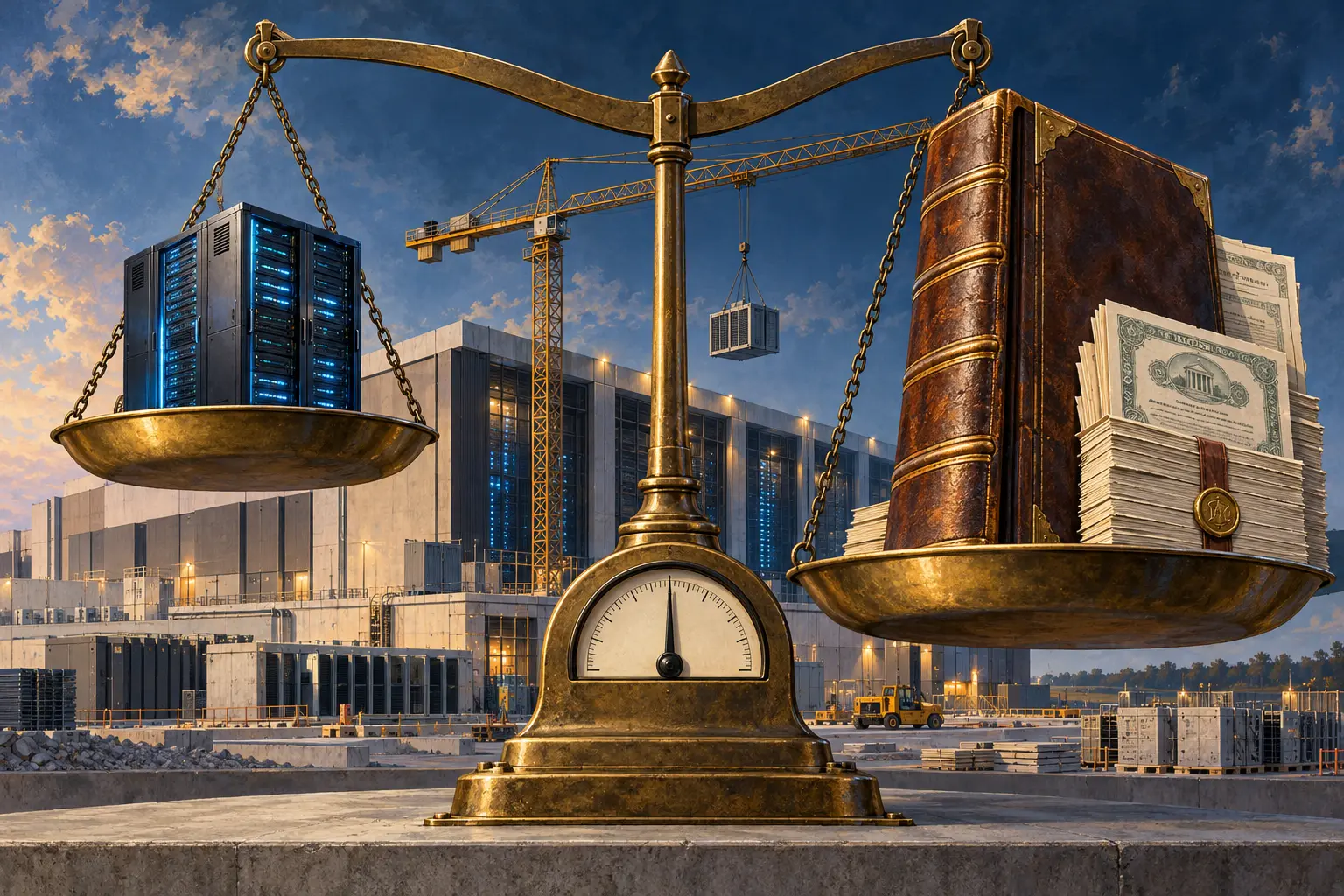
That does not make legacy sites a substitute for new AI campuses. The interview provides no evidence on how much additional workload these facilities can absorb, and some may still require power or cooling upgrades. Pado’s approach depends on identifying which workloads fit the infrastructure already in place. For BTW readers, this is mainly about getting more use from existing powered facilities. Operators may be able to place suitable inference work in older sites while reserving newer, higher-density infrastructure for workloads that actually require it.
What to watch
Watch for the first legacy-site deployments using Pado’s software, especially details on which inference workloads are moved and whether existing power and cooling systems need upgrading. The clearest evidence will be operating data from those sites: utilisation, power draw, thermal performance and any limits operators hit when they try to place more AI work in older facilities.