Summary
- In 2005 Opera Mini let a Java-capable feature phone display web pages by giving the handset a small client and sending page processing to a remote Opera server. The first named pilot distributor was Norway's TV2, which bundled a branded browser with its mobile services.
- Opera opened a worldwide download in January 2006 and advertised compression of up to 80%. Three months later it was selling the same growth in mobile browsing to network operators as a way to lift data revenue. The small phone gained a browser; the server and the distribution channel gained a job.
The browser would not fit in the phone
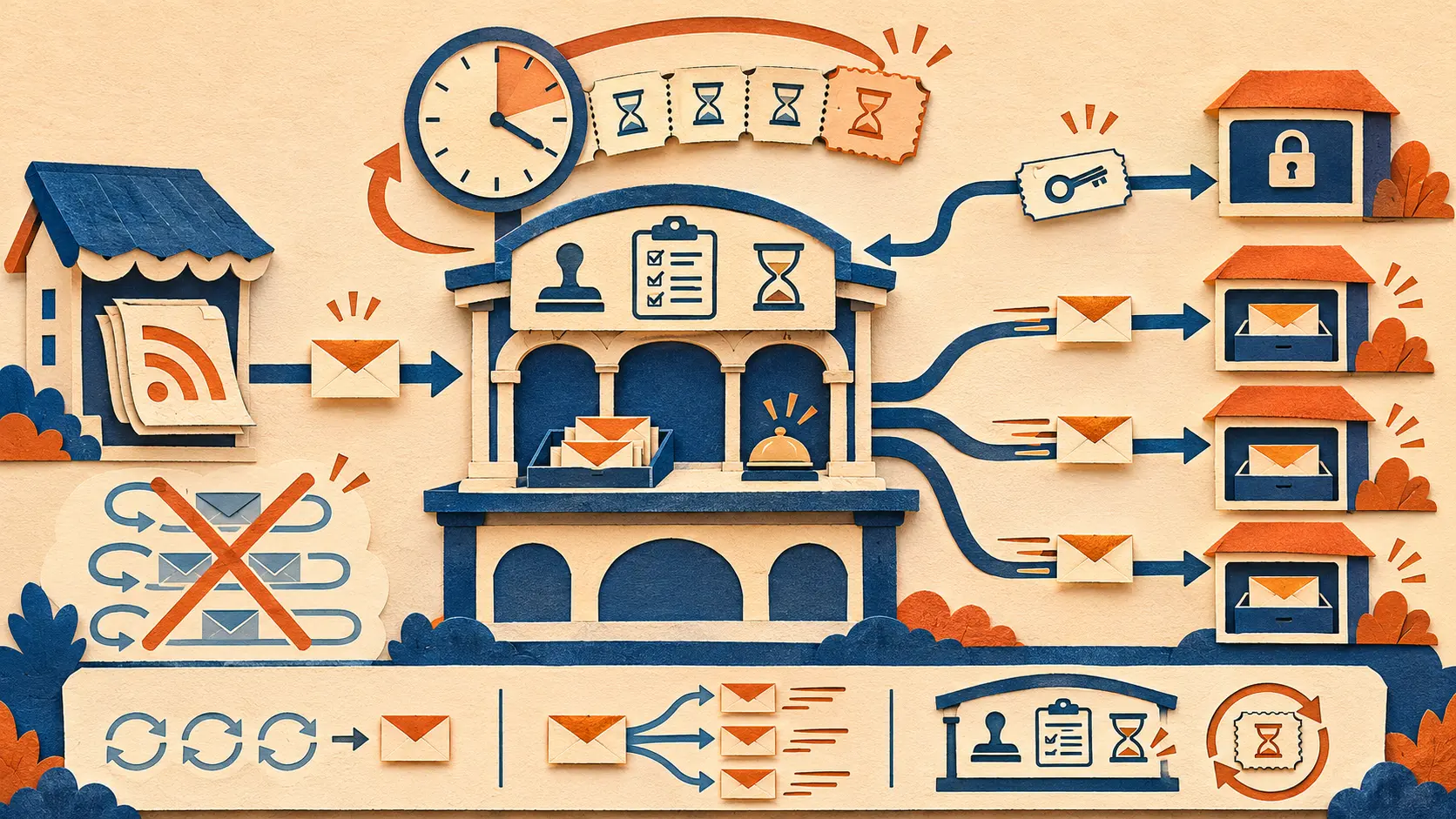
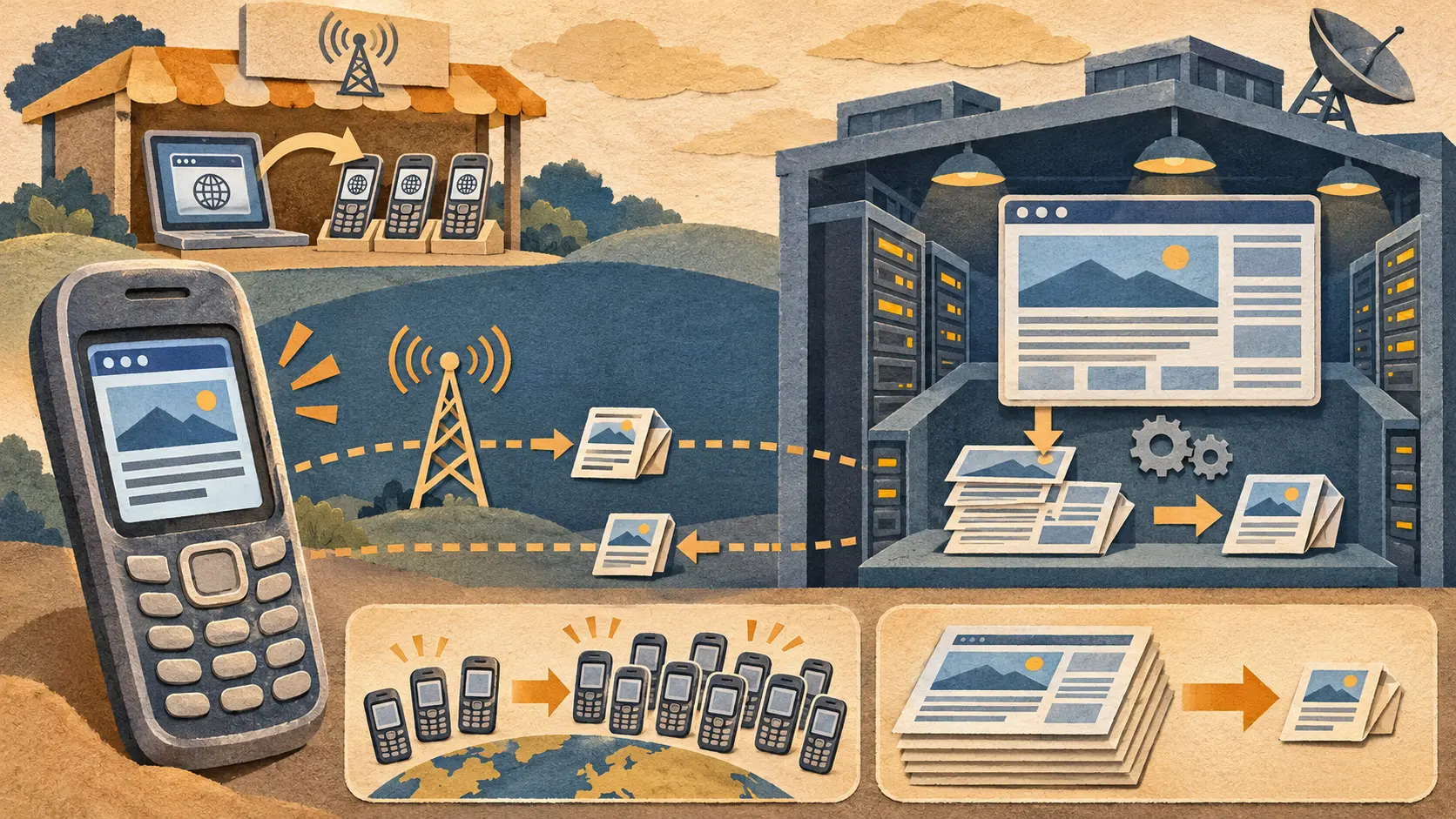
A desktop web page in 2005 could ask too much of a cheap handset. The phone had a small screen, limited memory and a network bill that might rise with every kilobyte. Opera's August 2005 introduction of Mini attacked the first problem by moving the work. A tiny J2ME client ran on the phone. A remote Opera Mini server fetched and pre-processed the page, then sent a version the handset could handle. The company pitched the design to owners of low- and mid-tier Java-capable phones, including phones whose usual door to the network was WAP.
The split is the whole story. A small client was possible because it was not carrying the full page-processing load. Opera did not turn every basic phone into a desktop computer. It built a second computer into the path, owned and operated elsewhere. The browser's most expensive work crossed the network before the user saw the page.
Opera's 2005 announcement estimated a potential market of more than 700 million suitable handsets. That was a claim about devices that might run the client, not a count of people who had installed it. The more revealing number was the number of moving parts: phone, radio network, Opera server and the web site. Each could decide what a mobile browsing session felt like.
First, a television station held the door
The first named Mini pilot in the August notice was not a universal app-store launch. Norway's commercial television station TV2 bundled a branded Mini with its mobile services. Opera offered customization to operators, broadcasters and content providers. A company that already had subscribers or viewers could hand them a browser bearing its own distribution plan. For TV2, that meant placing its portal beside broader web access; for Opera, it was a way to reach phones without waiting for each handset maker to replace its software.
This matters because access did not arrive by magic when the Java file existed. A user had to get the client onto the phone, have a data connection, and reach Opera's server. TV2's pilot addressed the distribution step. The remote server addressed the computing step. Neither was a decorative extra to an otherwise self-sufficient handset application.
Opera's January 2006 worldwide release widened the door. The company offered a free WAP download or a download by SMS for a small fee. It still required Java. The notice advertised page compression of up to 80% and Small-Screen Rendering for the handset's narrow display. That percentage described a possible saving in Opera's pitch, not a measured average for every page or network. Yet the economics were plain: if a customer paid by the kilobyte, fewer transmitted bytes could make a web session easier to afford.
The worldwide release did not erase branded distribution. Opera continued offering customized Mini versions to mobile operators, handset makers and other companies. It could invite direct downloads and court wholesale partners at the same time. The client was small enough to travel by WAP or SMS; the processing service behind it remained Opera's.
The carrier found a cash register in the compression story
Opera's April 2006 announcement to operators put the carrier's incentive in the headline. It argued that wider browsing on feature phones could raise average revenue per user and demand for mobile data packages. T-Mobile was to offer Mini on high-volume feature phones. Opera also kept selling regular and branded editions to operators and other distributors.
There is a small irony in that offer. Compression made an individual page cheaper to carry, while a usable browser could persuade customers to load more pages. The user might gain a lower bill per page; the operator could gain a larger data business. Those are compatible incentives, not identical ones. Opera's notice presented the carrier outcome as a commercial opportunity. It did not provide a neutral test of any particular customer's bill.
The product therefore joined three decisions that are often filed under one word, “browser.” The handset decided what Java client it could run. Opera's server decided how the requested page would be processed for that client. The operator or branded partner decided how the client reached subscribers and how data traffic was sold. The web site still supplied the page, but it no longer met the small screen directly.
Where the page actually became mobile
Opera Mini's early achievement was real in the way an operating arrangement can be real. It gave ordinary Java-capable phones a path to pages they could not comfortably process alone. The cost of that reach was a dependable middle machine and a distribution bargain. A reader looking only at the little icon on the handset would miss the larger browser running on the other side of the connection.
That is the durable lesson of the 2005–2006 record. The web did not shrink itself to fit the cheap phone. Opera moved page processing to its server, cut the result down for a small screen and offered carriers a reason to hand out the client. The phone got a window. Someone else owned the workshop.
Member Briefing
Deeper Profile Context
Sign in with the right membership level to unlock the full briefing and source notes.
Only for Strategic Circle
Strategic Circle
Open to all readers. Unlock profile briefings after joining and signing in.
Join Strategic CircleOnly for Leadership Alliance
Leadership Alliance
For qualified IP-asset owners and management; sign in to unlock alliance briefings.
Join Leadership Alliance