Summary
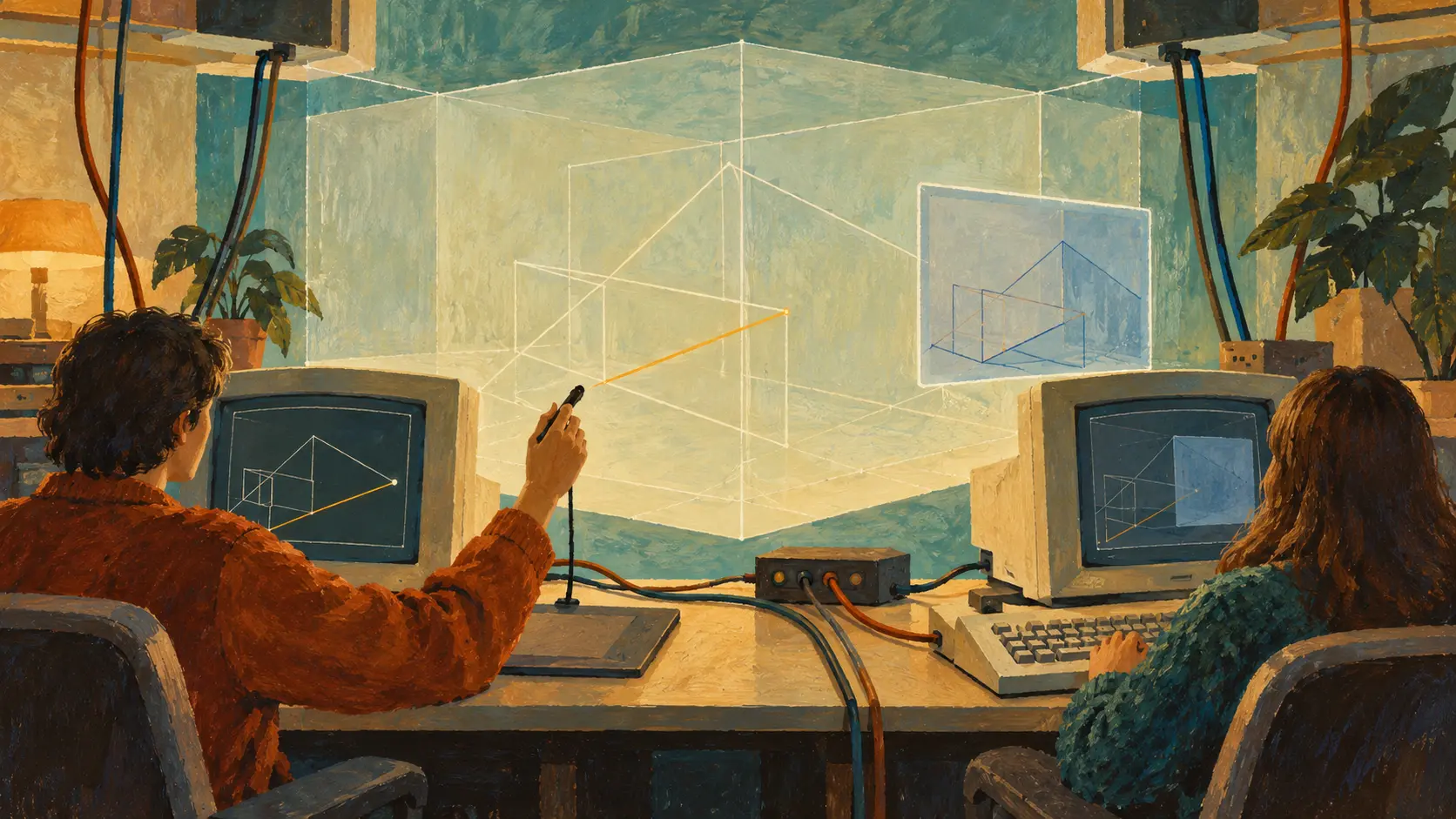
- RFC 782 proposed a virtual terminal as a shared, many-sided resource: several people could read and write one logical display while their personal workstations showed selected windows of it.
- The design separated each person's local screen and input controls from the shared virtual display, and described file-backed history and coordination among virtual-terminal peers. In January 1981 it remained a model awaiting a minimal implementation.
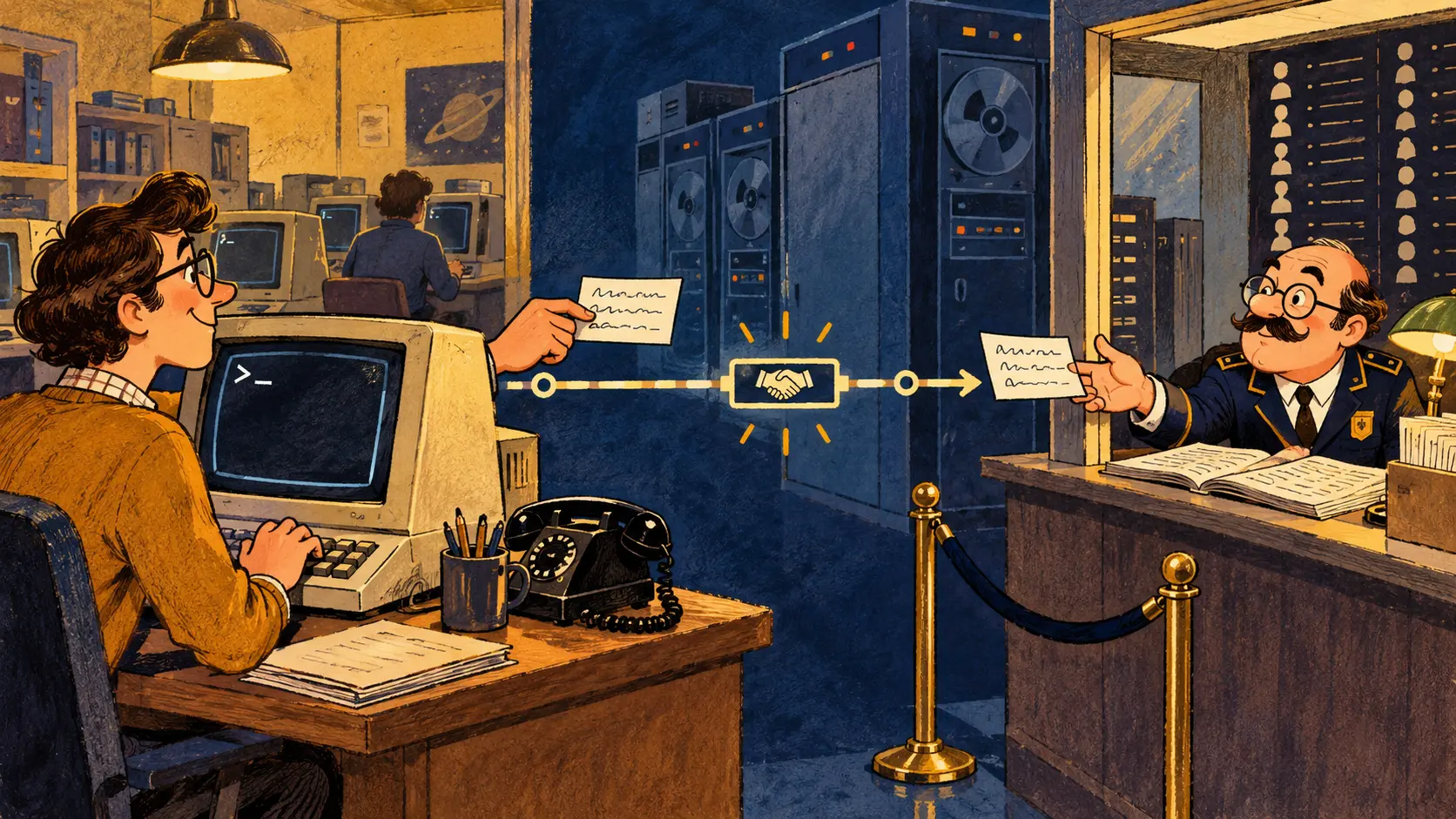
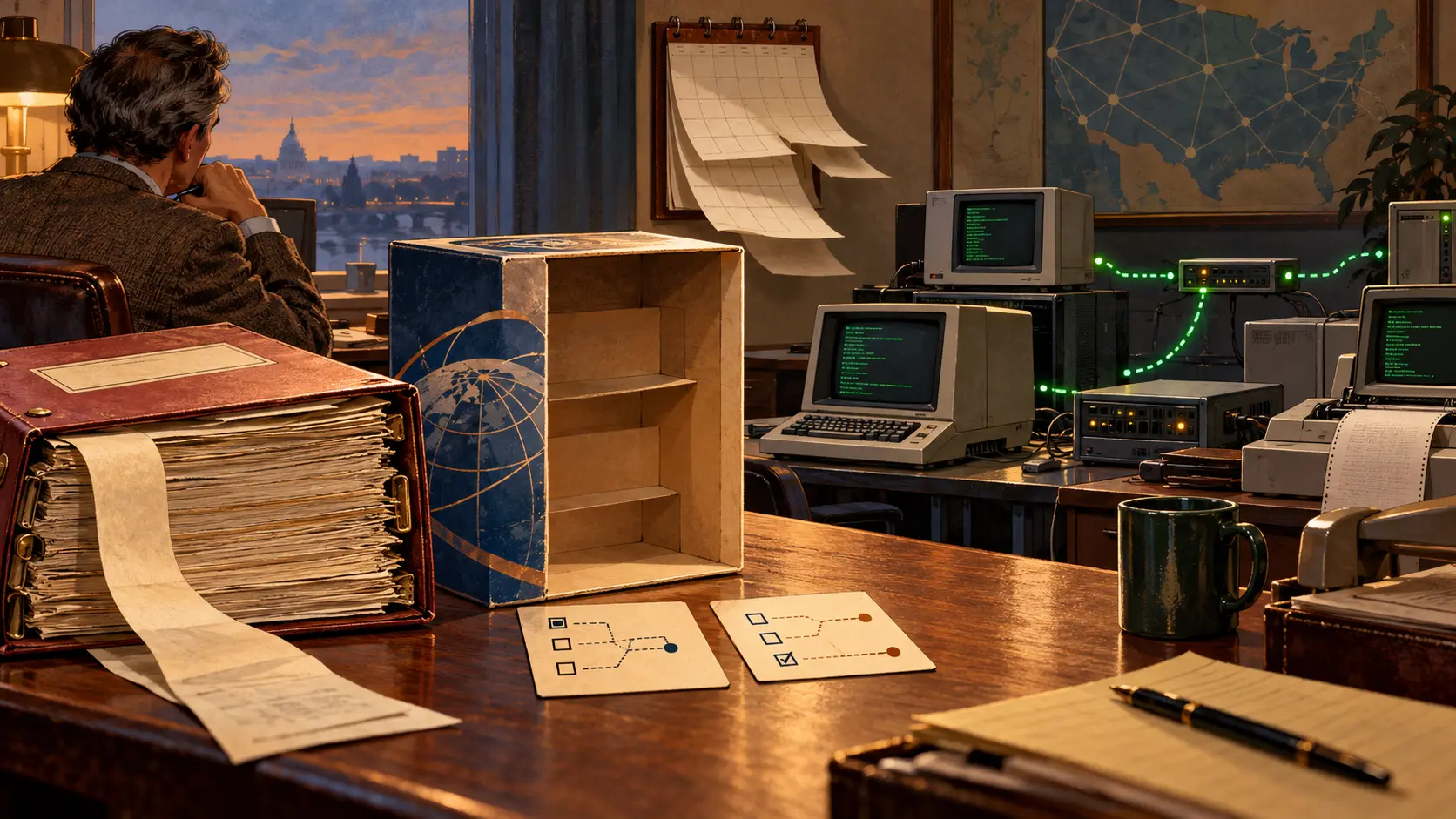
The terminal had a familiar job: let one person talk to one computer. Jose Nabielsky and Anita P. Skelton looked at that arrangement in January 1981 and invited more people into the conversation. In RFC 782, A Virtual Terminal Management Model, they gave a virtual terminal several correspondents and a display that more than one workstation could share. A screen, in their model, could have an audience and a committee of editors. Anyone who has watched a committee use a whiteboard can see why the next question was control.
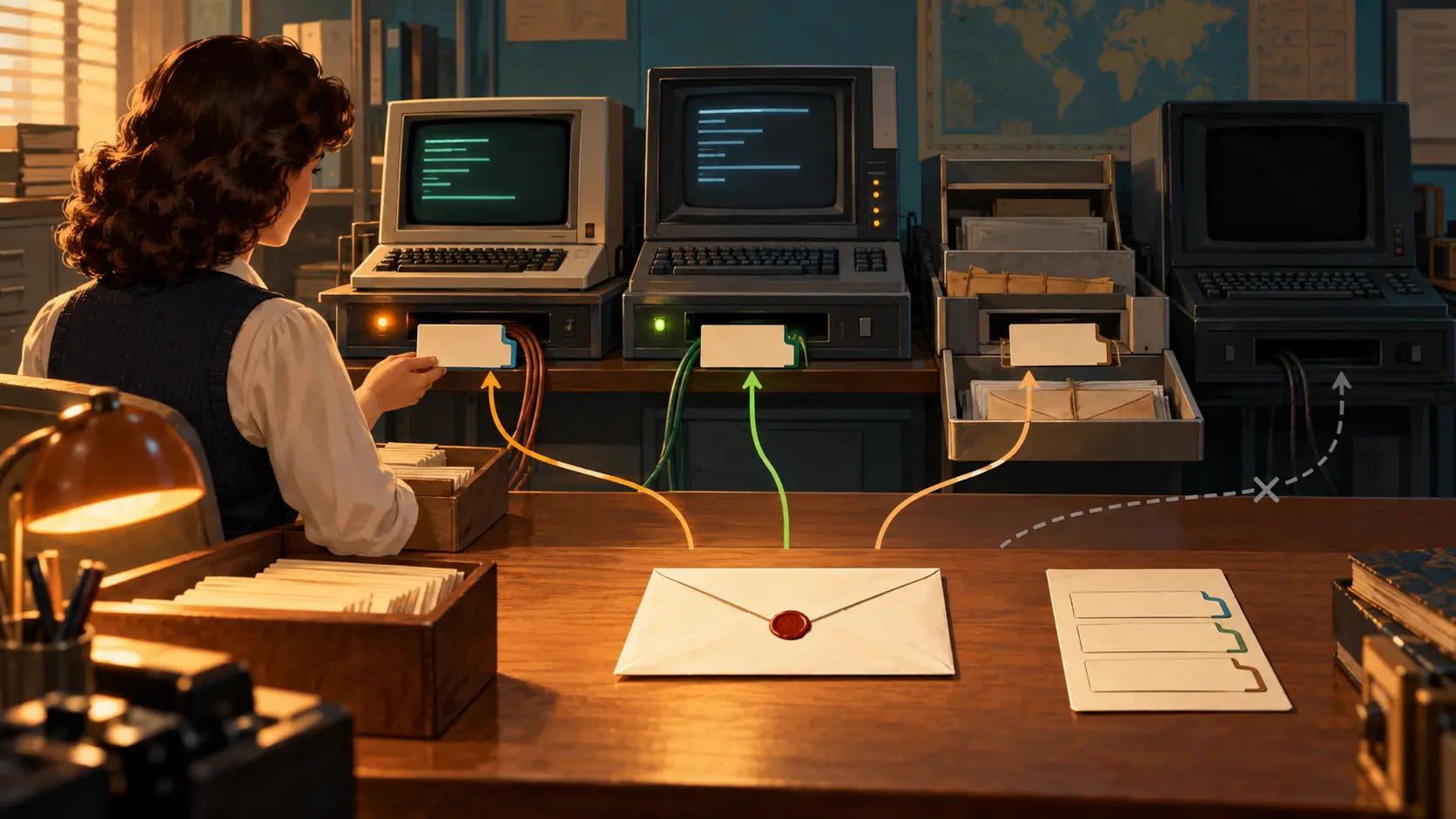
Their starting point was a change in the machine on the desk. Cheap, capable microprocessors promised dedicated personal workstations instead of a single large computer rationing cycles among many terminals. Each workstation could keep several conversations with distant agents open at once. Its physical display could be split into logical areas or switch among them over time; the keyboard, mouse or other input device would address one chosen conversation at a time. The proposal even made room for graphics and pointing tools. It pictured richer voice and video exchanges as a future possibility, not a fixture already sitting on every desk.
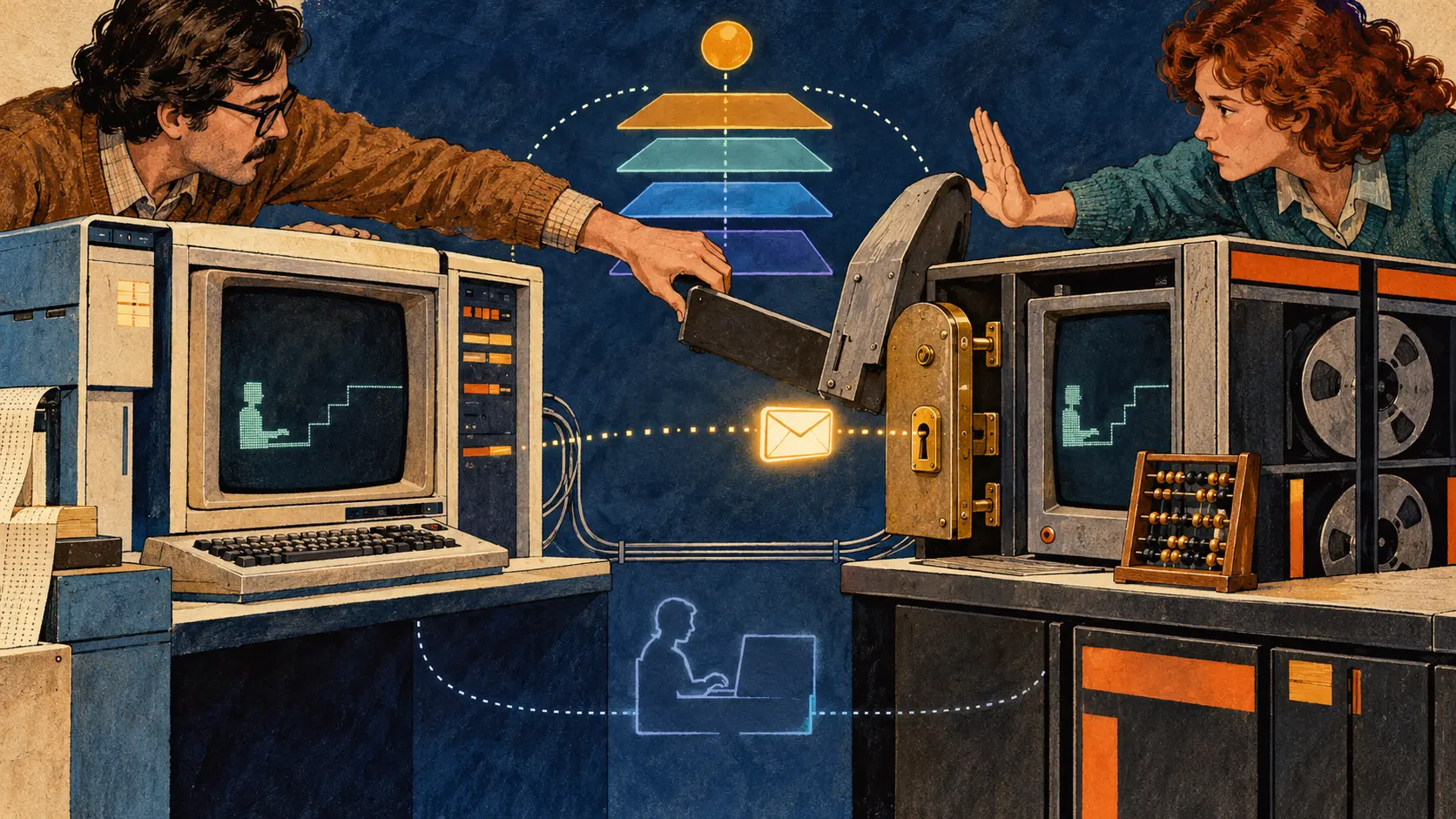
The crucial move was to treat the virtual terminal as a resource rather than a two-way pipe. Several users could connect to one logical terminal. Each could receive its output and, when the arrangement allowed, send input into it. The shared device had virtual keys, a controller and a display. It might present a stream, a line, a page or graphics, depending on the class of terminal. Its own representation stood between the different physical devices. An adaptation unit at each workstation translated that user's local device commands into the common virtual language.
The person with one model of terminal and the person with another could work on the same logical surface without pretending their hardware matched.
Nabielsky and Skelton pushed the idea beyond showing everyone the same rectangle. The virtual display was potentially larger than any one person's visible window. Each workstation could choose the part it wanted to see. If the virtual display had a local I/O-file extension backed by storage, a user could also look back at earlier activity. The authors said that doing so need not disturb the others who were still sharing it. The file extension was a local facility; it was not a magic command every remote peer had to implement.
For someone trying to catch up on a conversation, the distinction mattered more than the wiring diagram: the meeting could keep going while you checked what had been erased from your view.
Shared writing raised a less glamorous problem. If several virtual terminals each kept a view of the same state, their updates had to be coordinated. The paper compared them to managers of local copies of a distributed database and proposed concurrency control to preserve a single-user view when desired. A common drawing can be great fun until two hands move the same line. The model put the disagreement where the architecture could address it: among cooperating virtual terminals and their shared store, while adaptation units dealt with the peculiarities of individual workstations.
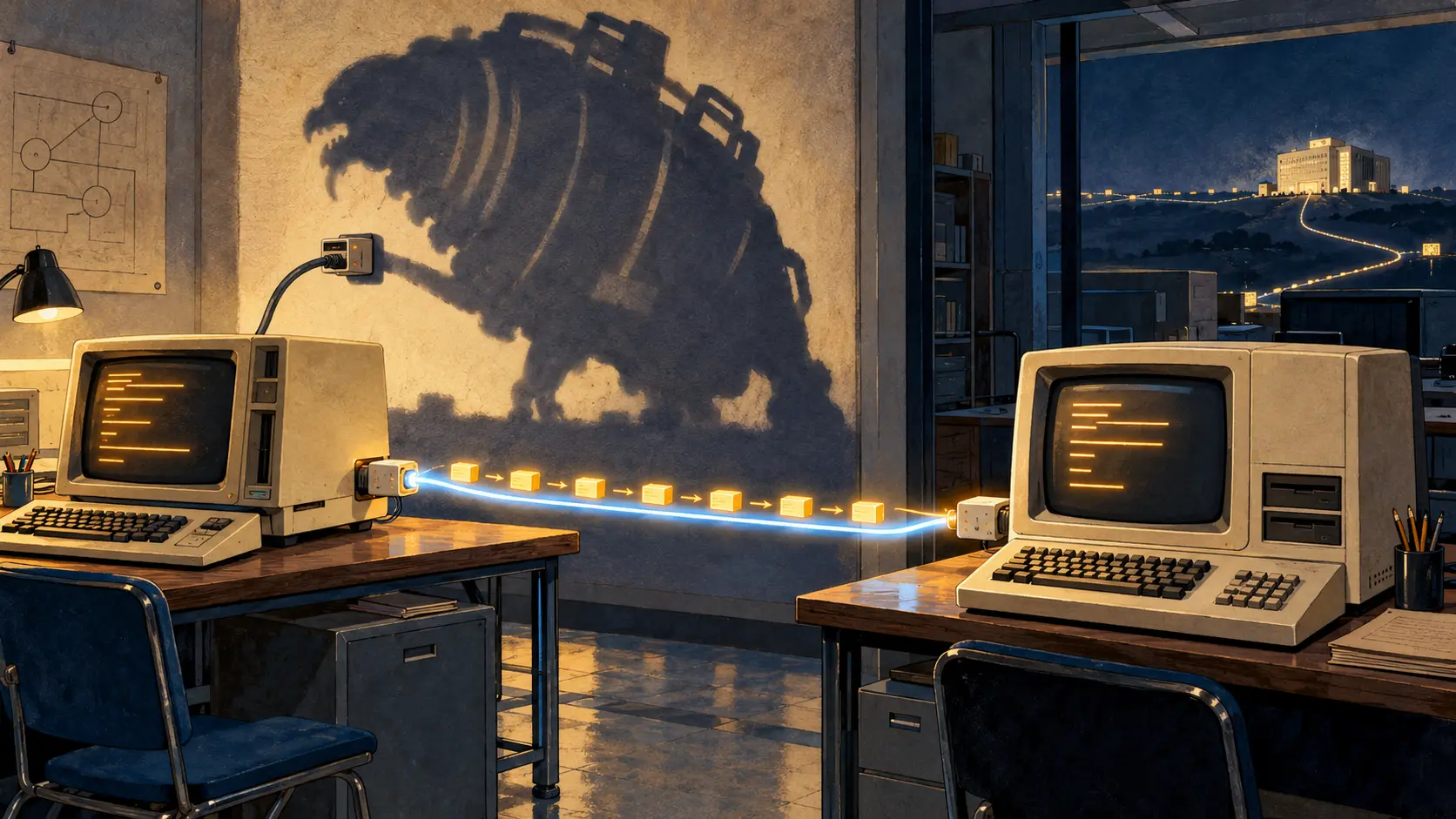
The authors were candid about the stage of the work. Data structures and addressing had been designed in detail; operations and control mechanisms were less complete. They planned a minimal implementation to test the model. They submitted the document amid international interest in virtual-terminal protocols, hoping a future standard would leave room for the proposed capabilities. The RFC itself described work in progress. It was an architectural invitation, with unfinished parts identified in the margin.
That status makes the paper more interesting, not less. In 1981, the authors were asking what a networked personal workstation should share once it could do more than impersonate a remote teletype. Their answer was a logical workspace with several participants, local windows and a past that one person could inspect without stopping everyone else. The proposal did not have to win a standards race to show the shift in imagination. A terminal had been a chair facing a machine. In RFC 782, it became a table around which several chairs might fit.
Member Briefing
Deeper Profile Context
Sign in with the right membership level to unlock the full briefing and source notes.
Only for Strategic Circle
Strategic Circle
Open to all readers. Unlock profile briefings after joining and signing in.
Join Strategic CircleOnly for Leadership Alliance
Leadership Alliance
For qualified IP-asset owners and management; sign in to unlock alliance briefings.
Join Leadership Alliance