Summary
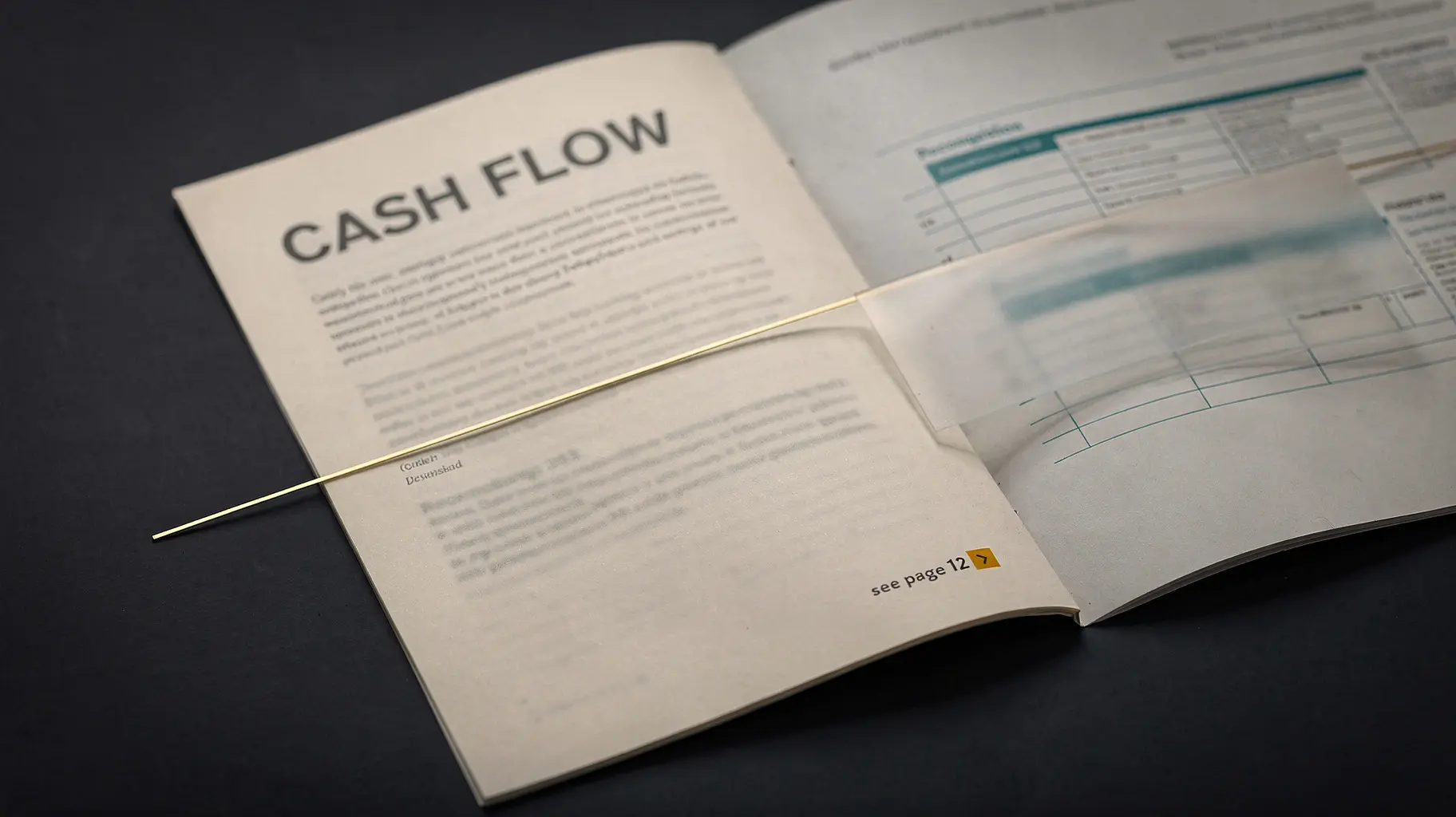
- Millicom (NASDAQ: TIGO) announced on 27 July 2026 that it would publish second-quarter 2026 results on 6 August 2026, and the release it published that day carries the label "EFCF excluding proceeds from disposals" plus an instruction to see page 12 for the description of non-IFRS measures and the reconciliations to the nearest IFRS measures.
- Two secondary accounts of the same quarter agree on USD 2.18 billion of revenue and on a record in cash flow, and agree that the profit line moved 84% year over year. They disagree on the direction of that move, and the body of the release was not readable here, so the disagreement is the story rather than a footnote to it.
A cash headline is a decision about edges
Equity free cash flow is not a mysterious quantity. It is what the operating base throws off after capital spending and after the obligations that sit in front of shareholders. Every version of it draws a line somewhere, and Millicom drew its line at the disposal till: proceeds from selling operators do not count as cash flow from running one. That is a coherent choice for a group whose portfolio has been reshaped repeatedly, because it refuses to let a divestiture flatter a quarter it did not earn.
It is also a choice that needs its own audit trail, because the same boundary can be used in two opposite ways. If disposals are genuinely episodic, excluding them tells a reader something worth knowing about the run-rate business. If disposals recur as a funding habit, the exclusion quietly removes a real, repeatable inflow from the headline while leaving the impression that the headline is the conservative number. The definition does not say which of those describes Millicom. Only the reconciliation does, and the reconciliation is on page 12.
What the retained record actually supports
Three things can be said flatly. The registered entity is "Millicom International Cellular S.A., Luxembourg", listed by the International Telecommunication Union with the classification ROA and ITU-D participation https://www.itu.int/hub/membership/our-members/directory/?myitu-members-states=true&request=organisations&id=1000100396. The group told the market on 27 July 2026 that its second-quarter numbers would come on 6 August 2026 by press release https://www.morningstar.com/news/globe-newswire/1001254694/millicom-tigo-notice-of-second-quarter-2026-results-and-video-conference. And the release it then issued carries the non-IFRS instruction and the disposal exclusion on its own front matter https://www.morningstar.com/news/globe-newswire/1001256289/millicom-tigo-q2-2026-earnings-release.
Everything more specific comes second-hand. Yahoo Finance reported revenue up 59.4% year over year to USD 2.18 billion, profit down 84%, and a record cash flow https://uk.finance.yahoo.com/news/millicom-tigo-plunged-84-024848938.html. ad-hoc-news.de reported the same USD 2.18 billion of revenue, the same record in cash flow, and a 3.27% share gain after that record was reported https://www.ad-hoc-news.de/boerse/news/corporate-news/millicom-stock-gains-3-27-percent-as-cash-flow-hits-a-record/70234761.
Then the record contradicts itself. One account says profit plunged 84%; a later summarisation of the same release described an 84% profit increase. Nothing retained here settles which is right, and no table from the release was read. That is not a small annotation on a quarterly story. It is the difference between a group whose earnings collapsed while its cash held up and a group whose earnings jumped while its cash did — and media coverage circulated both readings of the same 6 August document.
Why acquisition accounting makes the confusion plausible
A large purchase does two things to a set of accounts in the same period. It pulls the acquired revenue into the top line, which is why a revenue jump of this size sits so naturally beside an operator roll-up. And it loads the profit line with the costs of having bought something: amortisation of acquired intangibles, transaction expenses, the integration spend that follows. A quarter can therefore show a revenue line and a profit line moving in opposite directions without either number being wrong.
That matters here because the retained record does not separate organic from acquired revenue, does not disclose which operators moved, and does not say whether the record cash figure is the EFCF measure that excludes disposal proceeds or some other construct that happens to have peaked. Each of those gaps is a place where a plausible reading of the quarter could be built on nothing.
The reader's defence is unglamorous. It is to insist on the reconciliation, to check whether the disposal exclusion changed definition between quarters, and to notice whether a "record" cash number is presented alongside a falling leverage path or merely alongside a rising share price.
The test that would actually settle it
One record quarter proves presentation. A durable signal is duller and harder: an equity free cash flow figure, on a definition that does not migrate between quarters, rising while net leverage falls and capital intensity stays disciplined. Millicom is mapped in the directory as a telecom group here https://btw.media/en/directory/millicom-international-cellular-s-a Only for Strategic Circle, and the question a capital-allocation reader should hold against it is not whether this quarter's cash flow was a record. It is whether the number that hit the record survives being read next to the page it points to.
Member Briefing
Deeper Profile Context
Sign in with the right membership level to unlock the full briefing and source notes.
Only for Strategic Circle
Strategic Circle
Open to all readers. Unlock profile briefings after joining and signing in.
Join Strategic CircleOnly for Leadership Alliance
Leadership Alliance
For qualified IP-asset owners and management; sign in to unlock alliance briefings.
Join Leadership Alliance