Summary
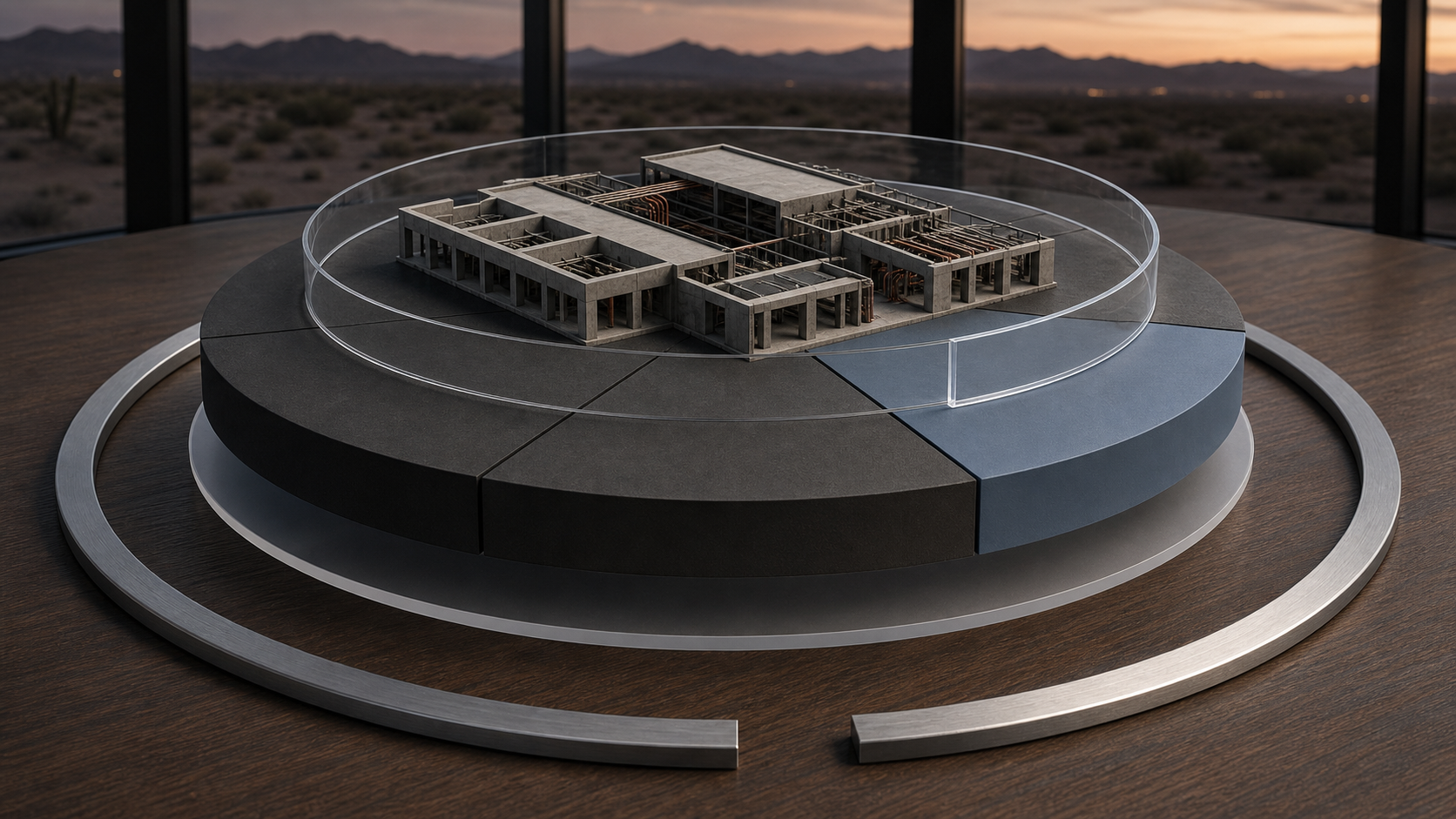
- BlackRock-managed funds will own 80% of the El Paso venture and Meta 20%; the transaction is expected to close in coming days and has not yet closed.
- The parties expect approximately $14 billion of development cost for a one-gigawatt campus whose capacity is intended to begin coming online in 2028.
- Meta will contribute land and construction-in-progress assets valued at about $2.3 billion; BlackRock will contribute about $4.9 billion in cash, partly funded by $12.5 billion of debt financing.
- Meta will receive an approximately $1 billion distribution to align the 80/20 ownership stakes, then lease the entire campus for four years with four extension options.
- Meta will provide residual-value guarantees with an aggregate threshold of about $13 billion that declines over time.
Twenty per cent of the equity can coexist with one hundred per cent of the initial occupancy. The first number allocates ownership in the venture. The second identifies who supplies its opening revenue.
Meta will be the initial sole occupant of the El Paso campus and lease the entire development. BlackRock-managed funds will hold 80% of the vehicle; Meta will retain 20%.
That structure brings outside capital into a facility designed for Meta’s workloads. It does not detach Meta from the asset’s construction, utilisation or terminal value.
The tenant is more concentrated than the cap table
Meta will provide construction management, administrative and property-management services. It also plans to occupy all of the campus when completed.
For the venture, this reduces the opening leasing problem: the intended user is identified. It increases tenant concentration: no second customer is named to replace cash flow if Meta does not extend or if part of the campus becomes unnecessary.
The leases start with a four-year term and offer four extension options. Exercising all of them would allow a potential 20-year term. Options create flexibility for Meta; they are not the same as a firm 20-year commitment at signing.
The announcement does not publish rent, indexation, availability obligations, service credits or renewal pricing. Those terms will determine how much operating risk and return sits with the landlord vehicle.
Contributions create the 80/20 opening balance
The parties estimate total development cost at about $14 billion for buildings and long-lived power, cooling and connectivity infrastructure.
At financial close, Meta will contribute land and construction in progress valued at about $2.3 billion. BlackRock will contribute about $4.9 billion in cash. Meta will receive a one-time distribution of about $1 billion to align stakes with the 80/20 split.
That distribution should not be described as project profit. It is part of forming the agreed ownership balance after contributing assets. Whether value ultimately exceeds cost depends on construction, lease cash flow and the campus’s residual worth.
A portion of BlackRock’s investment will be funded with proceeds from $12.5 billion of debt financing. The announcement does not provide a complete public sources-and-uses table linking every dollar of debt, equity, contributed asset, distribution, reserve and cost.
This article therefore does not repeat the earlier bond-marketing thesis. The new event is the official disclosure of the venture contract and its risk allocation.
The guarantee reaches beyond Meta’s equity percentage
Meta will provide residual-value guarantees whose aggregate threshold starts at about $13 billion and decreases over time.
If specified conditions are met during the first 16 years, Meta’s maximum payment would be the shortfall between the fair value at that time and the applicable threshold for covered property.
This is not a guaranteed $13 billion cash payment. It is a conditional shortfall mechanism against a declining threshold. If fair value meets or exceeds the threshold, the described shortfall would be zero; the exact result depends on conditions, valuation and time.
The guarantee protects part of the vehicle’s terminal-value risk. It also means Meta’s economic exposure cannot be inferred from its 20% equity alone. Tenant payments, management responsibilities and the residual-value mechanism sit outside that percentage.
The public release does not include the guarantee agreement, covered-property schedule, valuation procedure or enforcement terms. Those documents matter before assigning a precise maximum exposure.
One gigawatt remains a delivery sequence
The campus is under construction and intended to reach one gigawatt. Capacity is expected to begin coming online in 2028.
“Begin” does not mean the full gigawatt will be commissioned at once. Power, cooling, connectivity, buildings and IT acceptance can arrive in phases. The release does not provide a megawatt-by-year schedule.
Meta says more than 2,300 workers are already onsite, with more than 4,000 construction jobs at peak and 300 operating roles once complete. Employment measures activity, not commissioned compute or the vehicle’s ability to service debt.
The transaction itself is also one step earlier than completion: it is expected to close in coming days. Until financial close occurs, the contributions, distribution and 80/20 ownership have not reached their final operative state.
The venture now has a disclosed capital and contract map. The next proof will be closing, followed by construction draw, energisation, lease commencement and phased acceptance. Minority equity is only one coordinate on that map.