Summary
- MaxLinear’s Q3 2026 revenue rose 72% year on year, while Infrastructure revenue increased 210% to US$124.9 million.
- The company’s nine-month operating cash flow turned negative as working capital funded wafer prepayments and inventory for data-centre demand.
A semiconductor boom has a glamorous side: faster links, bigger clusters, enormous forecasts. It also has a supplier’s side: someone pays for wafers before the finished product reaches a customer. MaxLinear’s latest quarter shows both ledgers at once.
The Carlsbad chip designer reported US$218.1 million in Q3 revenue, up 72% from a year earlier and 29% from the previous quarter. Its Infrastructure segment brought in US$124.9 million, compared with US$40.3 million a year earlier. The 210% jump is striking. That segment combines optical data-centre products with high-performance analog and wireless backhaul and access products, so the growth rate covers the full Infrastructure portfolio.
The income statement has repaired itself quickly. GAAP operating margin rose to 13.9% from a loss-making 32.7% margin a year earlier. Gross margin increased to 58.7% from 56.9%. That is a sharp turn after a difficult comparison period, and the company points to higher shipment volumes and product mix.
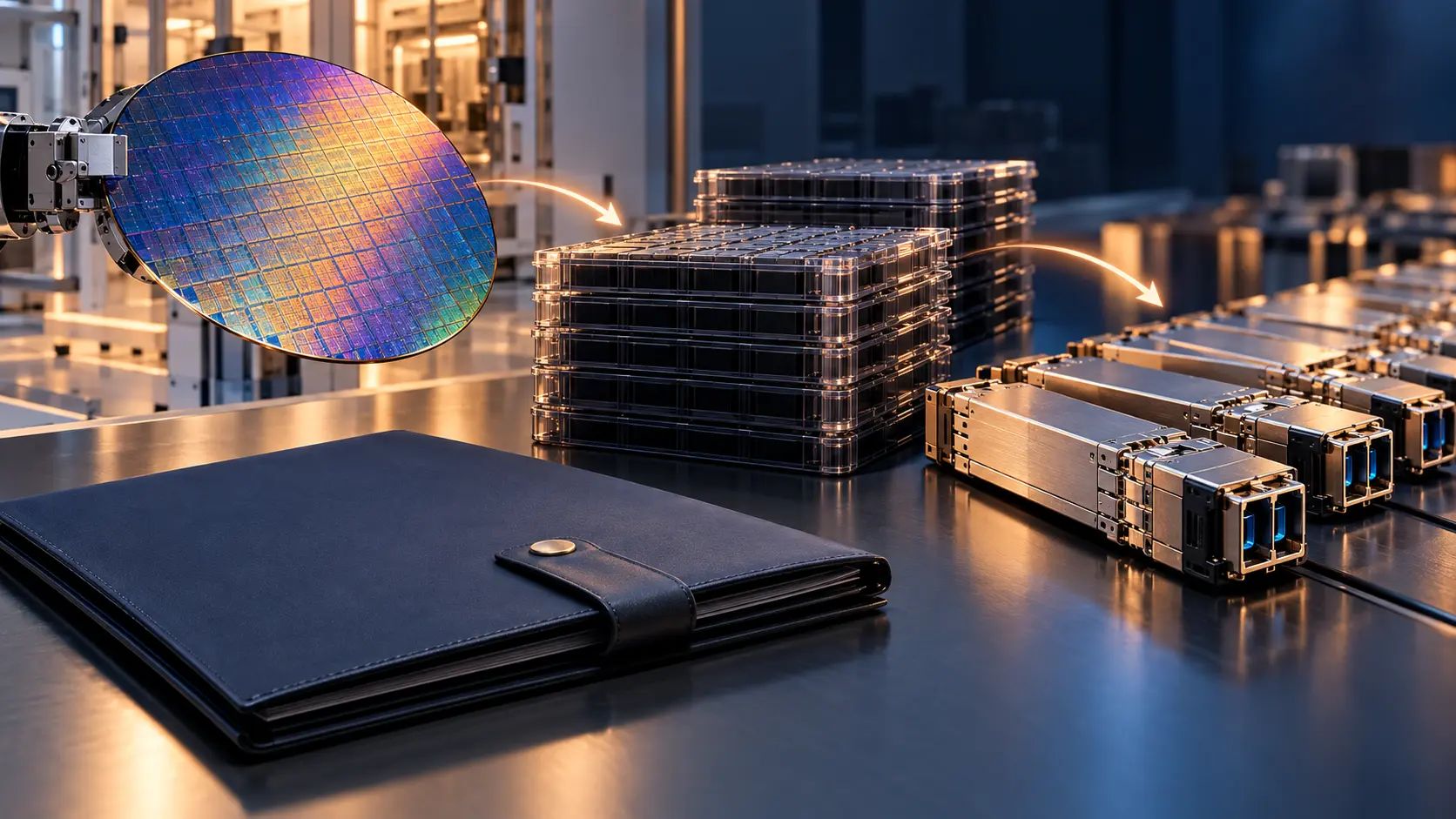
Cash took a less theatrical route. For the first nine months, operating activities used US$17.7 million, against US$9.2 million generated a year earlier. MaxLinear says working-capital investment reduced operating cash flow by about US$137.6 million, primarily because it prepaid for wafers and bought inventory to support rising demand for certain data-centre products. Those purchases are the physical advance payment for a ramp: product is being prepared for future shipments, while the cash leaves earlier.
The customer side adds a second timing problem. The 10-Q says the ten largest customers accounted for 56% of nine-month revenue; one customer represented 10%. Customer names are anonymised. MaxLinear also says customers buy on purchase orders, with no long-term purchase commitments. A successful design-in can keep a chip in a product for 24 to 60 months. Selection, qualification and volume production each take time, while purchases remain purchase orders without long-term volume commitments.
That distinction matters for the next stage. The company forecast Q4 revenue of US$240 million to US$260 million. If sales land near that range, the question for investors is what happens to inventory, receivables and operating cash as the ramp continues. More shipments should eventually help cash generation if collections follow and inventory turns into sales without another comparable pre-funding surge. If working-capital demands keep outrunning cash receipts, headline growth will keep arriving with an expensive suitcase.
MaxLinear increased its revolving-credit facility by US$70 million, to US$200 million. That puts a larger financing backstop beside the wafer and inventory bill.
The quarter pairs higher shipments, a recovering margin and a large investment in the inputs needed to serve demand. The commercial test is whether those customer orders recur, whether the inventory clears, and whether the cash arrives on a schedule that lets the growth pay for its own supply chain.
Sources: MaxLinear Q3 2026 results; MaxLinear Form 10-Q.
Member Briefing
Deeper Profile Context
Sign in with the right membership level to unlock the full briefing and source notes.
Only for Strategic Circle
Strategic Circle
Open to all readers. Unlock profile briefings after joining and signing in.
Join Strategic CircleOnly for Leadership Alliance
Leadership Alliance
For qualified IP-asset owners and management; sign in to unlock alliance briefings.
Join Leadership Alliance