
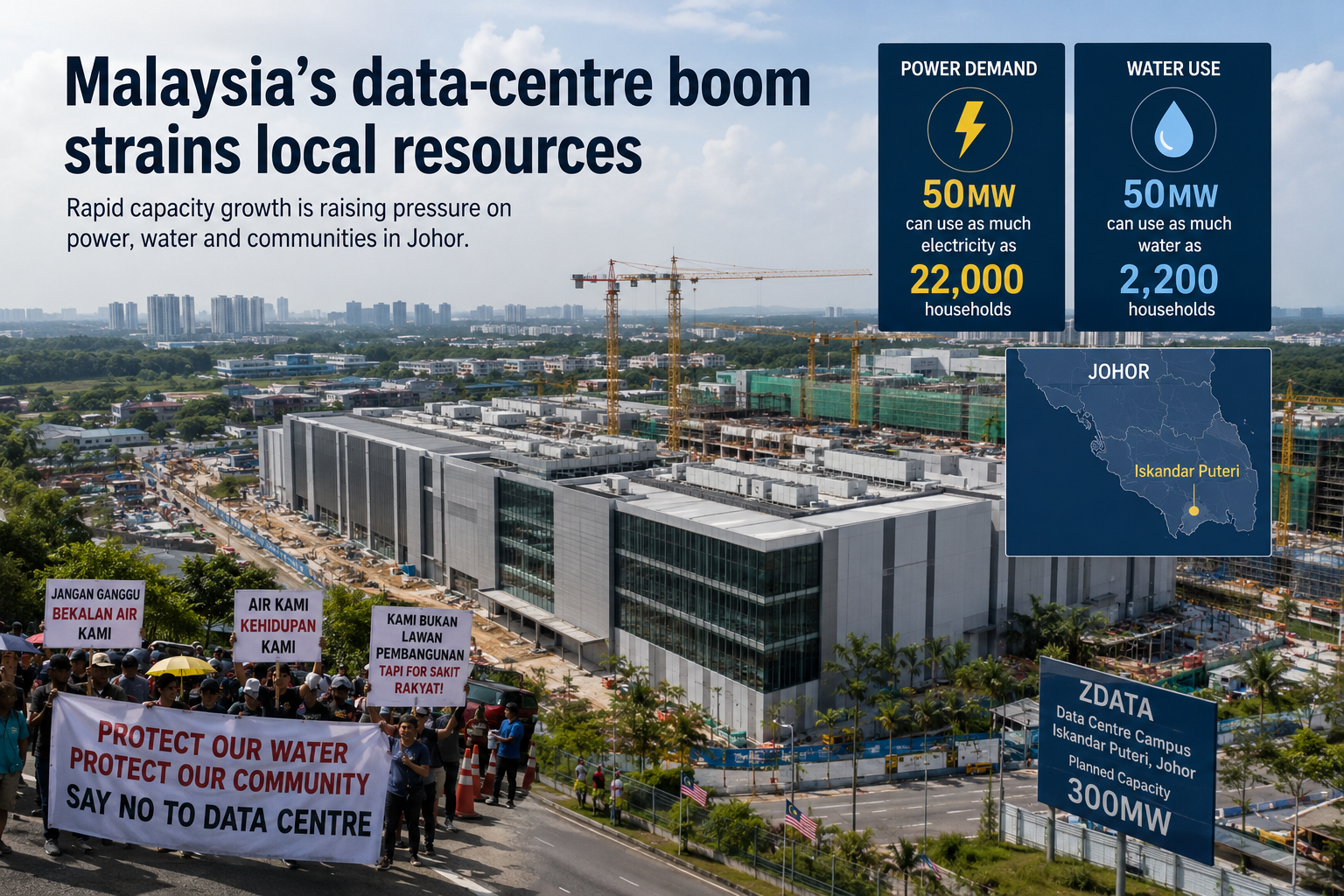
•A 50MW facility can use as much electricity as 22,000 households and as much water as 2,200
•Johor residents have protested over water pressure, construction dust and the loss of green space
The fact
Malaysia’s rapid data-centre expansion is drawing greater scrutiny over electricity demand, water use and construction impact. Bank Negara Malaysia estimates that a 50MW facility can consume as much electricity as 22,000 households and as much water as 2,200 households each day. Johor’s planned capacity, including projects under construction and in the pipeline, could rise eightfold from current levels to about 7,000MW, according to JLL.
Concern has been most visible in Iskandar Puteri, where residents protested against ZDATA’s planned 300MW complex. Some residents reported lower water pressure, although ZDATA said its site was not responsible. Complaints about construction dust led land developer Tropicana Firstwide to provide free car-washing services, while other residents objected to the clearing of nearby green space. Malaysia has tightened project vetting, and the federal government has said developers will bear the cost of electricity and water network upgrades needed to support new facilities.
The assessment
Malaysia’s buildout is changing what developers must secure before a large data centre can operate. A suitable site and electricity agreement are no longer enough on their own. Developers must also account for water supply, utility upgrades and construction effects, while utilities and local authorities decide whether existing systems can support the additional load. The evidence does not show that ZDATA caused the reported water-pressure problems, and the requirements may differ between projects. However, Malaysia has placed the cost of relevant grid and water upgrades on developers.
Supporting infrastructure therefore becomes part of the project’s development responsibility rather than a cost automatically carried by existing users.
For BTW readers, Johor’s pipeline can progress only where developers can pair computing capacity with sufficient local utility capacity. Power and water arrangements will help determine which projects reach construction and operation, even where land and investment are available.
What to watch
Watch how Johor applies its stricter project-vetting rules and whether developers disclose their expected power and water demand. Further details on developer-funded utility upgrades, treated-water systems and renewable-energy agreements will show how projects plan to reduce pressure on existing networks and surrounding communities.
