Summary
- LKNOG's 2019 Call for Papers said selections were made first-come, first-served regardless of the submission deadline.
- The same call allowed the LKNOG Committee to retain a limited number of slots until the deadline for presentations considered exceptionally timely, important or operationally critical.
- Those clauses created two routes into one finite agenda: an ordinary timing queue and a committee-controlled exception pool.
- The reviewed page did not state how many slots were retained, how exception judgements were recorded or whether the two routes were reported separately after the event.
- Publishing the size of the reserve and a short reason code for its use would make the rule auditable without removing the committee's capacity to respond to urgent operational material.
Submission time was an allocation rule
A conference deadline usually tells contributors how long they have to prepare a proposal. LKNOG3's published call made timing more consequential than that.
The page said paper selections would be made on a first-come, first-served basis regardless of the submission deadline. It added that authors or speakers would be contacted as selections were made.
That wording turned a calendar into an allocation mechanism. A qualifying proposal submitted earlier could be selected while the call remained open. The final deadline did not describe a single moment after which all proposals would be compared together.
The rule had advantages. Rolling decisions can help organisers confirm speakers, build a programme and reduce the risk of empty slots. It can also give authors a faster answer.
But first-come selection is not neutral merely because a timestamp is easy to verify. It rewards people who see the call early, have draft slides ready and can obtain internal approval quickly. None of those conditions proves that an early presentation is weaker or that a late one is stronger. They show that timing becomes part of the selection criterion even when the technical topic remains relevant.
The public record makes that timing rule visible. That is better than operating an unpublished queue. The harder question begins with the exception printed directly beneath it.
The committee kept a second route open
LKNOG's call also said its committee could retain a limited number of slots until the final submission deadline for presentations that were exceptionally timely, important or of critical operational importance.
This was not simply another description of first-come selection. It preserved capacity that the ordinary queue could not consume immediately. Access to that capacity depended on committee judgement rather than submission order.
The distinction can be useful. Network operations do not wait for event calendars. A routing incident, newly exploited vulnerability, urgent standards change or unexpected operational failure may become important after a programme starts filling. A conference that allocates every slot to the earliest acceptable proposals could lose the ability to address a development that matters to operators now.
The retained pool therefore served a plausible operational purpose. The governance issue is not whether the committee should have discretion. It is whether readers can see the size and use of that discretion well enough to understand how the published queue actually worked.
“Limited” did not reveal the size of the reserve
The call bounded the exception pool with one word: limited. It did not state a number or percentage in the reviewed text.
That omission matters because the size of the reserve changes the meaning of the first-come promise. If one slot was retained, timing still governed most of the programme. If a much larger share remained open to exception judgement, first-come selection described a smaller part of the real allocation system.
The source does not permit either assumption. It does not show how many presentation or tutorial slots were available when the call opened, how many were reserved, whether the number changed, or whether every retained slot was eventually used.
The published schedule confirms that LKNOG3 had a finite programme of presentations, keynotes, workshops and open-mic time. It does not provide a selection ledger linking each accepted proposal to the ordinary queue or the retained pool.
Without that link, an outside reader can understand the formal mechanism but cannot reconstruct its operation.
Exceptional importance needed an observable reason
The retained-slot standard used three broad ideas: exceptional timeliness, importance and critical operational importance.
Those words give a technical committee room to exercise professional judgement. They also overlap. A new outage technique could be timely and operationally critical. A policy change could be important but not urgent. A proposal could be valuable without clearly meeting any exceptional threshold.
The reviewed sources do not disclose a scoring rubric, vote, conflict rule or reason record for those judgements. That absence is not evidence that none existed internally. It means the public rule named the committee's discretion more clearly than it documented the use of that discretion.
A short reason code would close much of the gap. A retained selection could be recorded as time-sensitive incident response, urgent standards deployment, critical regional outage lesson or another defined category. The code need not expose confidential proposal details or turn technical selection into litigation.
It would show that the exception was used for the purpose the public call described.
How the deadline extension interacted with the rolling queue
LKNOG3's page recorded an initial submission deadline of 12 September 2019 and a later extension to 20 September.
An extension gives potential contributors more time to submit. Under a rolling first-come rule, however, it does not necessarily restore opportunities already allocated. By the time the new deadline was announced, authors may already have been contacted as selections were made.
The evidence does not show how many slots remained at either date. It does not show that the extension harmed anyone or that it was adopted for an improper reason.
It reveals a structural difference between a deadline and a queue. Extending the former does not rewind the latter.
That interaction is another reason to publish a small amount of aggregate information: the number of ordinary slots filled before the extension, the number still open, and the size of the retained exception pool. With those figures, contributors could understand what additional time actually made available.
Selection also carried a bounded benefit
The call required relevant operational topics and draft slides. It distinguished conference presentations of 15 to 30 minutes from tutorials of 90 to 180 minutes.
Selected presenters received a waiver of LKNOG3 conference or tutorial registration fees. The call also said LKNOG would not cover presenter fees, transport or hotel expenses.
That boundary is useful. It shows what selection provided and what it did not. A programme slot offered audience access and removed a registration charge, but the source does not support broader claims about financial sponsorship or career effects.
For an unselected proposer, the evidenced consequence was narrower: no slot in this particular programme and no associated registration waiver. The public sources do not quantify any private cost beyond that.
The current committee is not the 2019 committee by default
LKNOG's current home page names a president, officers, executive committee members and volunteers. It also describes LKNOG as a non-profit, community-based initiative that uses presentations, panels and engagement activities to build operational knowledge.
That page helps identify the organisation's current public governance surface. It cannot be used to assign a 2019 selection decision to people listed today.
The LKNOG3 call referred to the LKNOG Committee without publishing a selector roster in the relevant clause. This article therefore evaluates the authority as it was publicly described, not the personal conduct of a named individual.
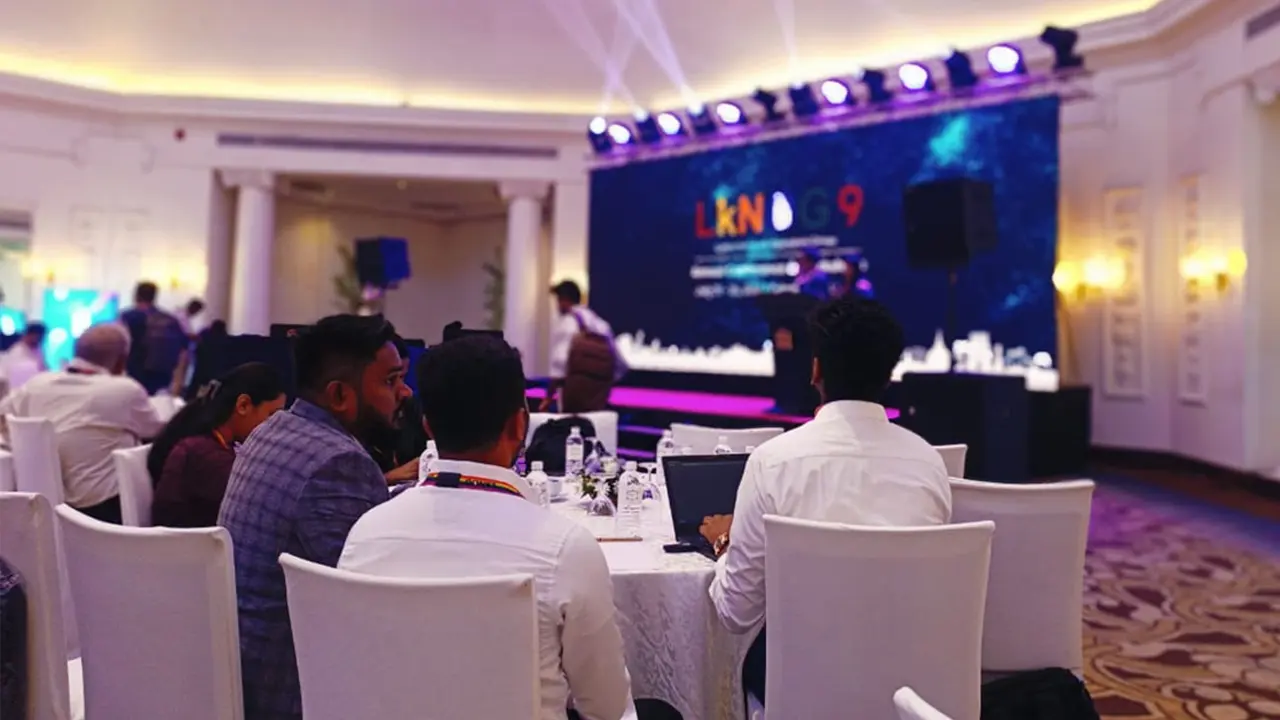
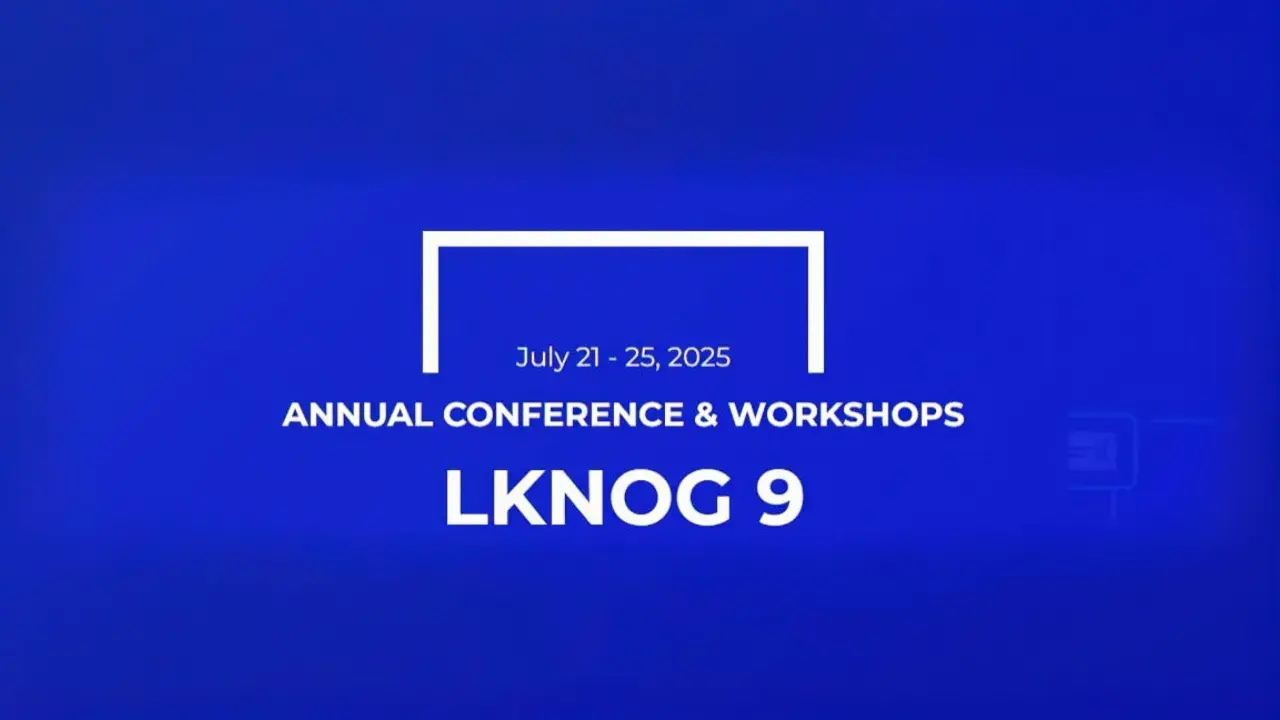
The later LKNOG9 page similarly confirms that conferences and workshops continued in 2025. It does not prove that the 2019 selection rule remained current. A historical rule should be analysed at its historical scale.
A two-queue system can be made legible
LKNOG did something important in 2019: it published both the ordinary priority rule and the existence of committee discretion. The record did not falsely present the agenda as purely first-come when exceptions were possible.
The missing layer was operational evidence.
Before a call opens, the committee can publish the total programme capacity and the number or maximum share of slots retained for exceptional material. Each retained selection can receive a short reason code. After the event, LKNOG can publish aggregate counts for ordinary selections, retained selections, unused reserve and withdrawals.
Conflict and recusal handling can be stated in one paragraph. If a committee member has a close professional or commercial relationship with a proposer, the record can show that the member did not participate in that decision without exposing private deliberations.
These controls preserve both strengths of the 2019 design. The ordinary queue remains predictable. The committee remains able to respond to material that becomes urgent after submissions begin.
One agenda should disclose how both doors were used
LKNOG3's public rule had two doors. The first opened according to submission time. The second remained under committee control for material judged exceptionally timely, important or operationally critical.
Neither door is inherently illegitimate. The governance risk comes from describing both without showing their relative scale or eventual use.
A finite agenda is a community resource. Early submissions, urgent operational lessons and committee judgement can all deserve a place. A simple reserve count and reason ledger would let contributors and attendees see how those claims were reconciled.
That would make the published rule more than a promise about process. It would make the resulting programme reproducible enough to trust.
Member Briefing
Deeper Profile Context
Sign in with the right membership level to unlock the full briefing and source notes.
Only for Strategic Circle
Strategic Circle
Open to all readers. Unlock profile briefings after joining and signing in.
Join Strategic CircleOnly for Leadership Alliance
Leadership Alliance
For qualified IP-asset owners and management; sign in to unlock alliance briefings.
Join Leadership Alliance