
Intelligence
Latest Articles
Latest intelligence on infrastructure operators, policy decisions, market moves, and digital power shifts.

Creators
Albert Greenberg: The Network as a Distributed Computer
Across AT&T, Microsoft Azure and Uber, Albert Greenberg has worked on a recurring problem: how to make a vast network behave as one coherent system when topology, traffic, control software, hardware and failure patterns change at different speeds. His influence is best understood…
Global Institutional
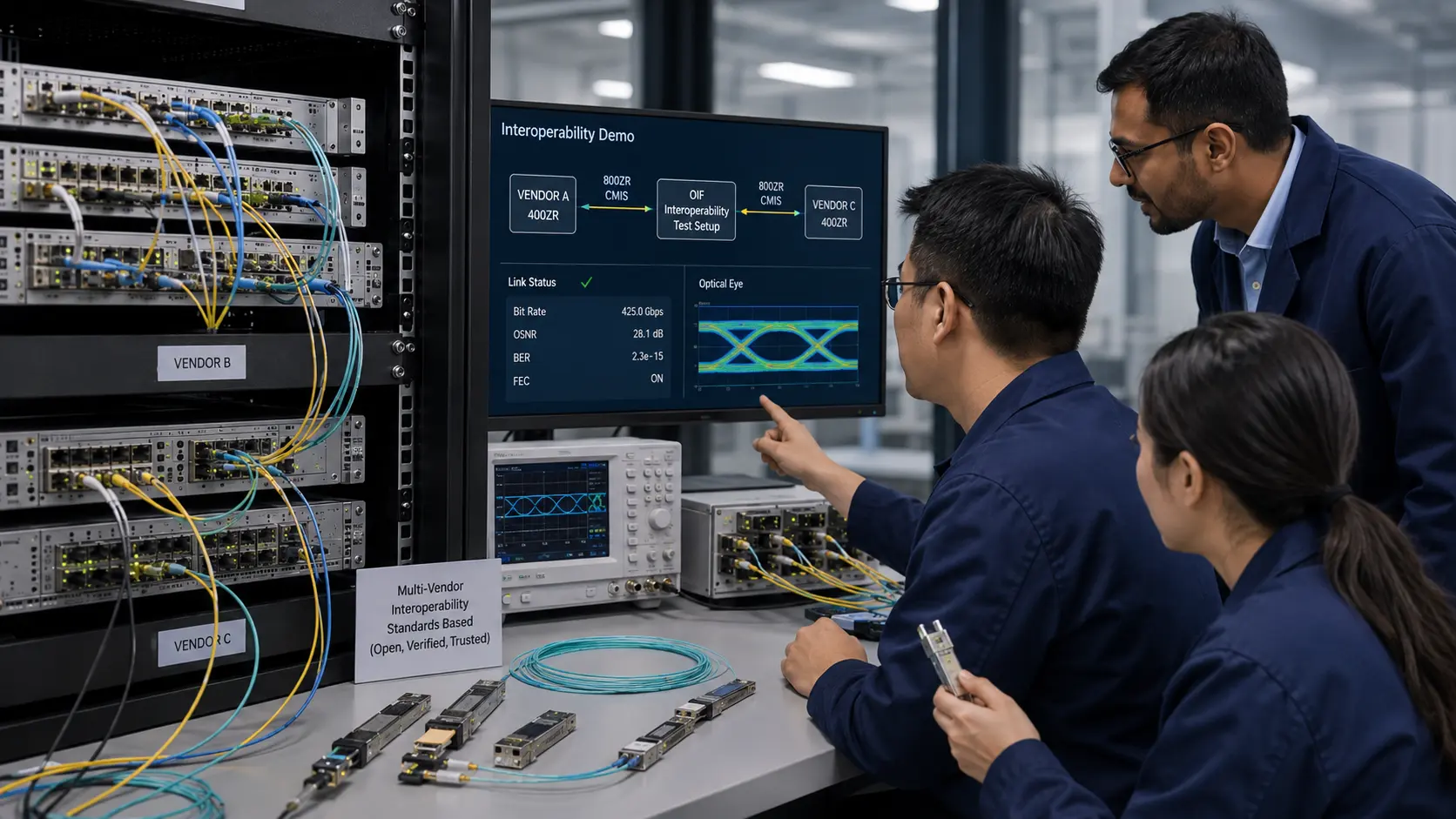
OIF and the work to align 1.6-terabit links
The Optical Internetworking Forum sits between formal standards and commercial products, turning optical, electrical and management decisions into implementation agreements that suppliers can build to and operators can test. Its influence is strongest where coherent modules, host…

History
The Username Looked Like a Person. The Namespace Only Promised a Slot: RFC 1439
In 1993, a tidy rule for turning names into email accounts met a problem that no directory card could hide: two people could produce the same string, and a successful delivery could still reach the wrong human. RFC 1439 treated the collision not as clerical untidiness but as a…

Global Cloud Services Trends
Wasabi's Storage Bill Remembers More Than the Latest File
Overwriting one entity can leave several generations on the bill. A shorter minimum duration, a new invoice and a new price each change a different part of that history.

IETF
David Benjamin and the Compatibility Code Point That Did Not Become a General Permission
An old cryptographic device can make a modern protocol migration fail at a very specific point. The remedy matters only if it preserves that specificity. RFC 9963 opens a constrained route for a legacy client signature; it does not reopen a general TLS 1.3 permission for the…
Global Institutional
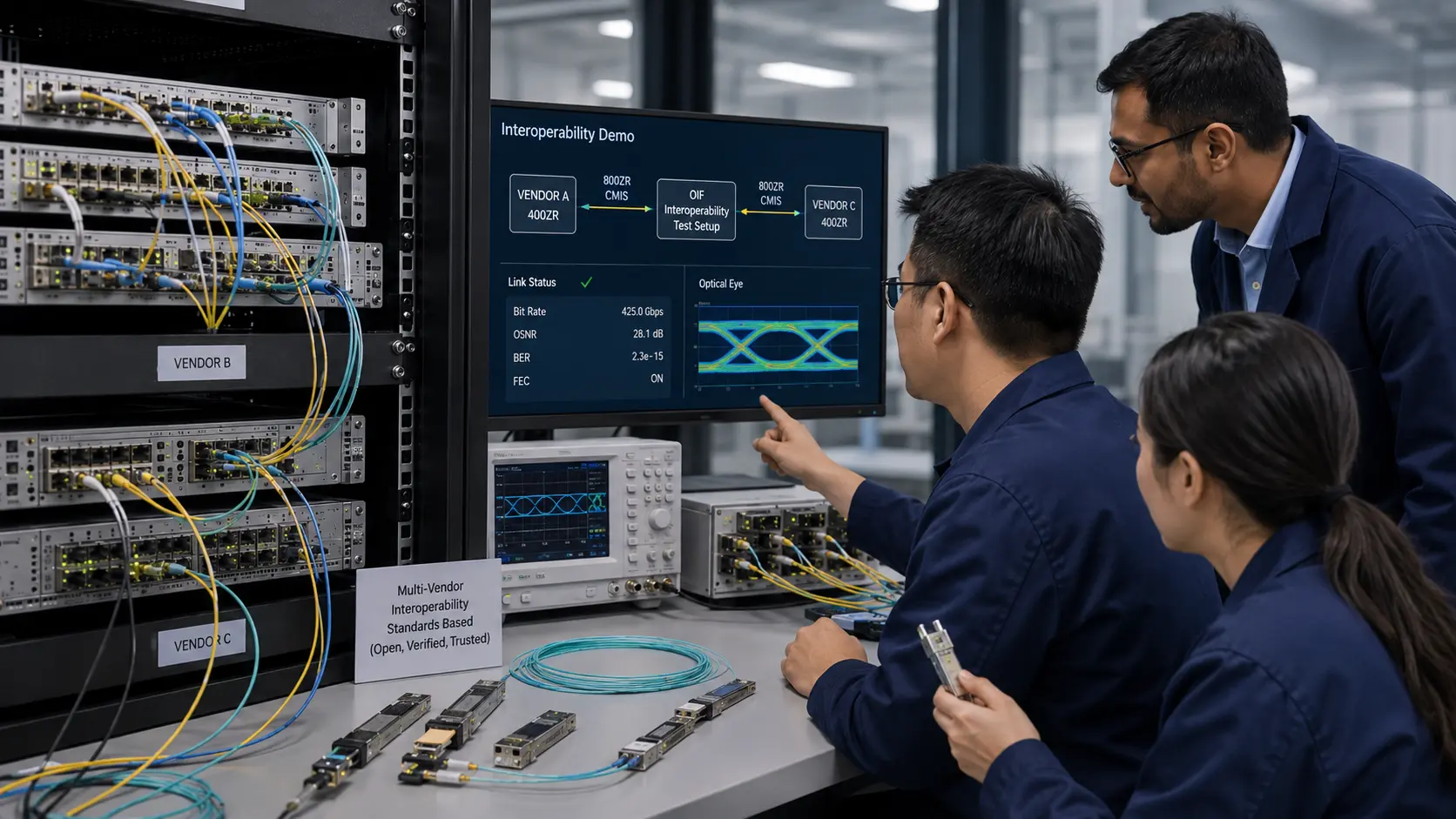
OIF and the work of making 1.6-terabit links agree
The Optical Internetworking Forum sits between formal standards and commercial products, turning optical, electrical and management choices into implementation agreements that vendors can build and operators can test. Its influence is clearest when several layers have to work…

History
The File Arrived. The Recipient Had Not Accepted It: RFC 1440
In 1993, an experimental Internet protocol tried to deliver a file the way a network might deliver a parcel: the sender pushed it without logging into the destination, the receiving host put it aside, and the named recipient decided what to do later. That convenience depended on…

IETF
Al Morton and the Capacity Test That Did Not Become a Service Promise
A speed measurement can be valuable evidence about a particular method, path and time. It becomes unreliable when its bounded result is promoted into a promise about every future session, an access plan, an application or a whole network.

Global Institutional
Batfish and the promise of checking a network before change
Batfish turns multi-vendor configurations into a common routing and forwarding model so operators can test reachability, policy and selected failures before production changes. Its value still depends on snapshot completeness, parser coverage, explicit intent and post-deployment…

IETF
Muhammad Shahzad and the Device Record That Did Not Revoke Access
Deleting a device record can be an important operational signal. It is not, by its own force, a contemporaneous proof that a network enforcement point withdrew access, that the device stopped attempting connection, or that a later session was denied.

IETF
Cédric Fournet and the Receipt That Did Not Make a Log Complete
A signed receipt can answer a sharp question about an entry and a particular tree state. It cannot, merely by looking formal, answer the larger question operators often want to ask: whether every event that mattered reached a complete, trusted and still-current log.

History
The WAN Session Was Up. The End Stations Still Had Two Links: RFC 1434
In an early-1990s network, a terminal could believe it was talking to a distant peer while every acknowledgement it saw came from a router in the same room. RFC 1434 made that split deliberate: keep fragile local link timing local, build another circuit between switches, and…

IETF
Christian Amsüss and the DoC Security Context That Did Not Protect the Upstream Resolver
A protected DNS-over-CoAP exchange can be an important fact without becoming a story about the whole resolver path. RFC 9953, collectively authored by Christian Amsüss, says that DoC can provide confidentiality and integrity between parties sharing a DTLS, TLS or OSCORE context.…

Global Institutional
Batfish and the promise of testing a network before it changes
Batfish turns multi-vendor configurations into a model of routing and forwarding so operators can ask whether reachability, policy and failure behaviour survive a proposed change before touching production. Its answers can be exhaustive inside the model, but their operational…

Leaders
Aaron Moreck and the Network-Service Decisions Behind NaaS and SD-WAN
Aaron Moreck’s public record sits at the operating edge of a regional technology company: network services, customer connectivity, managed firewalls and SD-WAN. The evidence supports a profile of a technical decision surface, not a claim that one director owns every customer…

History
The Codes Aligned. The Circuit Still Needed Permission: RFC 1394
A two-letter domain, a telex answerback and a telephone prefix could all point toward the same country and still leave a message nowhere to go. RFC 1394 made those correspondences useful by placing them in one table. It also marked the table's limits: values could be wrong…

Global Cloud Services Trends
Snowflake's AI Budgets Follow Entry Points, Not Just Agents
A budget attached to a Cortex Agent does not necessarily follow every request that reaches it. Snowflake's treatment of CoWork-originated activity exposes a wider question for enterprise AI: where spending is counted, whose access can be stopped, and how long the stop takes to…

Creators
Albert Greenberg and the network as a distributed computer
Across AT&T, Microsoft Azure and Uber, Albert Greenberg repeatedly addressed the same problem: how to make a large network behave as a coherent system while topology, traffic, control software, hardware and failures change at different speeds. His influence is clearest in control…

IETF
Paul Wouters and the IKEv2 Requirement That Was Not a Negotiation Receipt
“MUST implement” can sound like a deployment report. RFC 8247, co-authored by Paul Wouters, uses it for a narrower purpose: ensuring that IKEv2 implementations have a shared algorithmic baseline. It does not say which transform two peers offered, which one they selected under…

IETF
Bernie Volz and the DHCPv6 Trigger That Did Not Yet Configure a Client
A server log can make the word “Reconfigure” look final: the server issued the message, so a client must now have new settings. RFC 9915, co-authored by Bernie Volz, is more exact. Reconfigure is a carefully authenticated trigger for a later exchange. It is not, by itself, a…