
Intelligence
Latest Articles
Latest intelligence on infrastructure operators, policy decisions, market moves, and digital power shifts.

Leaders
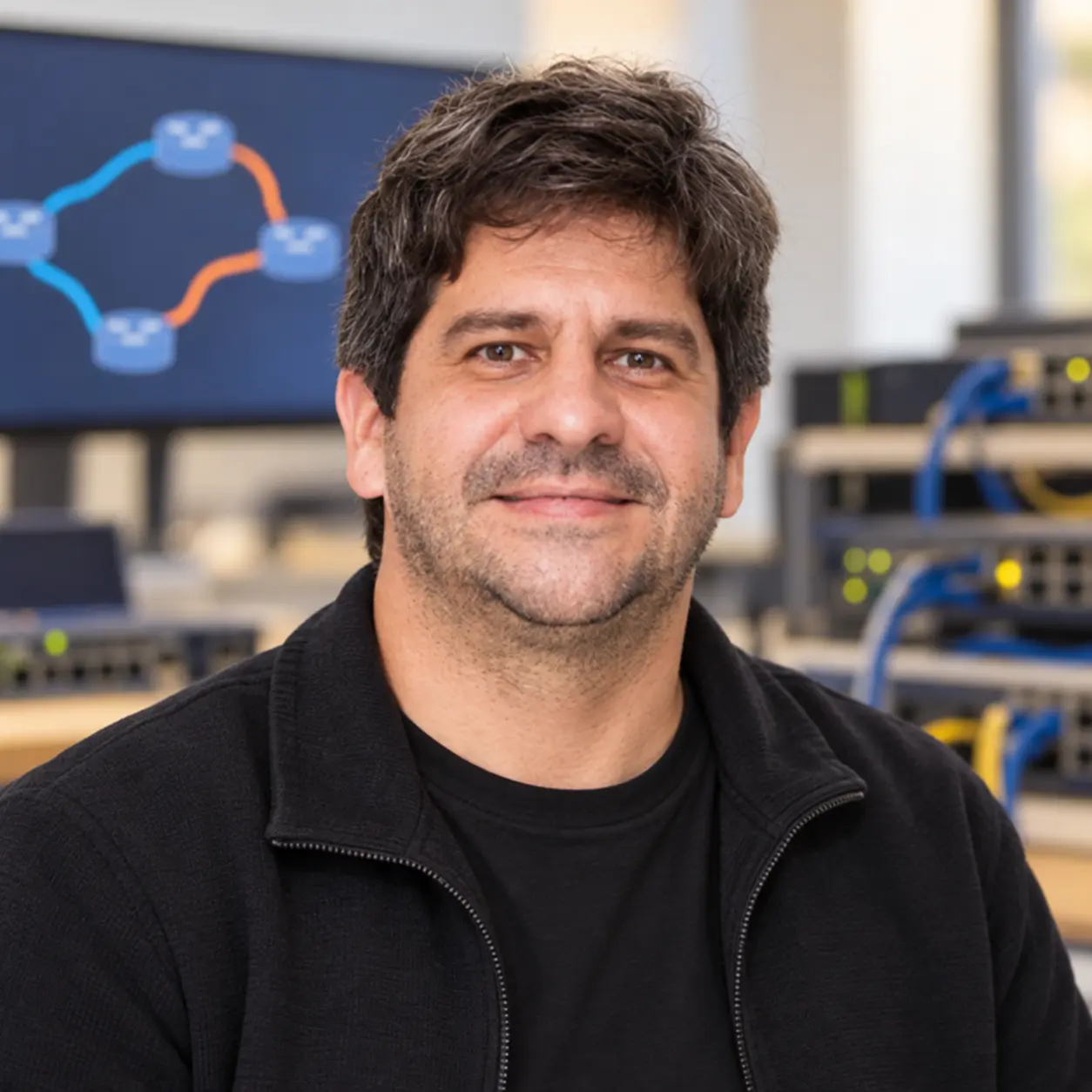
Hugo Salgado Asked the DNS to Show Its Work
Latin America's DNS Observatory traded a comfortable word, “resilience,” for server counts, network diversity and a record that could change over time.
Leaders
Alejandro Acosta Put the IPv6 Next Hop Under a Microscope
A LACNIC classroom plan turned a deceptively odd routing sentence into BGP sessions, captured packets and a question engineers could actually test.

Leaders
Geoff Huston Emptied the DNS Cache and Found the Bill
When a resolver already knows the way, almost any domain looks easy. Geoff Huston cleared its memory and watched a simple lookup become a tour of other people's design choices. The bill for a long alias chain does not arrive at the desk that wrote it.

Leaders
Nathalie Trenaman Found 460 Missing IPv6 Stars. The Routes Had Different Stories.
The dashboard said hundreds of networks had lost an IPv6 star. Nathalie Trenaman went looking for the operators behind the dimmed icons. Some had finished a test. Some had pulled a production route. Some had not noticed the route was gone. One score had been trying to tell three…

Global Cloud Services Trends
Extreme Committed $117.1m to Parts. Four Distributors Bring 60% of Sales.
Extreme Networks has promised to buy components its contract manufacturers ordered against a forecast. The customers, meanwhile, sit behind a concentrated distribution channel. The parts commitment is firm enough to appear in a filing; the path from those parts to an end user's…
CASE FILE
The FAA Knows the Signal Can Lie. It Still Waits for Someone to Report It
An aircraft can receive a radio message that looks ordinary and is not. The Federal Aviation Administration has identified spoofing, jamming and interference as threats to aviation communications. It also told federal auditors that its tools do not yet give it defined, continuous…
Story
RIPE’s 1993 /17 Split Off 1,024 Addresses in 2026. The Date Stayed Put.
A daily registry file that showed one 32,768-address range on Sunday showed three on Monday. The new middle piece belongs to a different named holder, but every row still wears the date 1 September 1993.

Story
One /22, Two Mergers, Three Advania Names: RIPE NCC's Missing Nameplate
The same 1,024 IPv4 addresses appear in two merger transfers 21 months apart. RIPE's organisation history supplies the identity link that the transfer rows omit.

Global Cloud Services Trends
Cloud Run sells a warm seat. It can replace the occupant.
Pay for minimum Cloud Run service instances and Google keeps capacity ready to answer requests quickly. The setting does not keep a particular container alive: minimum instances may restart at any time, and the target can temporarily dip below its configured level. A background…

History
Toys“R”Us Stocked Amazon’s Toy Aisle. Amazon Held the Door.
In 2000, Toys“R”Us brought the toys and Amazon built the online store. Four years later, the retailer said the exclusive aisle it had paid for was filling with other sellers’ products. The dispute exposed a hard question for anyone renting a platform: what is exclusivity worth…
Leaders
Randy Bush Asked Who Was Missing. APNIC Put a Clock on Consensus.
In 2003, Randy Bush challenged an Internet policy meeting on the people it could not see. Protocol engineers, router designers and operators had reasons to miss a distant conference; a proposal could arrive a week before the room decided. APNIC's answer was a written record and a…

Academics
Usama Ejaz Found 786 Routes With a Registry Receipt and a Red Light
An operator checks a route object and finds the prefix and origin neatly paired. The RPKI validator still says Invalid. Usama Ejaz counted 786 such stubborn disagreements in a week of routing data, forcing a harder question than whether a database row exists: who actually…

Leaders
Tom Strickx Cut the Extra Routes. Then the Leak Lost Its Address.
Too many internal routes can choke a router. Strip them away and a network may lose the clue that says where a leaked route escaped. Tom Strickx brought both problems to RIPE 93, along with a small piece of code meant to keep the clue without reviving the pileup.

Academics
Thomas Holterbach Wants the Routes the Collector Never Saw
A prefix disappears at an Internet exchange. A conventional BGP collection session can tell an operator what it received. Thomas Holterbach wants the harder evidence: what the route server saw before filtering, what it discarded, and whether the peer went away at all.

Leaders
Sandy Ginoza Put Three Pairs of Eyes Between a Draft and an RFC
An approved draft still has to become a stable document that engineers can quote, implement and challenge. Sandy Ginoza has worked at that narrow gate for decades. A 2004 staffing record and a 2026 final-review trail show how much human work sits between a standards decision and…

Leaders
Sander Steffann's Draft Pulled Complaints Off the Public List. Resource Returns Stayed.
A public complaint list can turn an allegation into a search result before a registry has settled it. Steffann and Shane Kerr rewrote RIPE proposal 2013-01 to count cases instead. They still wanted every returned address range recorded in public.

Leaders
Ray Plzak Froze Three IPv6 Fee Waivers. ARIN Gave Away Two Years, Kept the Old Bill.
ARIN set a new IPv6 price list in October 2004, then spent two board meetings deciding who would actually pay it. Ray Plzak stopped three separate waiver motions and returned with one broad exemption. The invoice already sent in 2004 survived.

Leaders
Nicolás Antoniello Wanted a Sixth Registry. IANA's IPv4 Drawer Was Empty.
Global networks crossed five registry regions with one address plan. Antoniello proposed a virtual desk to serve them. LACNIC's own impact analysis found that the desk needed five operators, a new system and an IPv4 pool IANA no longer had.

Academics
Muhammad Sangeen Found the Quiet Scanners in One SYN Packet
The loudest addresses can own a traffic chart while smaller scanners fill the source list. Muhammad Sangeen read a single TCP SYN packet for clues to the device behind it, then found that Internet-connected gadgets were common among scanning hosts and almost absent from the…

Leaders
Malcolm Hutty Put Fairness Back Into RIPE’s “No Need” IPv4 Fight
The form asking how many IPv4 addresses an applicant needed had outlived the free pool. Malcolm Hutty feared that tearing up the form under the banner “No Need” would also sound like tearing up the registry’s promise to distribute addresses fairly.