
Intelligence
Latest Articles
Latest intelligence on infrastructure operators, policy decisions, market moves, and digital power shifts.

CASE FILE
The Catalog Went Empty. The Servers Obeyed
A DNS catalog zone can turn one compact, authenticated change into a new operating perimeter for an entire authoritative fleet. That efficiency is precisely why the catalog must be governed as executable authority rather than treated as a harmless list.

Story
AFRINIC Sought Three Appeal Committee Nominees. The Appointment Record Must Be Case-Ready
AFRINIC’s Board opened nominations for three Policy Development Appeal Committee profiles and set a short, explicit deadline. The call establishes an intake step, not a functioning adjudicative body. Readiness will depend on what comes next: a versioned record of appointment…

Story
LACNIC and the economics of ICP-2 reform
The rule for recognising an Internet registry is also a rule about who must bear the cost of proving that institutional change is safe. LACNIC makes that trade-off unusually visible: regional legitimacy is built through members and an open policy process, while recognition…

History
The Birth Record That Could Outlive the Group: How ACTIVE.TIMES Separated Provenance from Availability
One list says a newsgroup can be selected now but remembers nothing about its beginning. Another preserves a group's local creation record after that group has disappeared from the selectable catalogue. NNTP made both answers valid on the same server. The apparent contradiction…

ICANN
ICANN Has 1,600-Plus gTLD Applications. What Remains Invisible Until Reveal Day?
ICANN can count the applications submitted in its 2026 new-gTLD round before the public can see the strings, applicants or contention sets. That is not a contradiction. It is a sequence of different institutional facts—and each needs its own denominator.

History
The Write That Returned Before It Was Safe
The server had returned success, yet the client was not free to discard the bytes. They might exist only in memory that the next restart would erase. NFS version 3 made that interval explicit, then attached a narrow piece of evidence to it: a write verifier that could tell the…

IETF
The First Sequence Number Could Not Be Only a Clock: TCP's ISN Defense
Every TCP connection begins by publishing a number. When that number followed one global clock too plainly, an attacker who could not see the connection could still predict enough of its state to impersonate a peer.

CASE FILE
The Route Said Valid. The Evidence Was Local.
One RPKI service fails. A customer network changes its view a second before its provider; the provider changes next, about five minutes later. If both networks export validation results as route attributes, one dependency failure becomes two waves of BGP UPDATEs. Nothing about…

ICANN
ICANN Wrote a 24-Hour Disclosure Clock. Authentication Decides When It Starts
The most consequential sentence in ICANN's new urgent-disclosure rules is not the one containing “24 hours.” It sits lower on the same policy page, in an implementation note: the obligations become effective when ICANN fully implements a Consensus Policy that establishes…

Story
AFRINIC Opened a Member Survey. Its Value Depends on a Response-to-Action Record
AFRINIC has invited members and stakeholders to say what works, what should improve and what deserves priority. A short, optionally anonymous survey can widen participation. Its durable value, however, will be measured after collection: whether AFRINIC makes the path from…

Story
RIPE’s CoC Draft Joins Final Appeal and Team Removal
A second RIPE Code of Conduct draft would let the RIPE Chair appoint, continue and remove community reviewers at discretion. The current appeal process already names that office as the final assessor. Neither power proves interference. Their combination does create a hard…
APRICOT
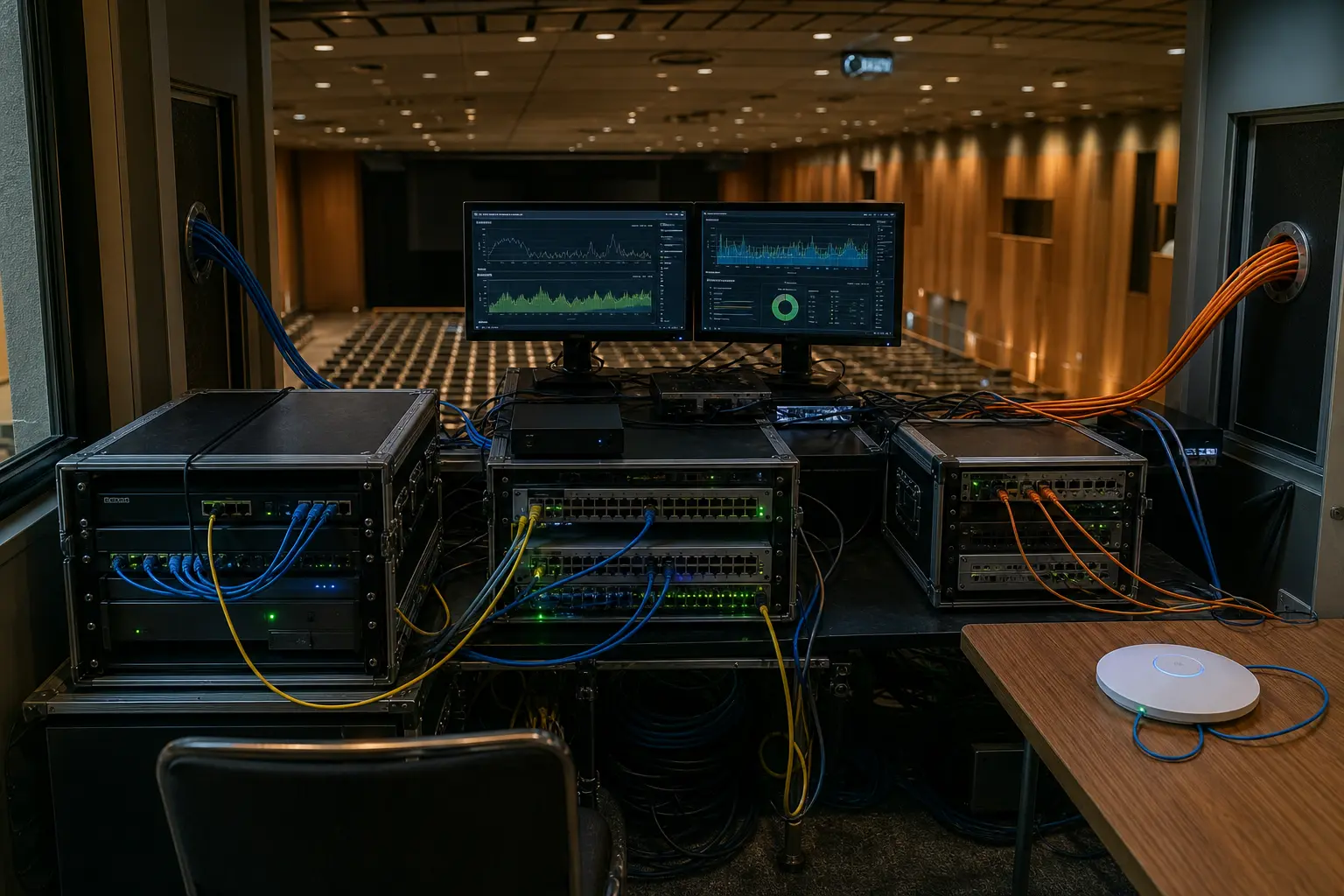
The Conference Network Is APRICOT’s Strongest Constitution
APRICOT’s temporary production network is a more testable statement of institutional values than a conference slogan. Its designs, routes, client measurements and failures show what the summit attempts to operate—without proving universal compliance or regional adoption.
History
The Prefix the Resolver Sent on Someone Else’s Behalf: EDNS Client Subnet
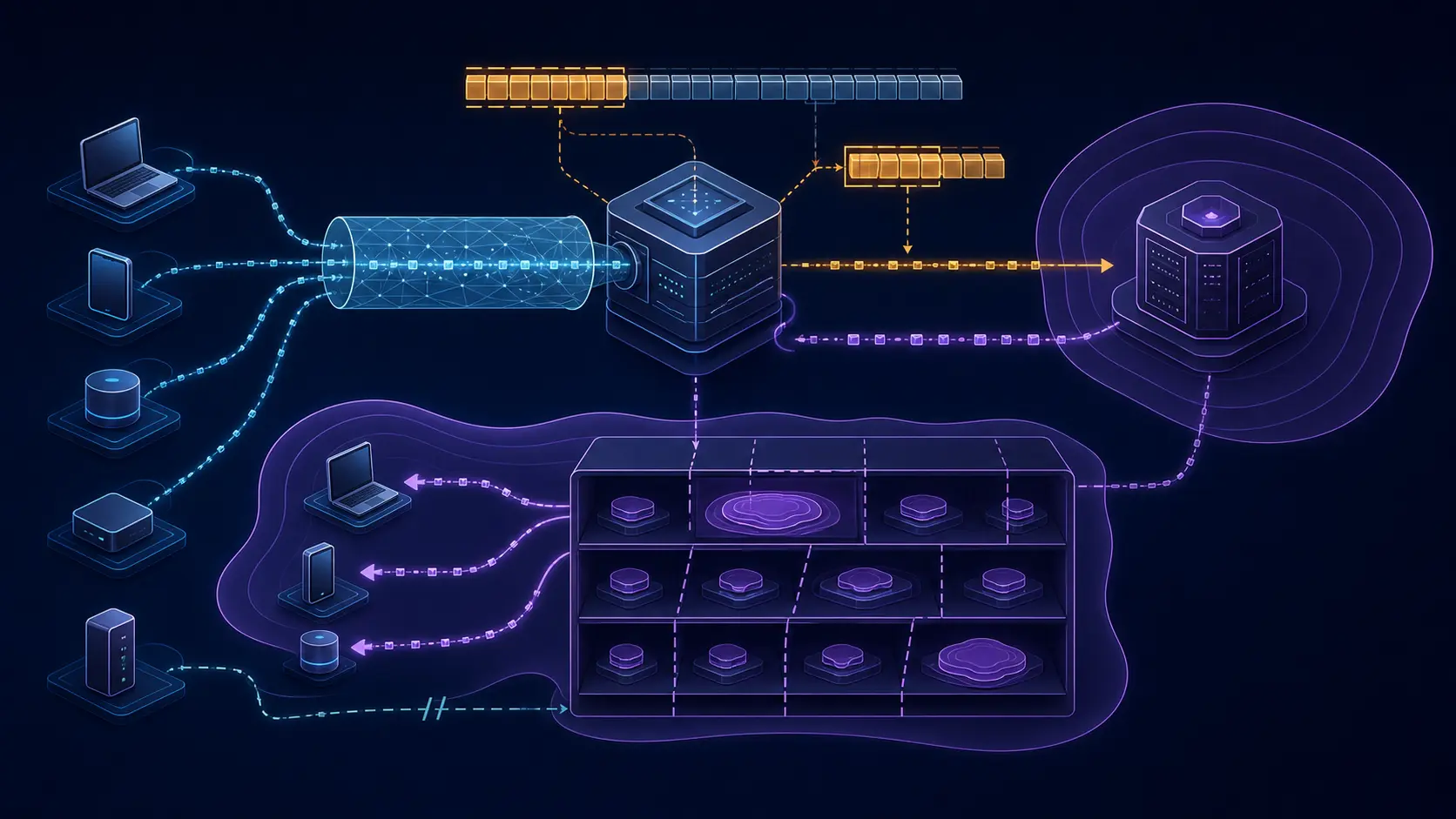
A recursive resolver usually speaks to an authoritative server from its own address. EDNS Client Subnet changed the message: the resolver could send part of a client's network instead, asking the authority to tailor an answer for someone who had not made that upstream query. The…

CASE FILE
The signed chain skipped a delegation that still existed
NSEC3 Opt-Out allows a large parent zone to leave eligible insecure delegations out of its signed hash chain. That omission can be fully valid. It is also why the chain cannot serve as a complete delegation register: the proof authenticates a limited statement about a hash…

Europe and Middle East Datacenter Trends
A data-centre connection has no date at Gate 1
A site can have land, drawings and an impressive megawatt number while still lacking the one fact that makes its power plan schedulable: a confirmed grid-connection date.

History
The Layer That Had to Come Last: How NNTP Compression Turned Order into Security
Two clients want the same three things: an encrypted channel, an authenticated account and fewer bytes on the wire. One asks for compression first. The server replies `206`, and two doors close: this connection can no longer begin TLS or accept `AUTHINFO`. The other client…

Story
A Private Registry Still Needs Public Limits
LACNIC is private infrastructure governance with public consequences: legitimacy depends on a bounded mandate, published rules, evidence, review and an operational record that affected networks can understand.

IETF
The Reset Had to Prove Itself: TCP's Challenge ACK Defense
A forged reset once needed only to land somewhere inside a moving receive window. RFC 5961 made destructive TCP control flags prove that they reflect the peer’s current state before one guessed sequence number can erase a long-lived connection.

Europe and Middle East Regional ISP Trends
Local broadband support has two clocks when Openreach owns the repair
A customer experiences one continuous outage. The organisations restoring it may be working to two different clocks, and the gap between them is where a promise of “local support” is either proved or exposed.

History
The Reservation That Might Reserve Nothing
Before sending a file, an FTP client could announce how much storage it expected to need. The server might answer `202`, a positive completion, while setting aside no space at all: advance allocation was superfluous on that system. The exchange let unlike machines keep working…