
Intelligence
Latest Articles
Latest intelligence on infrastructure operators, policy decisions, market moves, and digital power shifts.

History
The Device Had a MAC Address but No IP Stack: RFC 1089’s One-LAN Management Channel
A repeater could shape the network and still be absent from the Internet that operators used to manage it. RFC 1089 solved that awkwardness by putting an ordinary SNMP message directly inside an Ethernet frame. The missing layers made the agent simpler. They also made the…

CASE FILE
The Packet Carried a Mark. It Did Not Deliver an Operations Verdict: RFC 9947 and SRv6 Measurement Authority
A marked packet is compelling because it seems to turn an invisible path into a fact. A loss bit, a delay bit, an identifier, a timestamp and a sequence value can all travel inside the same Segment Routing Header that tells the packet which segment endpoint to visit next. That is…

IETF
Daniel Eggert and the Message Batch That Was Not a Stable Page
A UID range can divide a mailbox into manageable work without freezing that mailbox, enumerating its messages or making each unit equally expensive. RFC 10022 gives clients a partition. It does not give them pagination certainty.

History
The Heartbeat Held an X.25 Subaddress. It Did Not Authenticate the Claim: RFC 1086’s TP0 Bridge
A TCP/IP host wanted an address in a network it did not inhabit. RFC 1086 let a bridge listen on an X.25 subaddress on that host’s behalf—but only while a separate TCP connection stayed open. The mechanism knew when to release a scarce slot. It did not know who deserved it.

ICANN
ICANN’s .TEXAS Consent Gate Is Exact. Texas’s Letter Adds “Any Derivative”
Six words enlarge a clear objection into an undefined perimeter. Texas told ICANN that it opposed `.texas` “and any derivative thereof.” The 2026 Applicant Guidebook gives the state a consequential voice over the exact ISO 3166-2 match, but it also says strings that include…
History
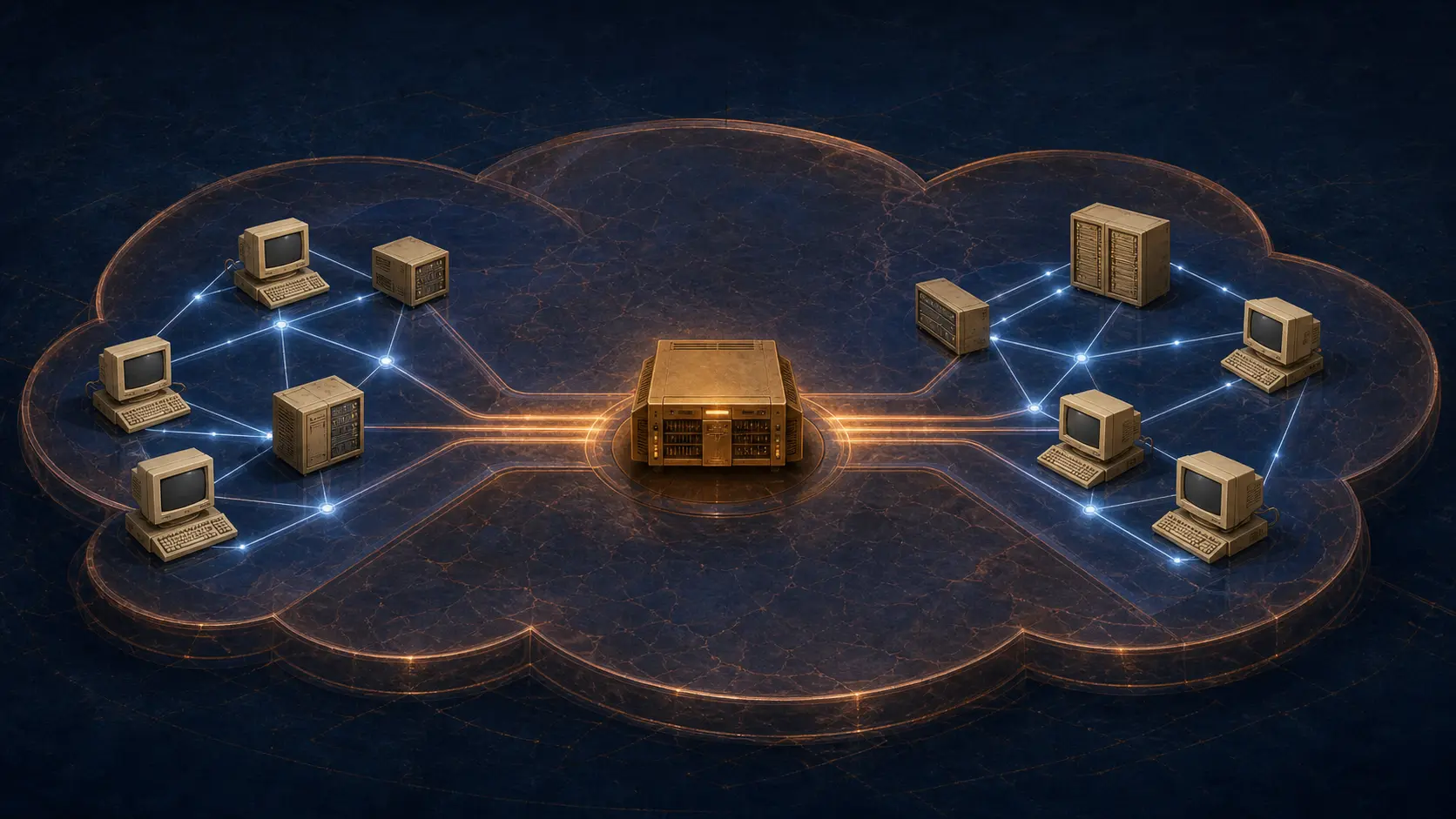
The Same Service Held Two Neighbors. A Router Still Stood Between Them: RFC 1209
Sharing a carrier service can make two machines look like immediate neighbors. RFC 1209, published in 1991 for IP over SMDS, made a deliberately narrower promise. A logical IP subnetwork was an administratively closed group on that shared service. Hosts could communicate directly…

History
Control-S Was a Command Only While the Option Held: RFC 1080’s Telnet Boundary
A terminal user presses Control-S. Did the keystroke pause the display, travel across the Telnet connection, or reach an editor as ordinary input? RFC 1080 made the answer depend on a small, revocable agreement—and kept the decisive mechanism at the user’s local Telnet process.

History
The NIC Looked Continuous. Its Registry Writes Had Paused: RFC 1261
In a service migration, the most reassuring things are often the things that travel cleanly: a familiar hostname, a working mailbox, a Help Desk number, a screen that resembles yesterday’s screen. RFC 1261 made a more sober distinction when the Network Information Center changed…

IETF
Pradosh Mohapatra and the Bandwidth Value That Was Not Available Capacity
A route can advertise a perfectly valid bandwidth number while the usable path behind it is smaller, older or defined by an entirely different rule. RFC 10005 makes the number portable. It does not make it a measurement of capacity now available to traffic.

CASE FILE
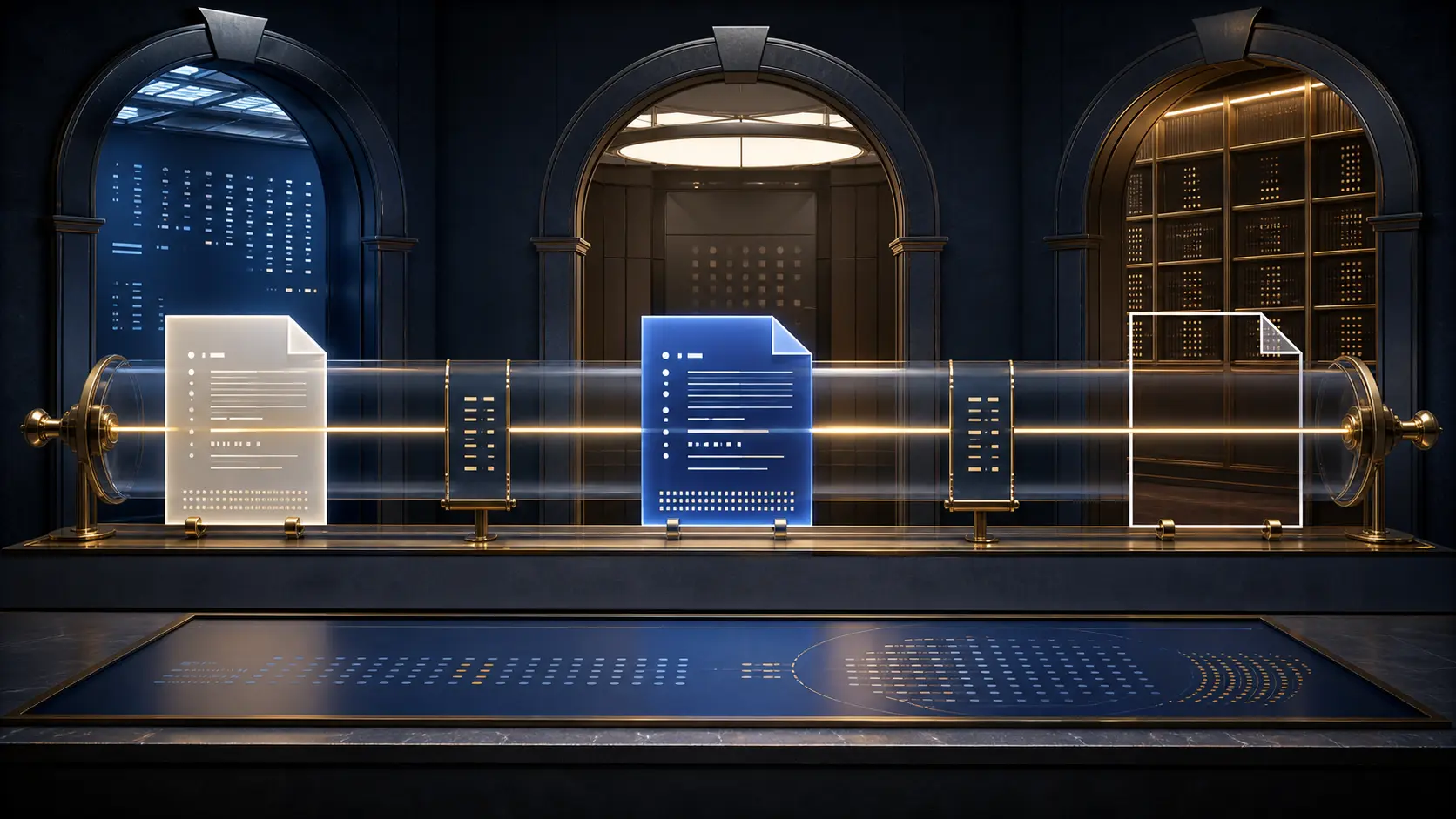
The Receipt Put a Statement on the Ledger. It Did Not Decide to Trust It: RFC 9943 and SCITT
A software-supply-chain record can look like a conclusion when its machinery is working well. A statement is signed. A transparency service accepts it. A receipt carries a verifiable proof. An auditor can replay a sequence and a dashboard can show a reassuring green line. The…
CASE FILE
W3C's 2026 XML Namespace Points to a Moving Draft Without a Change Policy
W3C dated a new XML Security namespace on 19 August 2026. The first archived Internet-Draft revision to use it appeared two days later, replacing a placeholder while the document was still adding material. Early allocation is useful; the unresolved governance question is what…

History
The Fiber Was Fast. The Service Was Still a System: RFC 1077
In 1988, optical fibre made terabit-scale raw capacity imaginable before the Internet knew how to turn it into ordinary service. RFC 1077 located the harder work beyond the glass: switches, hosts, allocation, management and proof of what a path actually delivered.

IETF
Hooman Bidgoli and the Leaf Set That Was Not a Delivered Multicast Service
The control plane can produce an orderly list of intended receivers while the data plane is still divided across controller state, replication segments, service context and receivers that have not seen a packet. RFC 10018 makes the list useful. It does not make the list a…

History
The Queue Accepted a Job. It Had Not Printed a Page: RFC 1179’s Two Acknowledgements
In a networked print system, the easiest status word is usually the least useful one: accepted. A client has opened a connection, named a queue, sent files and received zero-valued acknowledgements. That is real evidence. But it is evidence of a bounded exchange with a line…

History
HEMS Left the Protocol Race. Its Data Model Stayed in the Room: RFC 1076
In 1988 the Internet chose a short-term management protocol, and one rival stepped aside to make agreement possible. Seven months later, that rival published a remarkably rich query language anyway. RFC 1076 is the record of what selection can retire, what it can preserve, and…

History
The Ring Could Share a Filter. It Could Not Prove a Group: RFC 1469’s Multicast Boundary
In the early 1990s, IP multicast met a local medium with an awkwardly small vocabulary. A Token-Ring adapter could be told which hardware destinations to accept, but its scarce functional addresses could not give each IP group a private physical label. RFC 1469 solved the…
CASE FILE
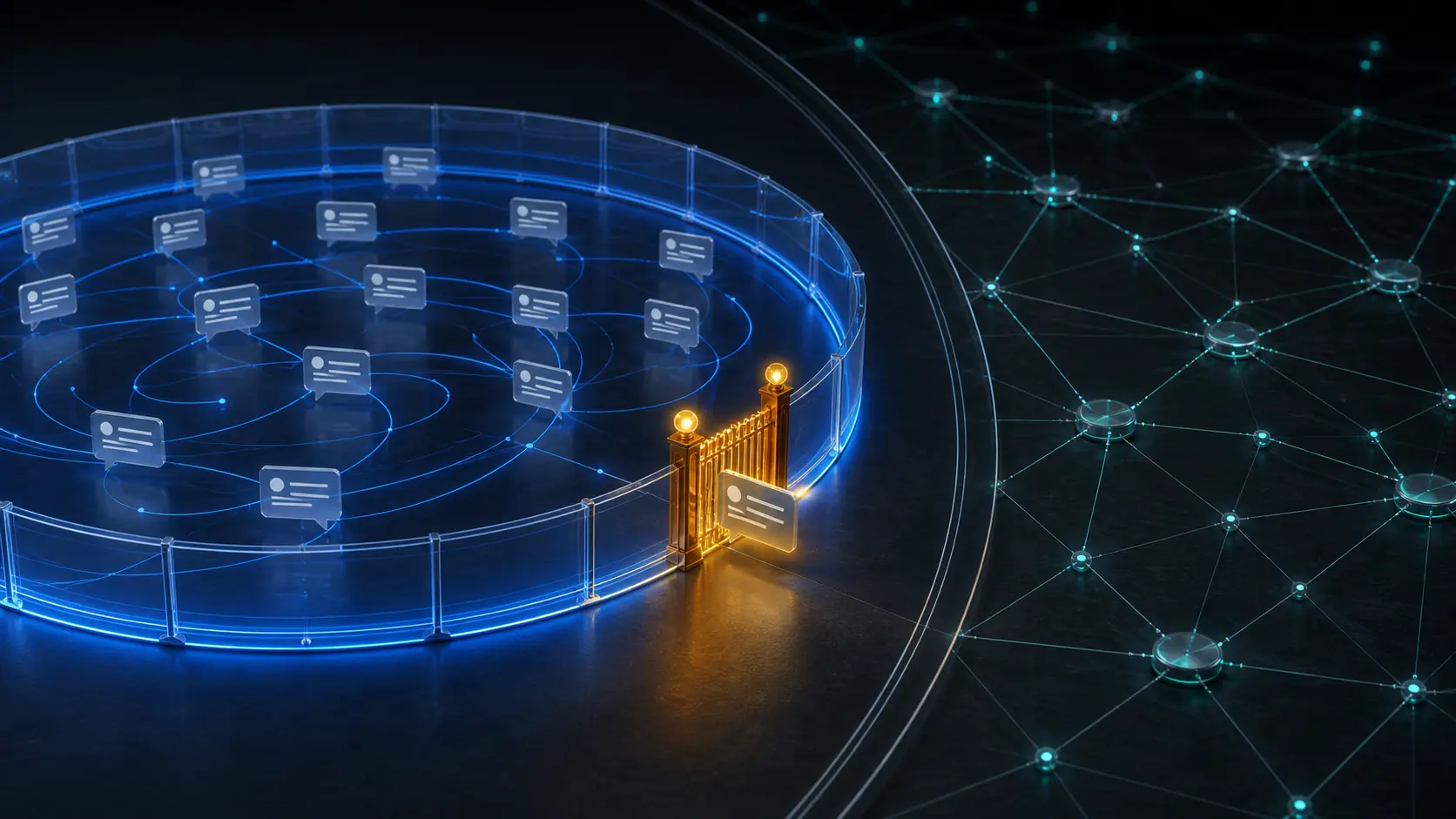
The Forum Could Suspend a Post. It Could Not Claim the Network: RFC 9945 and the Boundary of IETF Moderation
A forum needs a way to stop disruption without mistaking that housekeeping power for a title over everything discussed there. RFC 9945 makes that distinction unusually visible: it gives the IETF a shared procedure for its public online spaces, while repeatedly locating the…

IETF
Carlos Pignataro and the Watt Reading That Did Not Prove a Greener Network
A power meter can report a precise number while leaving the environmental claim undecided. Turning that number into energy, emissions or permission to switch off spare capacity requires separate evidence—and a record of who accepted the trade.

CASE FILE
The Multicast Request Reached the Group. It Did Not Authorize the Action: RFC 10020 and CoAP Evidence
One protected request can look wonderfully decisive. A controller addresses a CoAP group, the network fans it out, several endpoints answer, and the panel records a quiet burst of acknowledgements. In a constrained environment, that economy matters. It is also exactly where an…
History
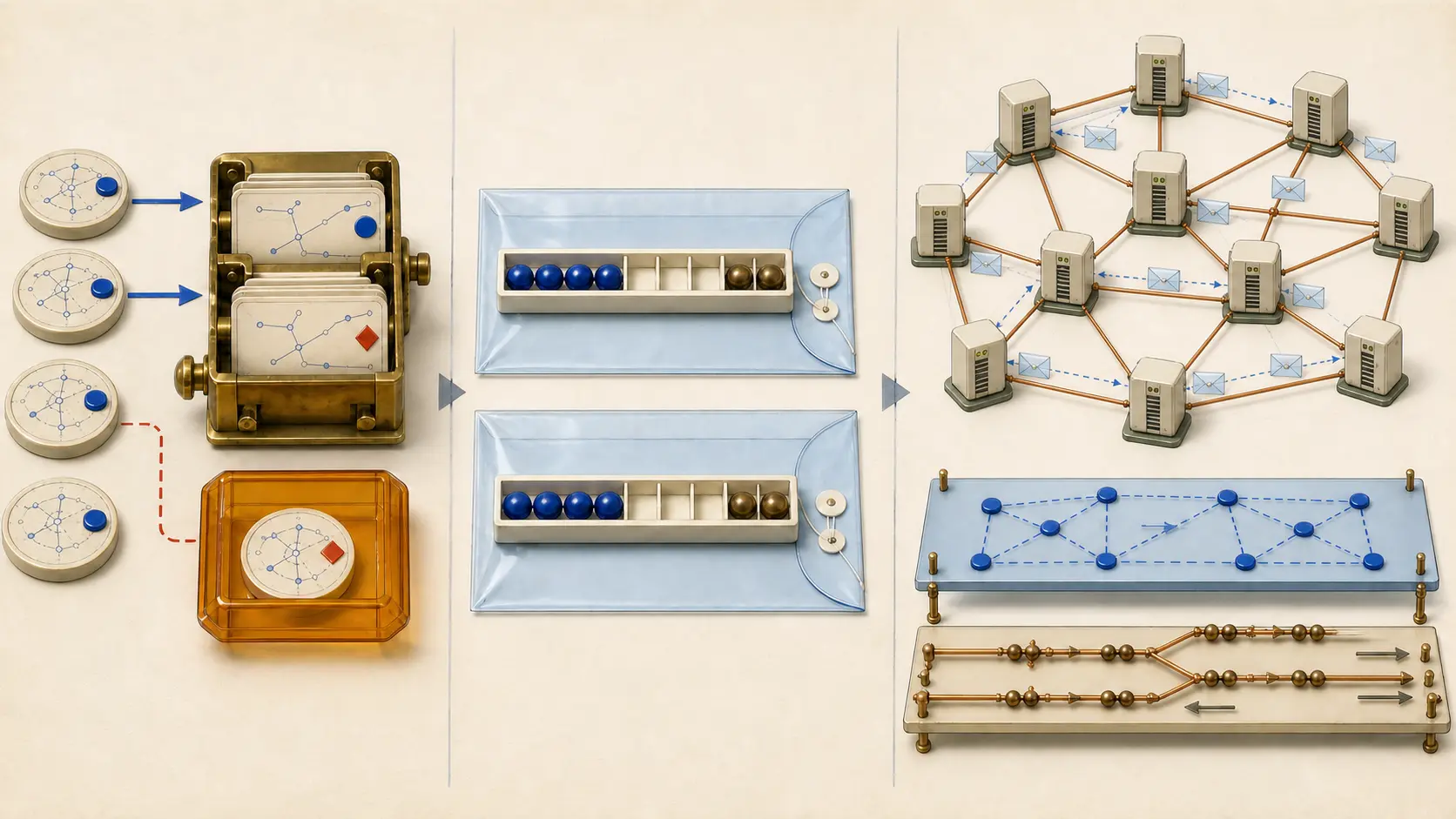
NSFNET Put IP Inside an OSI Address. Policy Still Chose the Route: RFC 1074
Thirteen T1 sites did not become one routing domain by choosing a pure protocol family. The 1988 NSFNET backbone carried IS-IS control packets over IP, fitted Internet addresses into NSAP-shaped fields, and let a policy database decide which EGP claims could become interior…