
Summary
- LACNOG says that more than 110 network professionals attended two June–July technical workshops in Costa Rica and Colombia.
- The reported programme paired DNS, DNSSEC, BGP, RPKI and interconnection material with hands-on work, but it does not yet demonstrate a measured change in routing or resilience outcomes.
Analysis
The useful unit of regional network coordination is often smaller than a policy declaration. It is a room where operators can compare the state of their own networks, test a configuration path and ask what will happen when a route leaks, a resolver is misconfigured or a peering arrangement changes. LACNOG’s August account of two workshops held in Costa Rica and Colombia is therefore more consequential than a conventional event notice, even though it is not evidence of a new technical deployment.
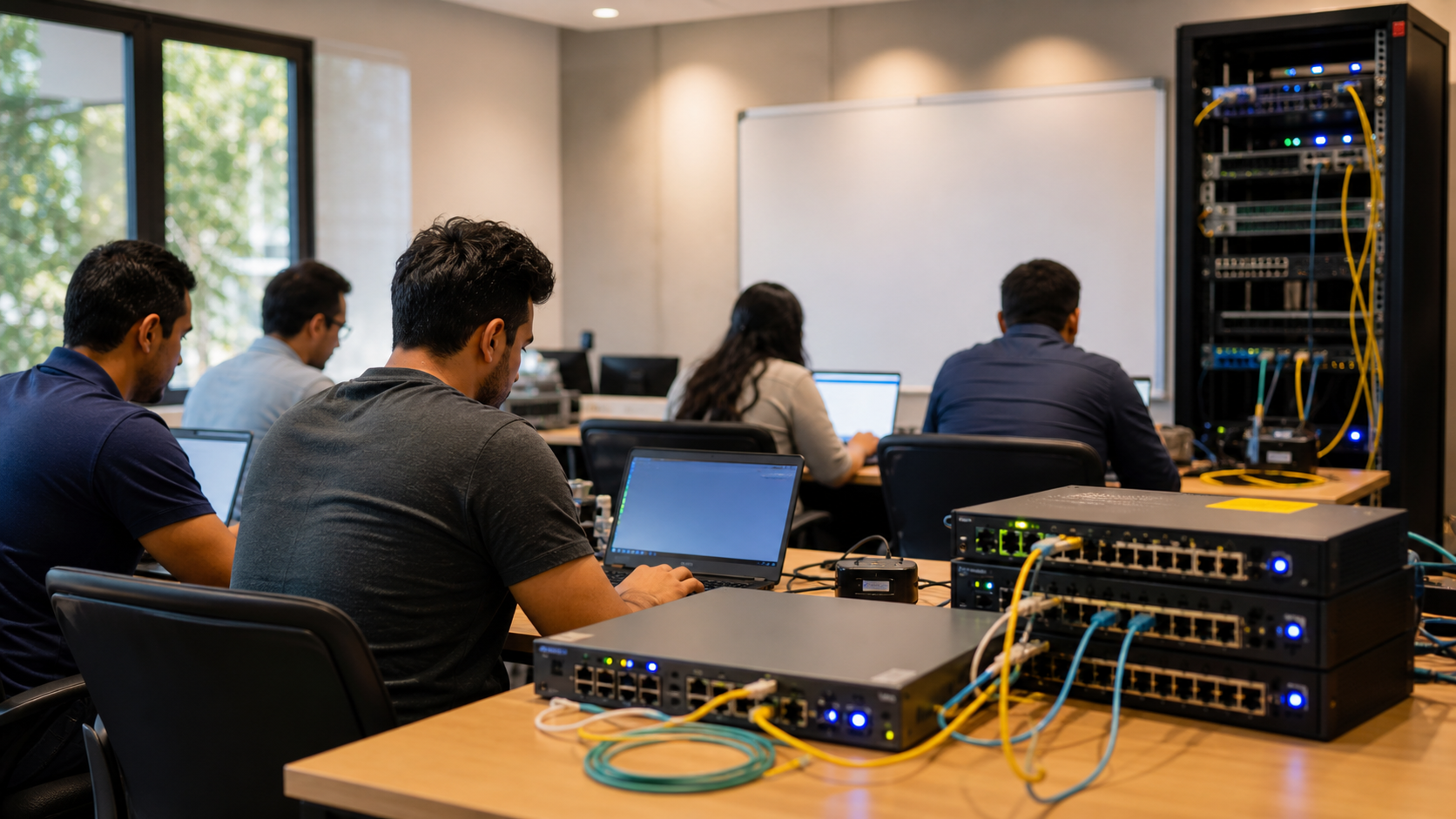
According to LACNOG, the sessions were organised with LACNIC and ICANN as part of a four-year effort to strengthen network-operator communities across Latin America and the Caribbean. The organisation says that the Costa Rica workshop, held on 23–24 June at Universidad Fidélitas in San José with NIC Costa Rica and CRIX, drew more than 50 participants. The Colombia workshop followed on 7–8 July at Bogotá’s Hotel 101 Park House with NAP Colombia and NOG Colombia, with more than 60 telecom and technology professionals reported to have attended.
The curriculum matters because it joined protocols that are too often discussed separately. LACNOG describes DNS and DNSSEC exercises, BGP and RPKI labs, and material on interconnection and routing security. In Costa Rica, it says the agenda also included recursive-DNS guidance associated with KINDNS and an introduction to the LACNIC policy-development process. In Colombia, the reported programme added discussion of routing incidents, the operating state of local ISPs and security self-assessment, alongside material on MANRS.
That combination is a practical design choice. Route security is not only a matter of signing a route object; it depends on operators knowing how a registration, a policy, a resolver and a peer-facing control interact in their own environment. A two-day workshop cannot establish that those controls have been adopted, and LACNOG’s retrospective does not publish before-and-after measurements for RPKI validity, routing incidents, DNSSEC deployment or peering growth. Readers should treat the attendance and local-ecosystem figures as the organisation’s account, not as independently audited performance data.
Still, the next step is visible. LACNOG says the series is due to continue in Santiago de los Caballeros in the Dominican Republic. For regional NOGs, repetition is part of the operating model: the value lies in returning to the same operational questions with a wider and more locally connected group of engineers.
